
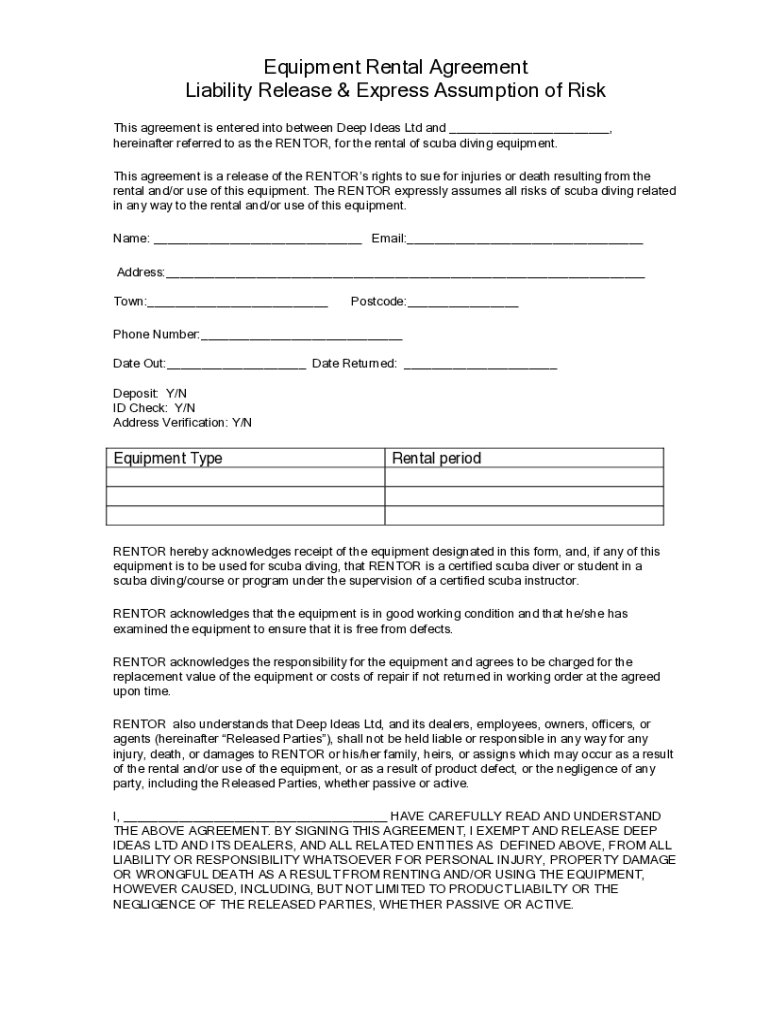







Definition & Meaning
An Equipment Rental Agreement and Liability Waiver is a legal document that outlines the terms under which equipment is rented to the RENTOR, as well as any associated responsibilities and risks. The liability waiver component ensures that the renting party, often the owner of the equipment, is not held responsible for any injuries or damages incurred by the user during the rental period. In essence, this document protects both parties by clearly defining their obligations and the risks they accept.
Practical Examples
- A scuba diving company may require customers to sign this agreement before renting diving gear.
- Construction firms might use it to rent heavy machinery.
Key Details
- Identifies both the equipment owner and the RENTOR.
- Specifies the rented equipment.
- Includes terms of liability related to the use of the equipment.
Steps to Complete the Equipment Rental Agreement and Liability Waiver
When filling out this form, it's crucial to follow specific steps to ensure clarity and legal compliance.
-
Review the Document
Begin by reading the entire document thoroughly. Pay attention to the terms regarding risks and liabilities. -
Identify the Parties Involved
Include the full legal names of both the equipment owner and the RENTOR. -
Specify the Equipment
Clearly list each piece of equipment, including any serial numbers or distinguishing marks. -
Define the Rental Period
State the start and end dates of the rental, along with any conditions for extension. -
Detail the Liabilities
Outline the responsibilities of each party, focusing on the waiver of liability. -
Sign and Date the Agreement
Both parties must sign and date the document in the designated sections to make it legally binding.
Key Elements of the Equipment Rental Agreement and Liability Waiver
Several critical components are common in most Equipment Rental Agreements and Liability Waivers. These elements ensure that the document covers all necessary legal bases.
Equipment Details
- Item description, including make, model, and condition.
- Maintenance responsibilities.
Rental Terms
- Duration of the lease.
- Payment terms, including fees for late returns or damages.
Liability and Waiver
- Statement of risks associated with equipment usage.
- Acknowledgment of assumption of risks by the RENTOR.
Legal Use of the Equipment Rental Agreement and Liability Waiver
The legal enforceability of this document is central to its utility. Understanding how this waiver operates can prevent potential conflicts and ensure compliance with applicable laws.
Legal Binding Nature
- Both parties willingly agree to the terms, signifying consent and understanding.
Enforceability in Court
- A clear, well-drafted agreement increases the likelihood of enforceability in legal disputes, provided the document complies with state laws.
Exceptions
- Cannot waive liability for negligence directly caused by the equipment owner.
Who Typically Uses the Equipment Rental Agreement and Liability Waiver
This form is relevant to various industries and situations where equipment rental is involved.


Common Users
- Sports and recreation businesses like diving or skiing companies.
- Construction and heavy equipment rental companies.

Industry Scenarios
- Short-term event equipment rentals, such as tents or electronics.
- Camera and production equipment rentals for filmmaking.
Important Terms Related to Equipment Rental Agreement and Liability Waiver
Understanding certain terms can clarify the intent and scope of the document.
Terminology
- RENTOR: The party renting the equipment.
- Lessor: The owner of the equipment being rented.
Contract Law Concepts
- Indemnification: One party agrees to protect the other from certain damages or claims.
- Breach of Contract: Violation of any agreed-upon terms.
State-Specific Rules for the Equipment Rental Agreement and Liability Waiver
Renting equipment across state lines or within specific jurisdictions may involve additional legal considerations.
Examples of Variations
- Some states limit the scope of liability waivers based on public policy grounds.
- Specific industries might have additional regulatory requirements in certain states.
Scenario Analysis
- Using the agreement for watercraft rentals could involve state-specific boating laws.
Practical Examples of Using the Equipment Rental Agreement and Liability Waiver
Examining hypothetical situations can illustrate the document's application in real-world settings.
Case Studies
- A photography business rents out high-value cameras for a production shoot, ensuring compliance via an agreement.
Potential Outcomes
- Avoidance of litigation if equipment is damaged, thanks to a clearly defined waiver of liability.
By understanding these critical facets of the Equipment Rental Agreement and Liability Waiver, businesses and individuals alike can ensure that their rental transactions are secure, compliant, and beneficial for all parties involved.




