





Definition & Meaning
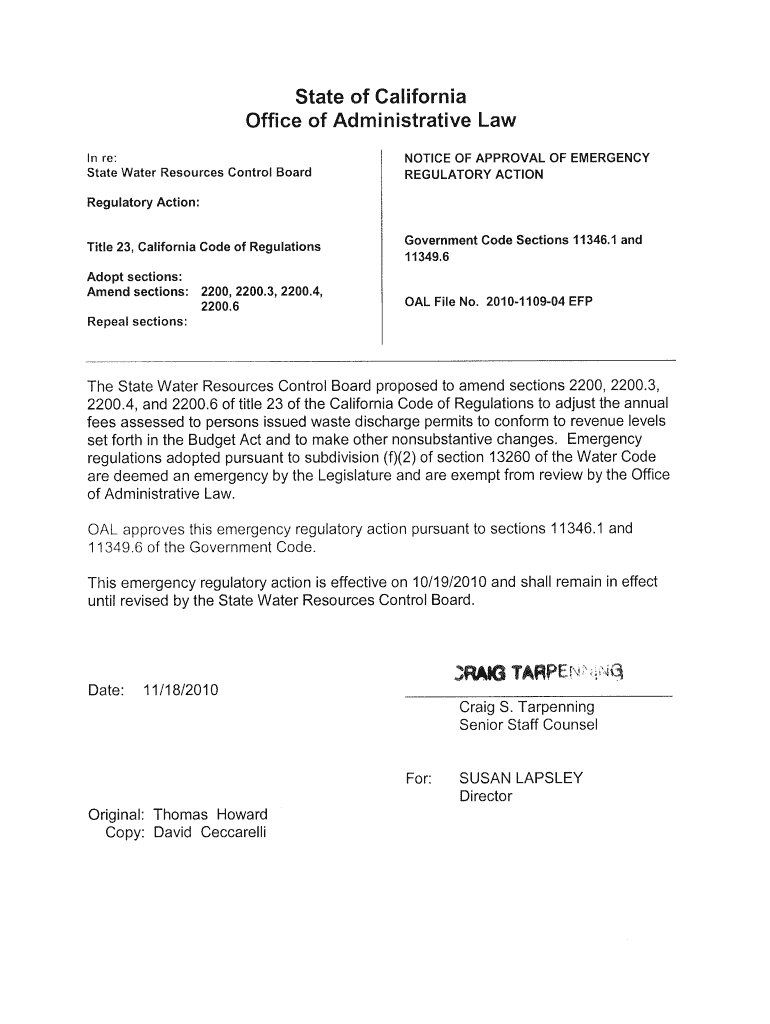
The Office of Administrative Law (OAL) in the State of California, also known as "oal ca," is responsible for reviewing and approving regulations proposed by state agencies. These regulations are changes in California law that impact how laws are implemented and enforced. The OAL ensures that these regulations comply with standards set forth by the Administrative Procedure Act (APA). By maintaining regulatory uniformity and clarity, the OAL upholds the integrity of legal frameworks within the state.
Key Responsibilities
- Review Regulations: The OAL examines proposed regulations to ensure they are clear, necessary, lawful, and user-friendly.
- Public Access: It ensures the public has access to regulatory information and enables citizen participation in the rulemaking process.
- Ensuring Merits: The OAL assesses whether proposed regulations have been adequately justified by state agencies.
How to Use the Office of Administrative Law - State of California - oal ca
Engaging with the OAL requires understanding its function and utilizing its resources to interact with the regulatory process in California. Citizens, businesses, and organizations can use the OAL to follow regulatory changes and participate in public comment periods.
Public Participation
- Comment on Regulations: Stakeholders can submit their views during the public comment period for new regulations.
- Track Regulatory Changes: Interested parties can subscribe to receive notifications about regulatory changes that could impact them.
Seeking Clarification
- Regulatory Inquiries: Individuals can seek clarification on existing regulations or ask questions about the rulemaking process.
Steps to Complete the Office of Administrative Law - State of California - oal ca
To engage effectively with the OAL and its processes, certain steps should be followed:
- Identify Concern Areas: Determine which regulations or potential changes might affect you or your organization.
- Public Comment Participation: Submit comments during the public feedback period to express support, concerns, or suggestions about proposed regulations.
- Monitor Outcomes: Stay informed by reviewing the OAL's final determinations and the official enactment of regulations.
Why Use the Office of Administrative Law - State of California - oal ca
Utilizing the OAL ensures that stakeholders remain informed and proactive about regulatory changes that may impact them. Engagement with the OAL can influence regulatory decisions and ensure that business or personal interests are considered.
Advantages
- Transparency: Engaging with the OAL guarantees transparency in how laws are enacted.
- Influence Policy: Active participation can affect policy direction and regulatory implementation.
Who Typically Uses the Office of Administrative Law - State of California - oal ca
Various groups interact with the OAL for reasons including compliance, advocacy, or curiosity:
- Businesses: Particularly those in highly regulated industries like finance, healthcare, and utilities.
- Legal Professionals: Lawyers and compliance officers seek to advise clients based on the latest regulations.
- Public Interest Groups: Organizations advocating for policy changes or maintaining checks on regulatory activity.

Important Terms Related to the Office of Administrative Law - State of California - oal ca
Understanding specific terminology related to the OAL is crucial for effective navigation of its processes:
- Regulation: A rule or directive issued by a government agency.
- Adoption: The formal acceptance of a regulatory proposal after the public comment period.
- Administrative Procedure Act (APA): The California law governing how state agencies develop regulations.
Legal Use of the Office of Administrative Law - State of California - oal ca
The OAL exists within a legal framework to ensure regulations are appropriately enacted:
- Compliance Verification: The OAL verifies that proposed regulations comply with statutory mandates.
- Public Participation Rights: Legally ensures that citizens have the opportunity to participate in the rulemaking process.
State-Specific Rules for the Office of Administrative Law - State of California - oal ca
California-specific rules and processes differentiate the OAL's operations from those in other states:
- Strict APA Adherence: The OAL’s adherence to the APA ensures a standardized regulatory process.
- State-Driven Focus: Regulations reviewed are primarily intended to address California-specific needs and issues.
Examples of Using the Office of Administrative Law - State of California - oal ca
Real-world applications illustrate how different entities engage with the OAL:
- Environmental Regulations: Advocacy groups may use the OAL to propose or challenge regulations affecting natural resources.
- Business Compliance: Companies might monitor the OAL’s activities to adjust their operations in line with new regulations, ensuring continued legal compliance.
These sections provide a comprehensive overview of the Office of Administrative Law in California, offering practical insights into how it functions, its significance, and its applications.




