







Definition & Meaning
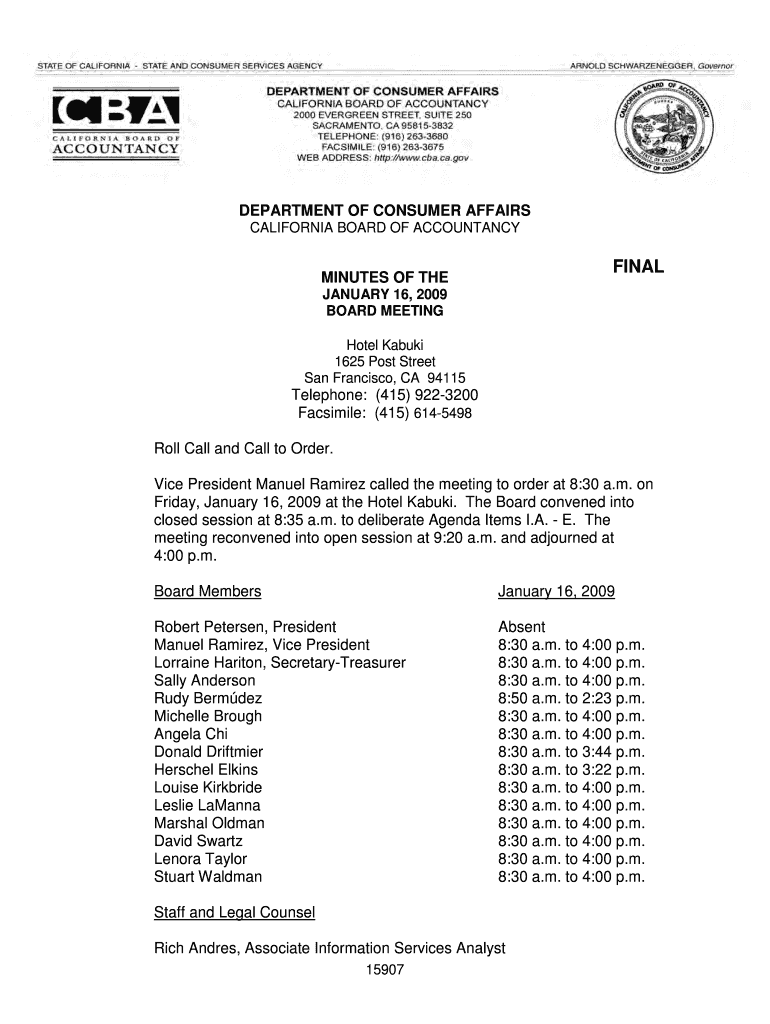
The Board Meeting Minutes 1 16 2009, California Board of Accountancy, refers to the detailed record of the discussions and decisions made during the board meeting held on January 16, 2009. These minutes serve as an official documentation of the proceedings, capturing agenda items, board member discussions, decisions on petitions, and any updates on regulatory changes. Importantly, they provide transparency and accountability for the actions taken during the meeting.
Key Elements of the Board Meeting Minutes
The meeting minutes include essential details such as:
- Roll Call: Listing of all board members present or absent to ensure proper quorum.
- Agenda Items: Outline of topics discussed, such as petitions, committee appointments, and budget updates.
- Discussions and Decisions: Insights into topics like licensing activities, enforcement matters, and legislative updates.
- Public Comments: Section for inputs from public attendees, reflecting stakeholder engagement.
- Adjournment: Official closure of the meeting, signifying end of discussions.
Steps to Complete Board Meeting Minutes
- Preparation: Gather all necessary materials, including the agenda and previous meeting minutes.
- Attendance Recording: Note all members present and absent.
- Agenda Following: Document discussions and actions taken for each agenda item meticulously.
- Documentation: Write a detailed account of decisions and notable discussions.
- Finalization: Review and approve minutes in subsequent meetings for accuracy.
Importance of Board Meeting Minutes
Board meeting minutes are crucial as they:
- Ensure Compliance: Provide a legal record of meetings for regulatory compliance.
- Aid in Decision-Making: Serve as a reference for past decisions and rationales.
- Enhance Transparency: Offer stakeholders insight into board activities and decisions.
Who Typically Uses the Board Meeting Minutes
These minutes are utilized by a range of stakeholders, including:
- Board Members: For reference and follow-up actions.
- Legal and Compliance Departments: To verify compliance with regulations.
- Stakeholders and Auditors: To review decisions impacting the board's governance.


Legal Use of the Board Meeting Minutes
Legally, board meeting minutes must:
- Be Accurate: Reflect true and complete records of a meeting.
- Be Approved: Often require official approval at subsequent meetings.
- Serve as Evidence: Can be used in legal proceedings to prove decisions and discussions.
State-Specific Rules for the Board Meeting Minutes
In California, specific rules include:
- Public Availability: Minutes often need to be accessible to the public or stakeholders.
- Timing of Recording: Should be recorded promptly after the meeting.
- Format: Typically follow a standard format for consistency and legal compliance.
Examples of Using the Board Meeting Minutes
Some scenarios include:
- Regulatory Audits: Where past meeting decisions need to be presented.
- Dispute Resolution: Providing evidence in disagreements concerning board decisions.
- Strategic Planning: Reviewing past decisions to inform future strategies.
Digital vs. Paper Version
The advent of digital tools offers benefits:
- Efficiency: Easier to distribute and archive digitally.
- Accessibility: Allows quick access and searchability for users.
- Sustainability: Reduces paper use and aligns with eco-friendly practices.
By covering these areas, we thoroughly examine the utility and implications of the Board Meeting Minutes from the 2009 California Board of Accountancy meeting. This comprehensive approach aids in understanding and utilizing the minutes effectively within the context of governance and regulatory compliance.




