




01. Edit your coa form online
Type text, add images, blackout confidential details, add comments, highlights and more.

Type text, add images, blackout confidential details, add comments, highlights and more.

Draw your signature, type it, upload its image, or use your mobile device as a signature pad.

Send coa application form via email, link, or fax. You can also download it, export it or print it out.
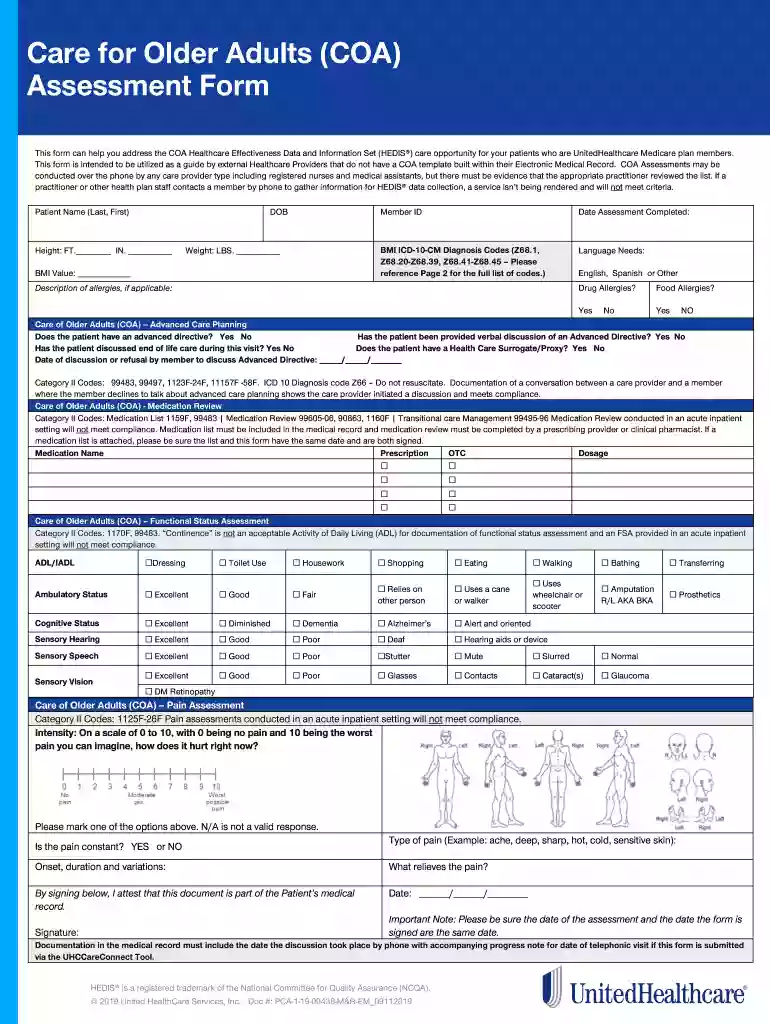
The Care for Older Adults (COA) form, often associated with various Medicare plans, serves as an essential tool for healthcare providers. Its primary purpose is to ensure comprehensive assessments are conducted regarding the needs and specifications of older adult patients. Through its structured approach, the COA form addresses a range of critical areas pertinent to patient care.
The COA form includes several vital sections that help structure the assessment process, promoting thorough documentation and compliance with healthcare standards.
Completing the COA form entails a systematic approach, which can be broken down into key steps to ensure all required information is gathered effectively.
Gather Patient Data: Start by compiling preliminary information through interviews with the patient and family members. This stage is critical for establishing a broad understanding of the patient's circumstances.
Conduct Assessments: Use standardized tools included in the COA form, such as those for evaluating functional status and conducting pain assessments.
Collaborate With Other Providers: Engage with other healthcare professionals involved in the patient’s care to obtain additional insights that may need to be documented in the COA form.
Review and Finalize Documentation: Verify that all required sections are completed accurately and comprehensively before final submission to ensure compliance with regulatory standards.
The COA form plays a vital role across various healthcare scenarios.
Utilization of the COA form is not solely about meeting regulatory mandates; it also serves as a foundation for quality improvement in patient care.
The Care for Older Adults (COA) form is indispensable for healthcare providers involved in the care of elderly patients. By systematically addressing various assessment dimensions, practitioners ensure comprehensive evaluations that support quality care and regulatory adherence. This structured documentation not only improves individual patient outcomes, but also contributes significantly to the overall effectiveness of healthcare delivery systems.
At DocHub, your data security is our priority. We follow HIPAA, SOC2, GDPR, and other standards, so you can work on your documents with confidence.
In the event of an injury or sickness, students should secure an insurance claim form online and complete it according to the directions on the form. Only oneRead more
COA. We committed to reducing disparities in medical resources and promoting the accessibility of healthcare, ensuring more people benefit from advancedRead more


