Motion to Vacate Default Judgment 2026

Get Form
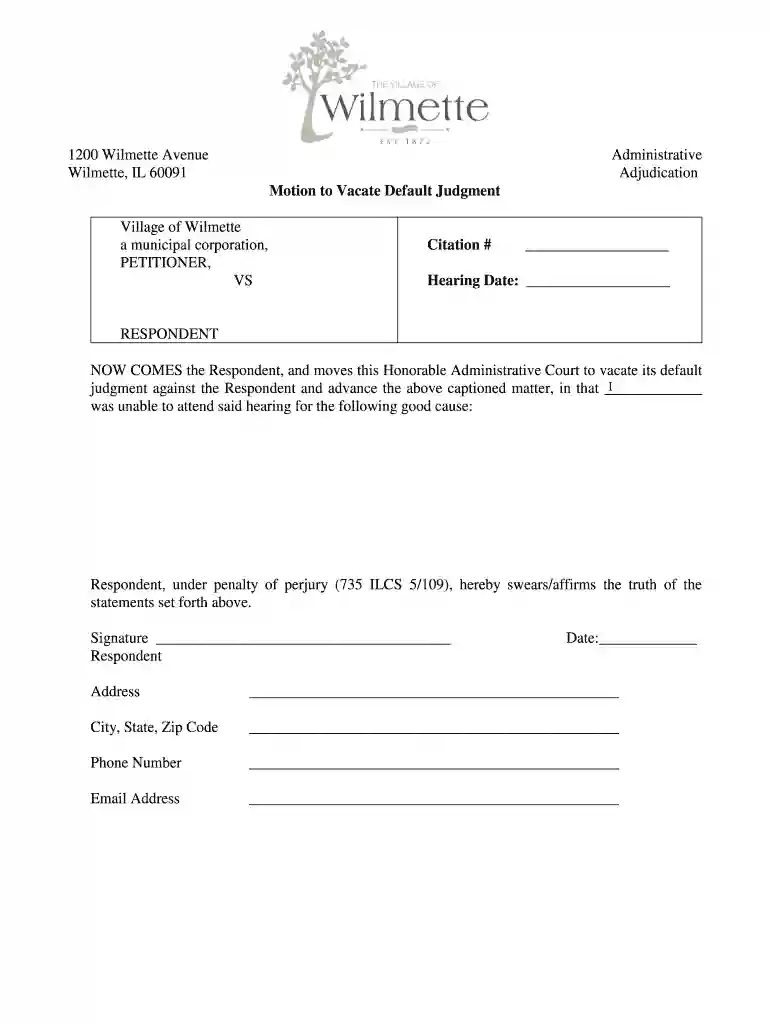
Motion to Vacate Default Judgment Preview on Page 1

Here's how it works

01. Edit your form online
Type text, add images, blackout confidential details, add comments, highlights and more.

02. Sign it in a few clicks
Draw your signature, type it, upload its image, or use your mobile device as a signature pad.

03. Share your form with others
Send it via email, link, or fax. You can also download it, export it or print it out.

Definition & Meaning

A Motion to Vacate Default Judgment is a legal request to the court seeking annulment of a default judgment. A default judgment happens when one party fails to respond or appear in court, and the other party wins by default. This motion serves as a formal request by the affected party to reverse the decision, usually because of extenuating circumstances that prevented their participation. Such circumstances might include a misunderstanding of the legal process, not receiving a court summons, or other valid reasons that justify reopening the case.

Practical Examples

  • A tenant who didn't receive a notice about a court date for an eviction hearing might file a motion to vacate the default judgment to contest the eviction order.
  • An individual served incorrectly with legal documents might seek a court's permission to reopen a case they did not know existed.

Key Elements of the Motion to Vacate Default Judgment

To successfully file a motion, certain critical elements must be present. These elements help establish a justifiable reason for vacating the default judgment.

Critical Components

  • Reason for Absence: A clear explanation of why the respondent was unable to respond or appear in court by the deadline.
  • Meritorious Defense: Details of any viable defenses or arguments that the respondent wishes to present in the reopened case.
  • Timeliness: Evidence that the motion is being filed within an appropriate or mandated time frame since the default judgment was issued.

Steps to Complete the Motion to Vacate Default Judgment

Filing a motion involves a series of methodical steps to ensure accuracy and compliance with legal procedures. The following outlines this step-by-step process:

  1. Draft the Motion: Include the case details, your explanation for default, and any evidence supporting your claims.
  2. Sworn Statement: Prepare a declaration affirming the truth of the facts stated within the motion.
  3. File the Motion: Submit the completed motion to the court. Ensure adherence to any filing deadline.
  4. Notify the Opposing Party: Serve a copy of the motion to the opposing party, usually through mail or personal delivery.
  5. Attend the Hearing: Be prepared to present your case to the judge if a court hearing is scheduled.

State-Specific Rules for the Motion to Vacate Default Judgment

Different states may have varying laws and regulations governing the filing of these motions. Familiarizing oneself with state-specific guidelines can improve the likelihood of motion acceptance.

Illinois-Specific Context

  • In Illinois, filing must typically occur within thirty days from the date of the default judgment.
  • Illinois allows for post-judgment motions under certain conditions, such as newly discovered evidence or errors by the court.

Legal Use of the Motion to Vacate Default Judgment

The legal framework surrounding motions to vacate is designed to ensure fairness within the judiciary system. It provides a mechanism to contest a judgment rendered in the absence of an affected party.

Important Considerations

  • A motion does not guarantee reversal of the judgment but ensures the respondent gets an opportunity to present their case.
  • The court evaluates the legitimacy and merits of the motion, considering the presented reasons and any impact on judicial efficiency.

Filing Deadlines / Important Dates

Adhering to critical timelines for filing the motion is imperative. Missing these can lead to rejection or dismissal of the motion.

Timing Guidelines

  • Ensure filing within any state-mandated periods, often ranging from ten to thirty days post-judgment.
  • Some jurisdictions permit exceptions beyond typical deadlines if compelling evidence or justifications are provided.

Who Typically Uses the Motion to Vacate Default Judgment

This motion can be used by various parties involved in civil, criminal, or administrative cases who were unfairly judged in absentia. Common users include:


  • Defendants in Civil Cases: Individuals who missed a hearing because of service issues or unavoidable circumstances.
  • Tenants in Eviction Proceedings: Renters facing eviction orders without prior court participation.
  • Businesses: Companies that were not duly notified about legal actions filed against them.
decoration image ratings of Dochub

Penalties for Non-Compliance

Failing to follow court orders, including default judgments, can lead to severe consequences. Understanding potential penalties underscores the importance of timely and accurate filing.

Common Repercussions

  • Enforcement Actions: The opposing party may initiate actions to enforce the judgment, such as wage garnishments or property liens.
  • Legal Costs: Additional expenses may accrue due to supplementary legal proceedings needed to address the default.

Form Submission Methods

Submitting the motion accurately and via the appropriate channels is essential for consideration.

Options for Submission

  • Online: Use of electronic filing systems where available.
  • Mail: Sending documents to the court via certified mail.
  • In-Person: Direct submission at the courthouse, ensuring receipt of filing.
be ready to get more

Complete this form in 5 minutes or less

Get form

Got questions?

We have answers to the most popular questions from our customers. If you can't find an answer to your question, please contact us.
Contact us
Under certain circumstances, it is possible to vacate (re-open) a default judgment. The court has a special procedure for determining whether to vacate a default judgment. The procedure is relatively straightforward, but often requires a noticed motion and a hearing before the judge.
If the defendant has a valid reason for not responding, such as never being notified, they may file a motion asking the judge to set aside the default judgment. This is also called a motion for relief from default or a motion to vacate judgment.
Default Judgement may be set aside in two circumstances: Consent the Plaintiff (whom Default Judgment favours) may consent for it to be set aside. The Defendant can bring an application setting out the grounds which he seeks to have the judgment set aside.
If a court has issued a default judgment against you, you may be able to get it vacated. In legal terms, vacate means to cancel or overturn a previous court order. This means the judgment is no longer in effect, and your case may be reopened.
In federal court, a defendant can make a motion to vacate a judgment, within one year of the judgment being entered, for a range of reasons including mistake, excusable neglect, newly discovered evidence, and fraud. However, after a year has passed, grounds for vacating the judgment are very limited.

Security and compliance

At DocHub, your data security is our priority. We follow HIPAA, SOC2, GDPR, and other standards, so you can work on your documents with confidence.

Learn more
ccpa2
pci-dss
gdpr-compliance
hipaa
soc-compliance

People also ask

Basis for Getting a Judgment Removed You paid the debt: Credit agencies will remove the judgment from your credit report if you can show that you did pay your debt on time. If you paid your debt after the judgment was established on your credit report, the agency wont remove the judgment.

Related links