




01. Edit your form online
Type text, add images, blackout confidential details, add comments, highlights and more.

Type text, add images, blackout confidential details, add comments, highlights and more.

Draw your signature, type it, upload its image, or use your mobile device as a signature pad.

Send it via email, link, or fax. You can also download it, export it or print it out.
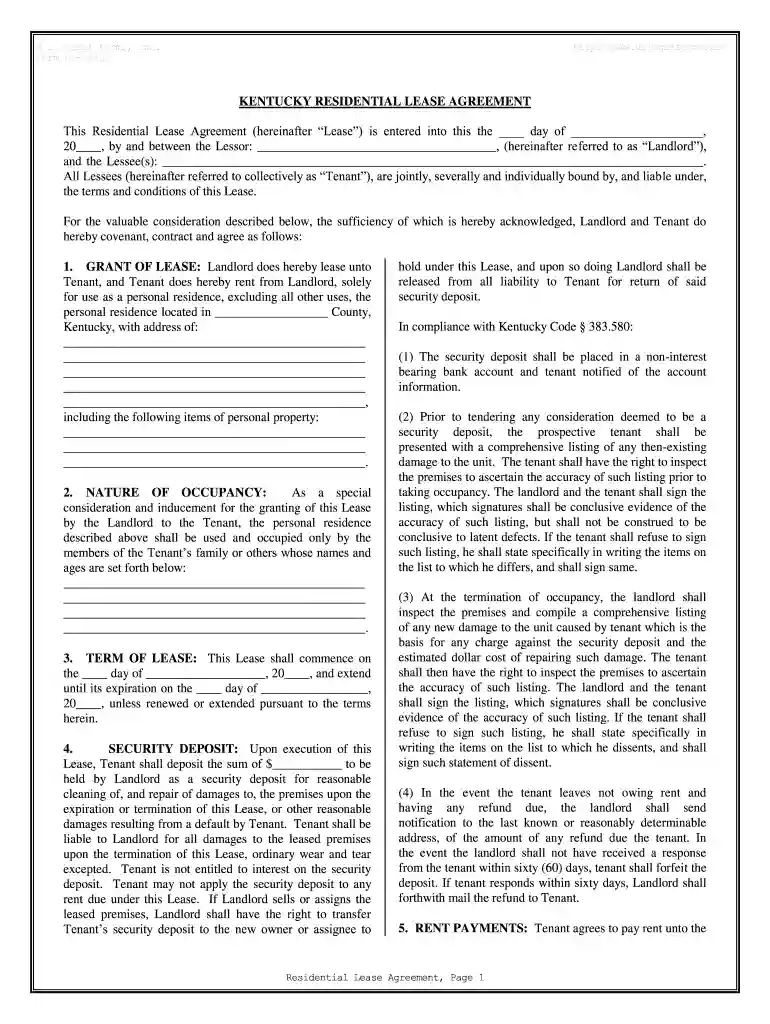
The Kentucky Residential Rental Lease Agreement is a legally binding contract established between a landlord and a tenant for renting residential property within the state of Kentucky. This document outlines the terms and conditions under which the tenant will occupy the property, ensuring clarity and mutual agreement on aspects such as lease duration, rent amount, and property maintenance. By clearly defining each party's rights and obligations, it helps prevent disputes and establishes a framework for resolving any issues that may arise during the tenancy.
The Kentucky Residential Rental Lease Agreement serves as a comprehensive guide for both landlords and tenants throughout the rental period. When preparing the lease:
Complete Essential Information:
Outline Financial Obligations:
Establish Tenancy Rules:
Set Responsibilities:
To efficiently complete the Kentucky Residential Rental Lease Agreement, follow these steps:
Gather Information: Collect all necessary details, such as full names, addresses, and contact information for both parties.
Discuss Terms and Conditions: Negotiate key aspects like rent amount, lease length, and specific clauses related to pets, repairs, and alterations.
Draft the Agreement: Use a standardized template to ensure all critical components are included. Tailor sections to fit the agreed-upon terms, adjusting for any unique circumstances.
Review and Revise: Both parties should carefully review the draft for accuracy and completeness. This is an opportunity to make any adjustments before finalizing.
Sign and Date the Document: Both the landlord and tenant must sign the document. Consider having it notarized for added legal weight.
Distribute Copies: Provide each party with a signed copy for their records.
Several key elements are critical to the structure and function of the Kentucky Residential Rental Lease Agreement:
Lease Term: Specifies the duration of the lease, with options for renewal or termination.
Rent Payments: Includes details on payment frequency, methods, and late fees. Clearly define due dates and acceptable forms of payment to avoid confusion.
Security Deposit: Outlines the amount required, conditions for its return, and any reasons for potential deductions.
Tenant Responsibilities: Sets expectations for property usage, cleanliness, and timely reporting of necessary repairs.
Landlord Obligations: Details what the landlord will provide in terms of maintenance, repairs, and communication regarding property issues.
The Kentucky Residential Rental Lease Agreement must align with state laws to be enforceable. Key Kentucky-specific considerations include:
Security Deposit Limits: Understand the maximum amount a landlord can request as a security deposit.
Notice Requirements: Kentucky law dictates specific periods for notices related to terminating tenancy or altering agreement terms.
Lead-Based Paint Disclosure: Comply with federal requirements for disclosing lead-based paint in buildings constructed before 1978.
The legal enforceability of the Kentucky Residential Rental Lease Agreement depends on its proper execution according to state standards. Ensure the document:
Is Written and Signed: Oral agreements are hard to enforce. A written and signed agreement is legally binding.
Adheres to State Law: Inclusion of all state-required disclosures and adherence to state-specific regulations is crucial.
Reflects Mutual Consent: Both parties must agree to all terms without coercion for the agreement to be valid.
Utilizing the Kentucky Residential Rental Lease Agreement offers numerous benefits:
Legal Protection: Provides legal recourse should disputes arise, by clearly defining obligations and rights.
Clarified Expectations: Reduces the chance of misunderstanding by detailing specific terms of the tenancy.
Peace of Mind: Establishes a predictable framework for tenancy, setting clear expectations for daily interactions and long-term commitments.
This agreement is used by:
Landlords: To formalize their rental business, protect their property, and ensure compliance with state laws.
Tenants: To secure their rights to the property, clarify their obligations, and ensure a stable living environment.
Real Estate Professionals: Such as property managers and leasing agents, for managing residential properties on behalf of landlords.


Familiarize yourself with several important terms found within the Kentucky Residential Rental Lease Agreement:
Sublease: Allows the tenant to rent the property to another party, subject to landlord approval.
Eviction: Legal process involving tenant removal due to lease term violations.
Default: Occurs when a party fails to meet their contractual obligations, such as non-payment of rent.
At DocHub, your data security is our priority. We follow HIPAA, SOC2, GDPR, and other standards, so you can work on your documents with confidence.








A lease is a binding, legal agreement. It usually spells out the obligations of a landlord and a tenant to one another.
A lease is a binding, legal agreement. It usually spells out the obligations of a landlord and a tenant to one another. A lease provides the express rights andRead more


