
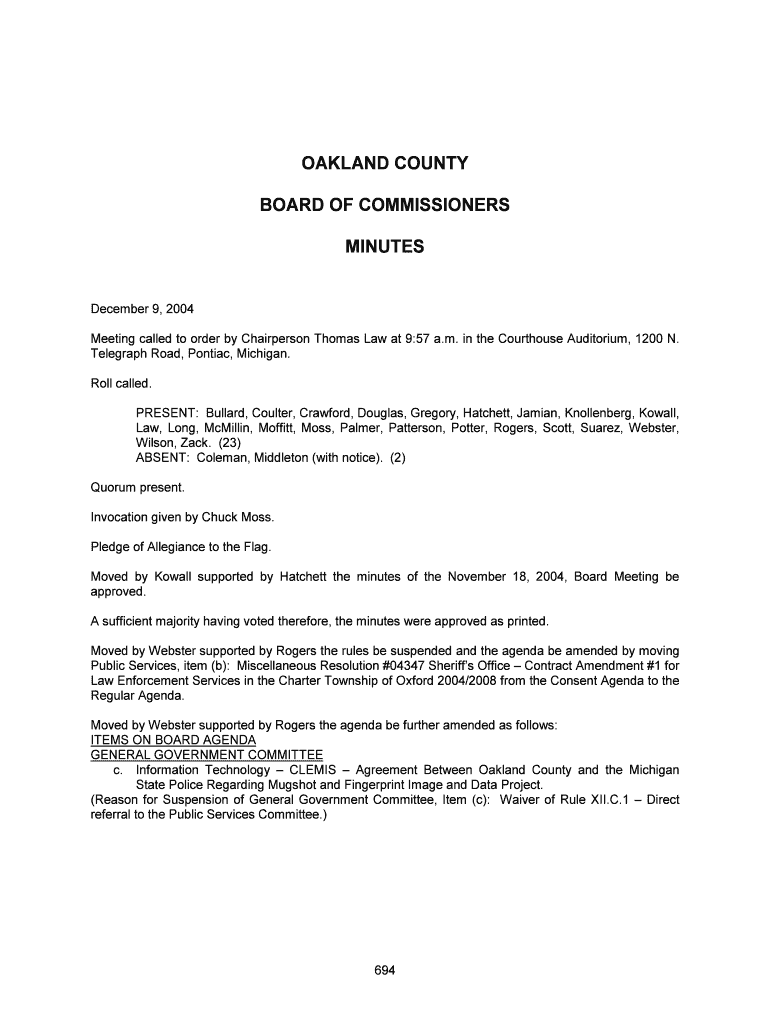







Definition and Purpose of Oakland County Board of Commissioners Minutes
The Oakland County Board of Commissioners Minutes document serves as an official record of the proceedings and decisions made during the board meetings. These minutes include detailed accounts of discussions, resolutions, amendments, and appointments. By providing a comprehensive record of what transpired, the minutes ensure transparency and accountability in the county's governance. They are essential for legal and historical purposes, offering insights into the legislative process and the board’s priorities. These records are often referenced by officials, legal professionals, and the public to verify actions taken during meetings.
Obtaining the Oakland County Board of Commissioners Minutes
To access the Oakland County Board of Commissioners Minutes, interested parties can typically visit the official county website or contact the county clerk's office. These documents are usually archived for public access, with options to view minutes from both current and past meetings. Some counties offer a searchable online database, allowing users to find specific minutes by date or meeting type. For those seeking physical copies, requesting them directly from the clerk's office is possible, though there may be a fee for printing or mailing services.
Essential Steps for Using the Minutes
- Identify the Relevant Meeting: Determine the date or agenda of the meeting relevant to your needs. This will help in locating the specific minutes required.
- Access and Review: Once you've obtained the minutes, carefully review the document to understand the context and outcomes of the discussions or decisions made during that meeting.
- Extract Key Information: Highlight or note the resolutions, amendments, or appointments that relate to your interest or need.
- Verify with Other Records: Cross-reference the minutes with other official documents or news releases for verification or additional context.
- Cite Appropriately: If using the information from the minutes in reports or legal documents, ensure proper citation as per jurisdictional requirements.
Significance of the Minutes in Legal Context
The minutes from the Oakland County Board of Commissioners' meetings hold significant legal weight as they serve as an authoritative account of decisions and legislative actions. They can be used as evidence in legal disputes to demonstrate the intent behind a resolution or to clarify the language of an ordinance. Legal professionals often reference these minutes when interpreting legislation or arguing cases that involve county regulations. They are also valuable in the appeal process, providing a clear record of the decision-making process that could impact legal outcomes.
Typical Users of the Board of Commissioners Minutes
- Legal Professionals: Use minutes for case research and legal precedents.
- Historians and Researchers: Examine the minutes to gain insights into the legislative history and sociopolitical context of the county.
- Citizens: Review the minutes to understand governmental actions affecting their community.
- Journalists: Utilize minutes to verify facts and provide informed reporting on local government issues.
- County Officials: Reference minutes to track the implementation of resolutions and ensure continuity in policy-making.
Key Elements Documented in the Minutes
- Attendance: Lists of all members present or absent during the meeting.
- Agenda Items: Overview of topics discussed during the session.
- Resolutions Passed: Detailed descriptions of resolutions, including who proposed and seconded them.
- Votes Recorded: Documentation of voting outcomes on various issues.
- Public Comments: Summaries of public input provided during the meeting.
- Future Actions: Actions to be taken before the next meeting or deadlines set for specific initiatives.
State-Specific Considerations for the Minutes
While the Oakland County Board of Commissioners Minutes primarily follow a standardized format, some variations may occur based on state-specific legal requirements. Michigan’s public records law mandates transparency, which influences how minutes are recorded and made accessible to the public. The format and detail level might differ slightly to comply with Michigan's Open Meetings Act, ensuring that minutes are detailed enough to inform public understanding and scrutiny of governmental actions. It’s crucial for users to be aware of these state-specific rules to fully interpret the minutes' implications.
Practical Examples of Using the Minutes
- Property Development: Developers may study minutes to understand zoning discussions and changes that could impact future projects.
- Budget Analysis: Financial analysts might examine the minutes to review approved budget amendments and assess fiscal policy directions.
- Legislation Tracking: Advocacy groups monitor minutes for updates on legislation affecting their areas of interest or activism.
- Community Planning: Local planners can use minutes to incorporate board decisions into broader community development strategies.
Digital Access and Software Compatibility
Many county clerks’ offices provide digital access to the minutes, often via PDF downloads, enabling easy distribution and archival. Software compatibility is generally broad; most devices and programs that can access PDF files, such as Adobe Reader or internet browsers, will suffice. Users can annotate or search the text within these documents, streamlining the process of locating pertinent information. Integration with document management software, like DocHub, allows for added functionality in editing and sharing these minutes within digital platforms.




