





Definition & Meaning
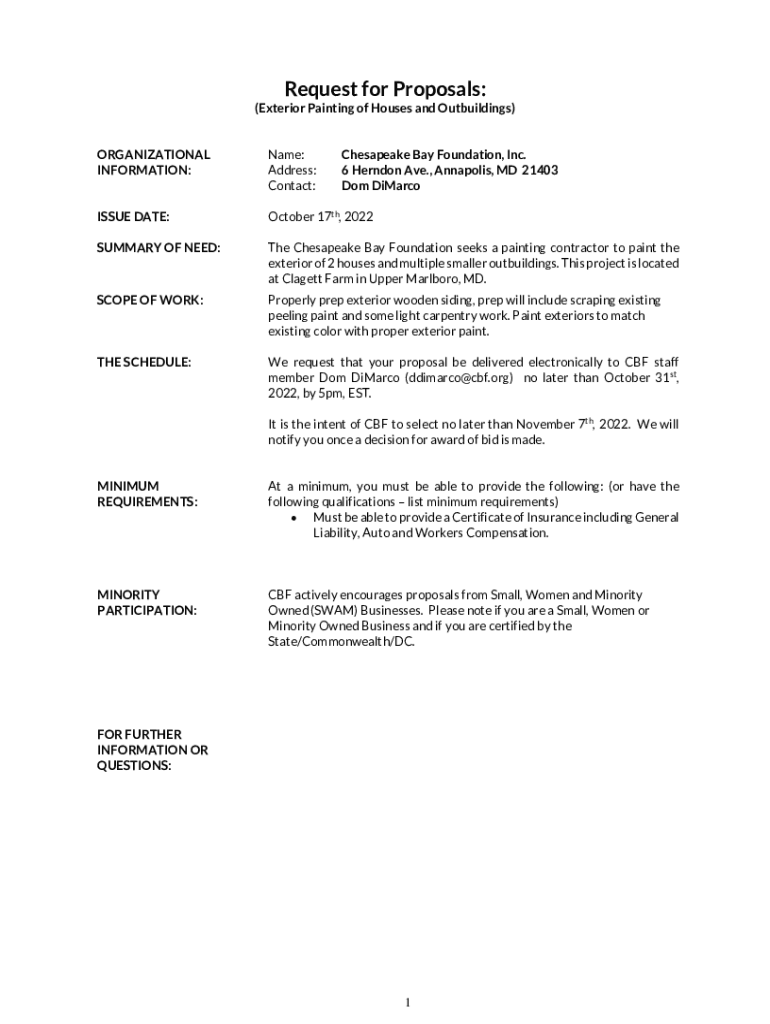
The "Exterior Clagett Painting RFP Form" is a request for proposal (RFP) document used to solicit bids from contractors for painting projects. Specifically, this form is utilized for the exterior painting of buildings like those at Clagett Farm in Upper Marlboro, Maryland. The purpose of the form is to detail the requirements and specifications of the painting project, ensuring that all potential contractors provide comparable proposals that meet the necessary criteria.
Key Components
- Project Details: Specification of the painting project, including the scope, such as buildings to be painted and any preparation work required.
- Submission Requirements: Information on how and when proposals must be submitted.
- Selection Criteria: Criteria that will be used to evaluate submitted proposals, such as cost, timeline, and contractor experience.
How to Use the Exterior Clagett Painting RFP Form
Using the Exterior Clagett Painting RFP Form involves several steps to ensure a complete and compliant proposal submission. Users must first acquire the form, then fill it out according to the requirements, and finally submit it by the specified deadline.
Steps for Submission
- Acquire the Form: Ensure you have the most current version of the form, which may be available electronically.
- Fill Out the Form: Provide all required information including contact details and proof of insurance.
- Supplementary Attachments: Attach any additional documents like project timelines, cost estimates, and certifications.
- Form Submission: Submit the completed form electronically by the deadline specified in the RFP notice.
Steps to Complete the Exterior Clagett Painting RFP Form
Completing the Exterior Clagett Painting RFP Form demands accuracy and attention to detail to meet all outlined requirements.
Detailed Instructions
- Project Understanding: Demonstrate a clear understanding of the project by including detailed plans and methodology.
- Budget and Costs: Provide a comprehensive breakdown of costs, ensuring transparency and competitiveness.
- Experience and Qualifications: Highlight past projects, especially those of similar scope, to establish credibility and competence.
Common Mistakes
- Incomplete Information: Double-check that all fields are completed and that no sections are left blank.
- Missed Deadlines: Submit the proposal well before the deadline to avoid last-minute issues.
Key Elements of the Exterior Clagett Painting RFP Form
Understanding the critical elements of the form is crucial for preparing a comprehensive submission. Each section of the form serves a distinct purpose in evaluating the proposal's fit for the project.
Essential Components
- Contact Information: Names, addresses, and communication details of the submitting contractor.
- Project Scope: Detailed description of services offered, including preparation, painting, and cleanup processes.
- Insurance Proof: Documentation indicating active insurance coverages, particularly liability insurance.
Legal Use of the Exterior Clagett Painting RFP Form
The legal use of the Exterior Clagett Painting RFP Form centers around ensuring compliance with local and federal regulations regarding contractual obligations and work standards.
Contractual Obligations
- Binding Agreements: Upon acceptance of the proposal, the details in the RFP and the proposal become legally binding.
- Regulatory Compliance: Contractors must adhere to safety and environmental regulations, ensuring that all works meet legal standards.
Importance of the Exterior Clagett Painting RFP Form
The form serves as a critical document in the bidding process, enabling a fair assessment of all potential contractors. It ensures transparent and standardized solicitation, fostering competitive and qualitative offerings.
Advantages
- Standardization: Offers a uniform format for submissions, making it easier to compare proposals.
- Transparency: Provides a clear framework of expectations and requirements, reducing misunderstandings.
State-Specific Rules for the Exterior Clagett Painting RFP Form
State-specific rules can impact the use and structure of RFP forms, such as those utilized in Maryland for projects like Clagett Farm.
Maryland-Specific Considerations
- Licensing Requirements: Contractors need to ensure they hold valid state licenses for painting and contracting tasks.
- Small Business Encouragement: Preferences or incentives might be available for small, women-owned, or minority businesses, aligning proposals with local development goals.
Examples of Using the Exterior Clagett Painting RFP Form
The successful use of the Exterior Clagett Painting RFP Form can be illustrated through past projects which followed the submission process meticulously and resulted in successful contracts.
Case Studies
- Project Efficiency: A contractor provided a well-structured proposal utilizing the form that clearly detailed their proposal, winning the contract due to their clear communication and exemplary track record.
- Innovation Highlight: Some bids showcased innovative painting techniques and eco-friendly materials, setting them apart in the selection process.