







Definition & Purpose of the Tea Group Intervention - Environmental Checklist - Blank Form - Health NY
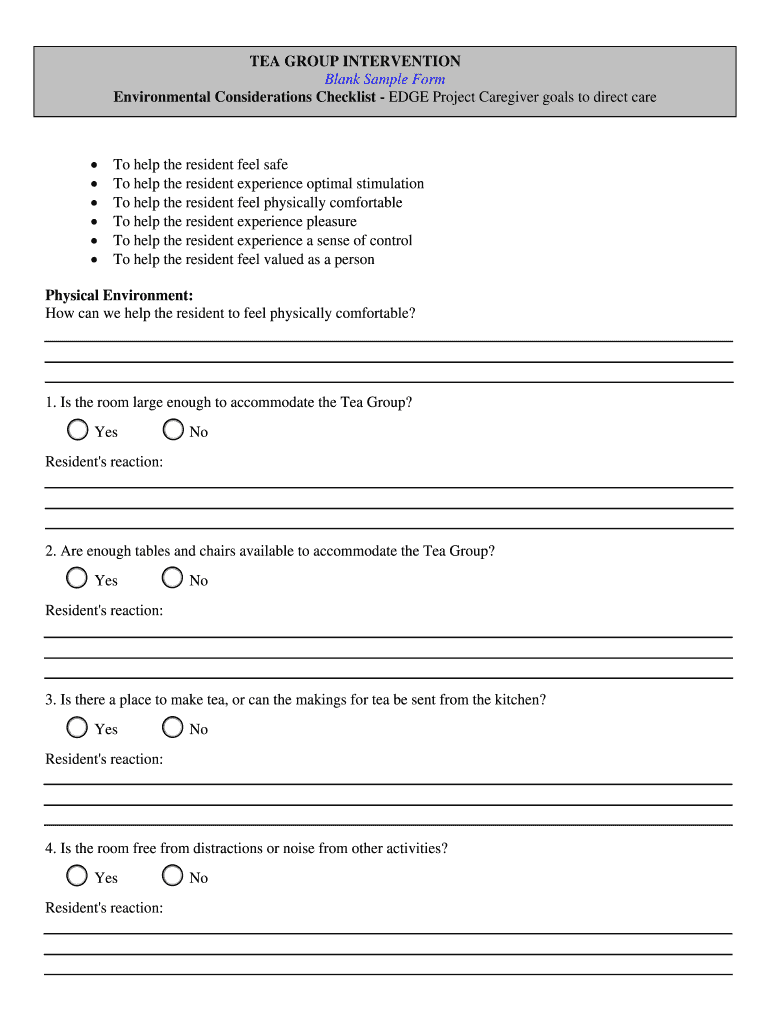
The Tea Group Intervention - Environmental Checklist - Blank Form is a specialized document used primarily in healthcare settings within New York. It is designed to facilitate the execution of interventions aimed at enhancing the well-being of individuals, particularly those with dementia, by ensuring their environment is conducive to participation in group activities. This form considers various environmental aspects such as physical, social, psychological, and cultural factors to create a supportive and enriching atmosphere for residents.
How to Use the Tea Group Intervention - Environmental Checklist
Using the Tea Group Intervention - Environmental Checklist involves several precise steps to ensure all environmental factors are adequately evaluated and addressed:
- Identify Participant Needs: Understand the specific requirements and preferences of the residents involved, focusing on those with cognitive impairments.
- Evaluate Environment: Use the checklist to assess factors like lighting, noise levels, and seating arrangements to ensure safety and comfort.
- Incorporate Social Elements: Ensure that social interactions are facilitated, and that cultural and psychological needs are acknowledged.
- Document Findings: Thoroughly record all observations and necessary changes needed to improve the environment.
- Implement Changes: Make adjustments based on the checklist to enhance the environment for the tea group intervention.
Steps to Complete the Tea Group Intervention - Environmental Checklist
Completing this form requires careful attention to detail across different sections:
- Review Physical Environment: Check temperature, lighting, and access routes for safety.
- Assess Social Setup: Determine the arrangement of participants, ensuring inclusion and ease of interaction.
- Psychological Considerations: Note the presence of items that can provide comfort or stimulation, like familiar objects.
- Cultural Relevance: Ensure activities and settings respect the diverse backgrounds of participants.
- Finalize and Share: Once completed, share the checklist with team members to ensure coordinated efforts in enhancing the environment.
Why Use the Tea Group Intervention - Environmental Checklist?
This checklist serves multiple purposes that are crucial for effective interventions:
- Enhances Resident Well-being: By creating a tailored environment, participants feel safer and more engaged.
- Facilitates Better Outcomes: A well-planned environment leads to improved participation and interaction during activities.
- Supports Comprehensive Care: The checklist provides a structured approach to considering all necessary environmental factors.
Key Elements of the Checklist
The checklist includes several essential components that guide the intervention planning:
- Safety Checks: Verification of physical safety elements such as handrails and clear pathways.
- Comfort Features: Assessment of seating, lighting, and ambient temperature.
- Social Dynamics: Considerations for seating arrangements that promote social engagement.
- Cultural Sensitivity: Ensuring materials and activities are culturally sensitive and inclusive.
Important Terms to Understand
Understanding the terms used in the checklist can provide clarity:
- Cognitive Stimulation: Activities that help maintain or improve cognitive function.
- Environmental Modifications: Changes made to the physical surroundings to enhance functionality and accessibility.
- Person-Centered Approach: Tailoring interventions to meet the individual needs and preferences of each resident.
Examples of Using the Checklist
Practical examples highlight the effectiveness of this form:
- Case Study in a Nursing Home: Implementing recommendations from the checklist resulted in a 30% increase in group activity participation.
- Community Center Adaptation: Adjustments made using the checklist improved the suitability of the environment for culturally diverse groups.
State-Specific Considerations in New York
Using the checklist within New York is influenced by specific state regulations and standards:
- Regulatory Compliance: Ensures interventions comply with state health regulations and guidelines.
- Adaptation for Urban Settings: Adjustments may include considerations for space limitations common in New York facilities.
Form Submission Methods
Although not a form with traditional submission requirements, the checklist should be distributed internally:
- Digital Sharing: Use a platform like DocHub to edit and share the checklist electronically.
- Physical Copies: In some settings, providing printed versions for team discussion can be beneficial.




