





Definition and Meaning of the Gala Sponsorship Letter
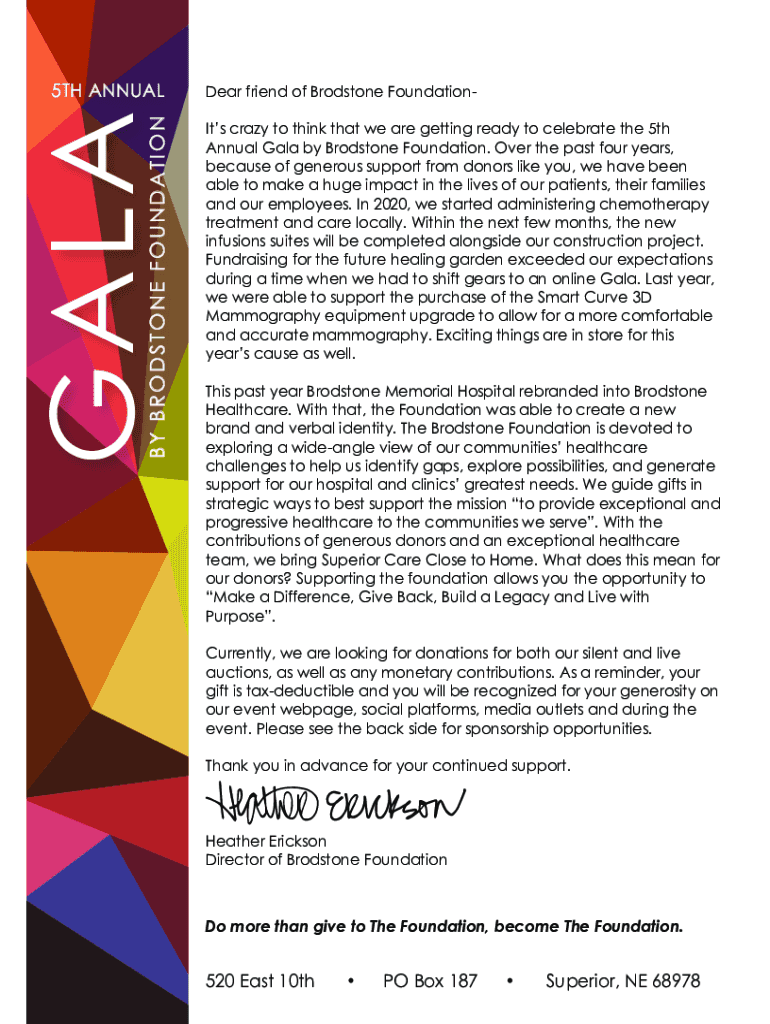
A Gala Sponsorship Letter is an official communication used to invite potential sponsors to support a gala event, typically for charitable purposes. This letter details the sponsoring opportunities available in connection to the event, aiming to secure financial or material support. Organizations such as the Brodstone Foundation often utilize these letters to reach out to businesses and individuals interested in community engagement and philanthropy. This document typically outlines the specific initiatives funded by sponsorships, such as new healthcare equipment or community programs, ensuring sponsors understand the impact of their contributions.
Key Elements of the Gala Sponsorship Letter
When constructing a Gala Sponsorship Letter, several crucial elements must be included to effectively communicate the purpose and benefits of sponsorship. First, the letter should open with an introduction to the event, including its name, date, and primary objectives. Subsequently, it should highlight the achievements and goals of the organizing body, emphasizing how the sponsorship will further these aims. Additionally, the letter outlines specific sponsorship levels or packages, each with distinct recognition opportunities such as logo placement or public acknowledgment. The concluding section usually includes a call to action and contact details for further discussion.
How to Use the Gala Sponsorship Letter
Utilizing a Gala Sponsorship Letter effectively involves strategic planning and execution. Businesses and nonprofit organizations should tailor the letter to align with the potential sponsor's interests and shared values. This often requires research into the sponsor's past philanthropy or community involvement. Personalizing the letter by addressing specific decision-makers and referencing previous interactions can increase the likelihood of a positive response. Once finalized, the letter can be distributed via email, mail, or in-person meetings, depending on the relationship with the prospective sponsor and the desired level of formality.
Steps to Complete the Gala Sponsorship Letter
Completing a Gala Sponsorship Letter involves a series of structured steps to ensure all necessary information is provided.
-
Identify Potential Sponsors: Begin by compiling a list of potential sponsors, focusing on organizations with a history of supporting similar causes or events.
-
Customize the Content: Tailor the content to align with each sponsor's interests and values. Mention specific reasons why their support would be impactful.
-
Include Sponsorship Levels: Clearly define each sponsorship level, including corresponding benefits and recognition opportunities.
-
Draft and Review: Draft the letter with a professional tone, and review it for clarity, grammatical accuracy, and completeness.
-
Send and Follow Up: Send the letter to identified contacts and set a schedule for follow-up communication to discuss sponsorship potential.
Who Typically Uses the Gala Sponsorship Letter
Gala Sponsorship Letters are primarily utilized by nonprofit organizations, foundations, and community groups that host fundraising events. These entities rely on sponsorships to fund initiatives ranging from healthcare improvement to educational programs. Additionally, businesses that plan large-scale events for corporate social responsibility purposes may also use sponsorship letters to engage partners and stakeholders. By reaching out to local businesses and philanthropically-minded individuals, organizers can secure the necessary support to meet their event-specific goals while forming valuable community partnerships.


Legal Use of the Gala Sponsorship Letter
Ensuring compliance with legal requirements is essential when using the Gala Sponsorship Letter. Organizations must make potential sponsors aware of the tax-deductible nature of their contributions in accordance with IRS guidelines. It is also important to outline any contractual obligations involved in the sponsorship, ensuring transparency and mutual understanding. Additionally, the letter should avoid guaranteeing specific financial returns, focusing instead on the community impact and recognition benefits for the sponsor. Organizations are advised to consult legal professionals to tailor the letter according to specific jurisdiction requirements.
Examples of Using the Gala Sponsorship Letter
Several real-world scenarios demonstrate how organizations effectively use Gala Sponsorship Letters. For instance, a healthcare foundation might highlight recent successes such as acquiring new medical equipment funded by previous galas, encouraging sponsors to contribute to subsequent advancements. Similarly, an art museum hosting an annual benefit event can present detailed sponsorship levels that include logo placement on promotional materials, special mentions during speeches, and exclusive invitations to pre-event receptions. These examples illustrate the structure and benefits articulated within the letter to attract sponsorship effectively.
Important Terms Related to the Gala Sponsorship Letter
-
Philanthropy: The desire or effort to promote the welfare of others, typically through financial aid or support.
-
Tax-Deductible: Contributions that can be deducted from taxable income, reducing the overall tax liability.
-
Sponsorship Levels: Different tiers of support offered to sponsors, each with its unique benefits and recognition opportunities.
-
Recognition Opportunities: Various methods of publicly acknowledging sponsors, such as logo placement, social media mentions, or speaking opportunities at events.
State-Specific Rules for the Gala Sponsorship Letter
The rules and regulations surrounding Gala Sponsorship Letters can vary by state, primarily in terms of tax implications and legal disclosures. For example, some states require detailed documentation about how sponsorship funds are allocated, as well as specific wording regarding tax-deductibility. Organizations must stay informed about local legislation and any changes that may affect the wording or distribution of sponsorship letters. Consulting state-specific guidelines ensures lawful practices and maintains the organization's reputation while fostering trust with potential sponsors.