







Definition & Meaning
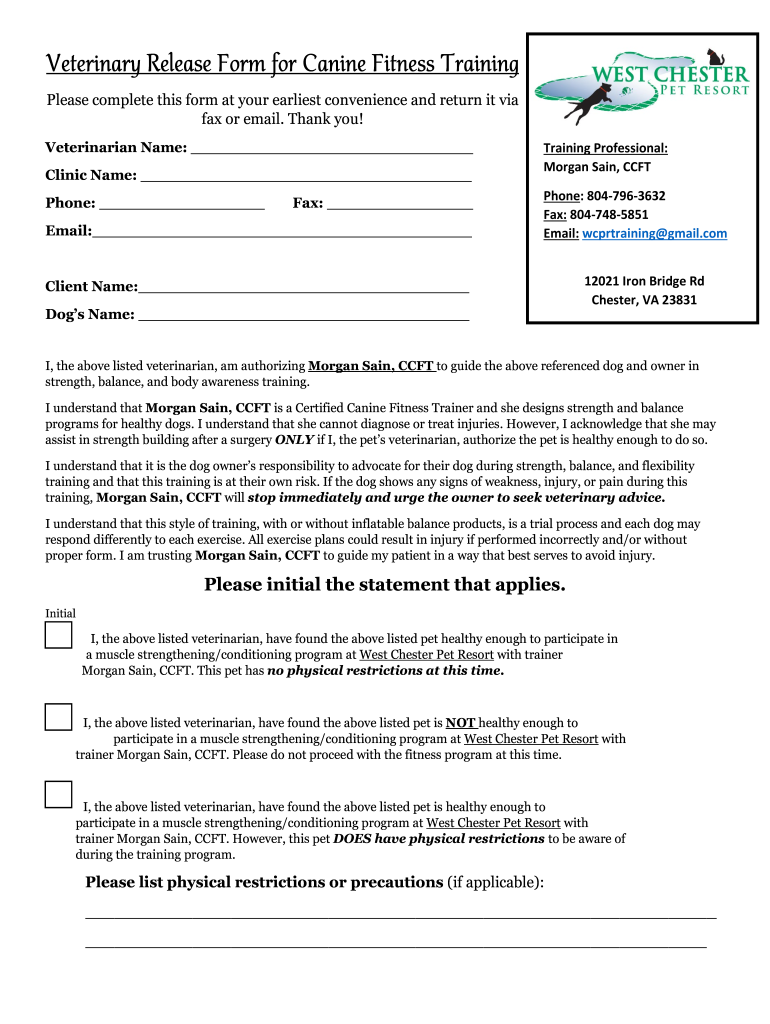
The Veterinary Release Form for Canine Fitness Training is a critical document designed to affirm a dog's health status before engaging in a fitness training program. It ensures veterinarians and owners collaboratively confirm that the canine is fit for specific physical activities that may be part of a training regimen. This form typically serves multiple purposes, such as communicating any medical restrictions the dog might have and documenting the veterinarian's consent for training, which is crucial for minimizing risks to the animal's health.
Key Elements of the Veterinary Release Form
This form contains several essential components that enable a detailed assessment of the dog’s readiness for fitness training. Key elements include:
- Veterinarian's Approval: Veterinarian’s signature or stamp, confirming that the dog is healthy enough to participate in the training program.
- Medical Restrictions: Any specific conditions or limitations that the veterinarian identifies, which the trainer must consider.
- Owner's Responsibility: Details regarding the owner’s role and responsibilities during the training process, including adhering to prescribed guidelines.
- Risks Disclaimer: Acknowledgment of potential risks associated with canine fitness training, which the owner must understand and accept.
These elements ensure all parties have a clear understanding of their roles and the dog's health needs.
Steps to Complete the Form
Completing the Veterinary Release Form for Canine Fitness Training requires careful attention to detail. Follow these steps for thorough documentation:
-
Consultation with Veterinarian: Schedule an appointment with your veterinarian to assess your dog's health.
-
Form Completion: Together with the veterinarian, fill out the form including sections on the dog's health status, any medical concerns, and approved types of exercises.
-
Signature Collection: Obtain signatures from both the veterinarian and the pet owner to validate the document.
-
Review Training Guidelines: Review any trainer-specific guidelines or requirements that need to be adhered to for the dog's safety.
-
Submit the Form: Provide a copy to the canine fitness trainer overseeing the program before starting any fitness activities.
Importance of Using the Form
Utilizing the Veterinary Release Form for Canine Fitness Training safeguards the health of dogs and provides a structured approach to canine fitness regimes. It serves as a legal document that:
- Ensures Medical Oversight: Verifies the involvement of a qualified veterinarian in assessing fitness suitability.
- Protects Trainers and Owners: Mitigates liability by outlining the risks and shared responsibilities concerning the dog's welfare.
- Formalizes Consent: Documents the mutual agreement between the veterinarian, owner, and trainer about the dog's participation in fitness activities.
Understanding these protective measures emphasizes the form’s role in maintaining canine health and trainer liability.
Legal Use of the Form
The Veterinary Release Form is a legally binding document in the context of canine fitness training. It must comply with U.S.-based legal standards for consent and liability. Important legal uses include:
- Evidence of Consent: Demonstrates that the owner agrees to let their dog partake in the fitness training, considering the health assessment by a vet.
- Risk Acknowledgment: The owner's acknowledgment of the inherent risks and understanding that they assume responsibility for these risks.
- Liability Limitation for Trainers: By outlining specific health restrictions and approved activities, the form helps protect trainers from legal actions stemming from accidents or health issues during training sessions.
Who Typically Uses the Form
This form is commonly used by various parties invested in the health and fitness of dogs. Key users include:
- Veterinarians: To provide professional health assessments before the start of training.
- Canine Trainers: To ensure that each participating dog is medically cleared for the specified activities.
- Dog Owners: To confirm and document their understanding and agreement with the health professional’s recommendations and the inherent risks associated.
This diverse usage necessitates detailed, accurate information to satisfy each user’s specific needs.


State-Specific Rules for the Form
While this form can be widely applied across the U.S., variations might exist due to state-specific legal requirements. For instance:
- Health Regulations: Some states may have specific guidelines regarding the types of documents needed for recording a dog’s health status.
- Training Restrictions: States may impose restrictions on certain types of training based on local laws concerning animal welfare.
Consulting local veterinary laws ensures compliance with any unique state-specific requirements.
Form Submission Methods
Submissions of the Veterinary Release Form for Canine Fitness Training generally occur through a few standard methods:
- Online Submission: Many training facilities accept digital versions of the form, allowing for quick and efficient submission through platforms such as DocHub.
- In-Person Drop-Off: Handing over a physical copy during the initial meeting with the trainer helps ensure all parties clearly understand the form contents.
- Mail Delivery: In cases where physical presence is not feasible, sending the completed form via mail to the trainer might be necessary.
These methods reflect the flexible compatibility the form maintains with diverse submission needs and technological access levels.




