
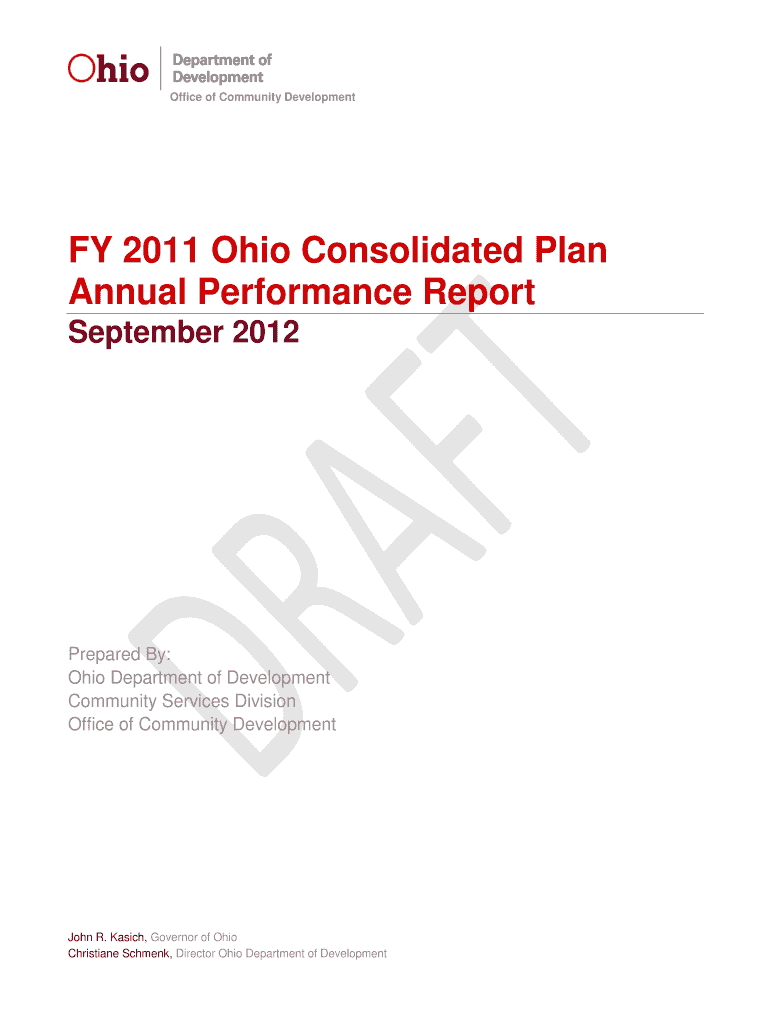







Understanding the FY 2011 Ohio Consolidated Plan Annual Performance Report
The FY 2011 Ohio Consolidated Plan Annual Performance Report is a comprehensive document prepared by the Office of Community Development. This report is designed to provide a detailed overview of Ohio’s progress in executing various housing and community development programs. These initiatives are primarily funded by both federal and state resources, aiming to address issues such as homelessness and affordable housing. The report outlines the specific allocation of funds, performance measures used to track progress, and data on beneficiaries.
Key Elements of the Report
-
Funding Allocations: The report details how resources are allocated across multiple programs.
-
Performance Measures: Key performance indicators to assess the implementation and impact.
-
Beneficiary Data: Information on the populations that benefit from the programs.
Important Programs Highlighted
The report covers several crucial programs, including:
- Community Development Block Grant (CDBG)
- HOME Investment Partnerships (HOME)
- Emergency Solutions Grant (ESG)
- Housing Opportunities for Persons With AIDS (HOPWA)
How to Utilize the Report
Understanding and utilizing the FY 2011 Ohio Consolidated Plan Annual Performance Report requires a strategic approach:
-
Identify Relevant Programs: Focus on programs that align with your interests or field of work.
-
Analyze Performance Metrics: Review the performance measures as they provide insights into the success and efficiency of the programs.
-
Understand Resource Allocation: Examine how funds have been distributed to assess priorities and focus areas.
Steps to Obtain the Report
To obtain this report, you can:
- Access it through the Ohio Office of Community Development’s website.
- Visit local government offices where the report might be available in hard copy.
- Request it via email or postal service from relevant state departments.
Key Users of the Report
The report is used by different stakeholders, including:
-
Housing Authorities: To assess state support and understand funding avenues.
-
Local Governments: To plan and coordinate community development efforts.
-
Non-profits and Community Organizations: To align their strategies with the state’s development goals.
Legal and Compliance Use
The report ensures compliance with fair housing laws and emphasizes the importance of ethical practices in implementing housing projects. It outlines:
-
Legal Obligations: Obligatory practices for state and local agencies.
-
Fair Housing Standards: Ensuring compliance with laws to prevent discrimination.
Examples of Report Utilization
Real-world scenarios include:
- A local government evaluating past allocation of CDBG funds to optimize future grant applications.
- A non-profit organization assessing the effectiveness of ESG programs to report to funders.
Digital vs. Paper Version
The report is available in both digital and paper formats. Digital versions offer:
-
Easy Access: Via email or website downloads.
-
Search Functionality: Enhanced navigation to specific sections.
In contrast, paper versions can be useful for physical archiving and in situations where digital access is limited.
Software Compatibility
If working with the digital version, ensure compatibility with document management software like DocHub, which allows for:
-
Editing and Annotation: Add notes or highlight essential sections.
-
Collaboration: Share with team members for collaborative review.
Performance Measures and Review
These metrics are essential to assess the year's accomplishments. Understanding these measures helps to:
- Evaluate effective use of funds.
- Identify areas needing improvement.
Benefits to Businesses and Non-profits
Certain types of entities benefit significantly from this report:
-
Businesses: Engaged in affordable housing construction gain insights into community needs.
-
Non-profit Organizations: Better align their missions with state initiatives.
By delving into these detailed elements, stakeholders can effectively leverage the FY 2011 Ohio Consolidated Plan Annual Performance Report to guide strategic decisions and foster community development.




