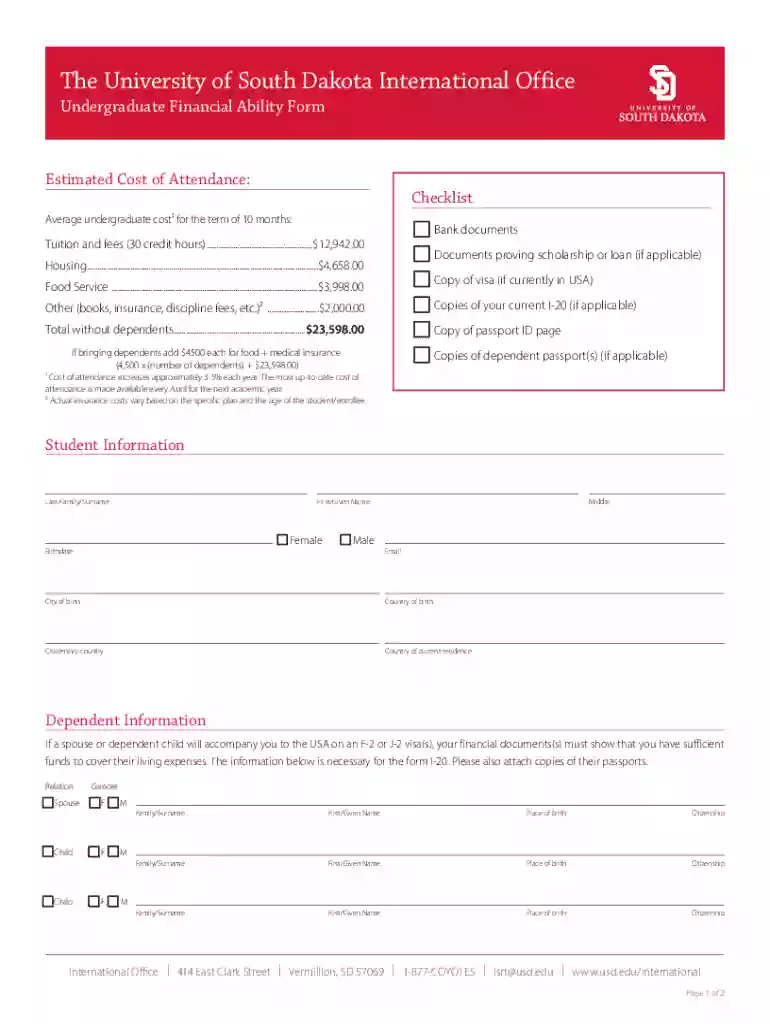
Definition of the Undergraduate Financial Ability Form
The Undergraduate Financial Ability Form is a crucial document required by many educational institutions, particularly in the United States, to assess the financial readiness of international students planning to pursue undergraduate studies. This form outlines the expected costs associated with attending the institution, such as tuition, housing, and other essential expenses. It requires students to demonstrate their financial capability to cover these costs for the duration of their study program.
Common Uses
- Admissions Process: Often part of the application package for prospective international students.
- Scholarship Consideration: Used by universities to determine eligibility for financial aid or scholarships.
- Visa Arrangements: Necessary for obtaining a student visa as proof of financial ability.
Key Components
- Estimated Costs: A breakdown of anticipated expenses such as tuition fees, room and board, and personal expenses.
- Financial Documentation: Types of documents students must provide, like bank statements or affidavits of support.
Steps to Complete the Undergraduate Financial Ability Form
Completing the Undergraduate Financial Ability Form requires careful attention to detail and accurate financial data. It ensures that international students are financially prepared to undertake their studies.
-
Gather Financial Documents: Collect all necessary documents that prove your financial capacity, including bank statements, affidavits, and sponsor letters.
-
Read Instructions Carefully: Review the form guidelines provided by the institution to ensure all sections are completed accurately.
-
Provide Detailed Information: Fill in all required fields such as personal data, cost estimates, and available financial resources.
-
Attach Supporting Documents: Ensure all financial documentation needed to verify your information is included.
-
Review and Confirm: Double-check all entries for accuracy before submission.
Tips for Accurate Form Completion
- Currency Conversion: If documentation is in a foreign currency, convert amounts to U.S. dollars using current exchange rates.
- Consistent Information: Ensure all documents submitted present consistent information about financial resources.
Key Elements of the Undergraduate Financial Ability Form
Understanding the critical components of the Undergraduate Financial Ability Form is essential for successful completion and submission.
Personal and Dependent Information
- Applicant Details: Name, contact information, and intended program of study.
- Dependents: Information about any family members accompanying the student, including their financial needs.
Financial Sources
- Self-Funding: Details about personal savings and assets.
- External Support: Information on financial support from family or sponsors, complete with affidavits and bank letters.
Certification of Support
- Sponsor’s Commitment: Documentation from individuals or organizations providing financial backing, certifying their commitment for the student's duration of study.
Required Documents for the Undergraduate Financial Ability Form
To complete the Undergraduate Financial Ability Form, students must provide a comprehensive set of supporting documents.
Checklist of Necessary Documents
- Bank Statements: Recent statements showing account balances and financial transactions.
- Affidavits of Support: Formal statements from sponsors affirming their financial support.
- Scholarship Letters: Documentation of any grants or scholarships awarded.
- Tax Returns: Copies of recent tax filings that exhibit financial capacity.
Best Practices for Document Submission
- Authenticity: All documents should be original or certified copies.
- Translation: Non-English documents must be accompanied by certified translations.
How to Obtain the Undergraduate Financial Ability Form
Obtaining the Undergraduate Financial Ability Form is the first step for prospective international students planning their study in the U.S.
Accessing the Form
- University Enrollment Services: Often available on the university's admissions webpage.
- Admissions Office: Request directly via email or during a campus visit.
- Online Portals: Many institutions offer downloadable forms from their official websites.
Common Access Issues
- Download Errors: Ensure a reliable internet connection when accessing the form online.
- Version Confusion: Verify that the form is for the correct academic year and program.
Who Typically Uses the Undergraduate Financial Ability Form
Understanding the typical users of the Undergraduate Financial Ability Form can provide context for its application and importance.

Major User Groups
- Prospective International Students: Primary users who need to demonstrate financial readiness.
- University Administrations: Use the form to evaluate and process applications.
Scenario Examples
- Transfer Students: Those moving between institutions and must verify continued financial capability.
- Scholarship Applicants: Students applying for financial aid who need to substantiate financial need.
Legal Use of the Undergraduate Financial Ability Form
Legality underpins the use of financial documentation for international students, emphasizing transparency and compliance.
Compliance Requirements
- U.S. Immigration Laws: Ensures international students comply with visa regulations regarding financial support.
- Institutional Policies: Aligns with university policy for student admissions and financial aid distribution.
Consequences of Misrepresentation
- Application Denial: Providing false information can lead to rejection of the university application.
- Visa Issues: Inaccurate financial documentation can affect visa approval or result in revocation.
Form Submission Methods (Online / Mail / In-Person)
The method used to submit the Undergraduate Financial Ability Form can vary depending on the institution and student preference.
Submission Options
- Online Submission: Allows for faster processing and immediate acknowledgment.
- Mail: Traditional method involving mailing hard copies to the university’s admissions office.
- In-Person: Direct submission during a campus visit, beneficial for immediate confirmation.
Best Practices for Submission
- Confirmation: Always request a receipt or confirmation of submission.
- Deadlines: Be mindful of submission deadlines to ensure timely processing.