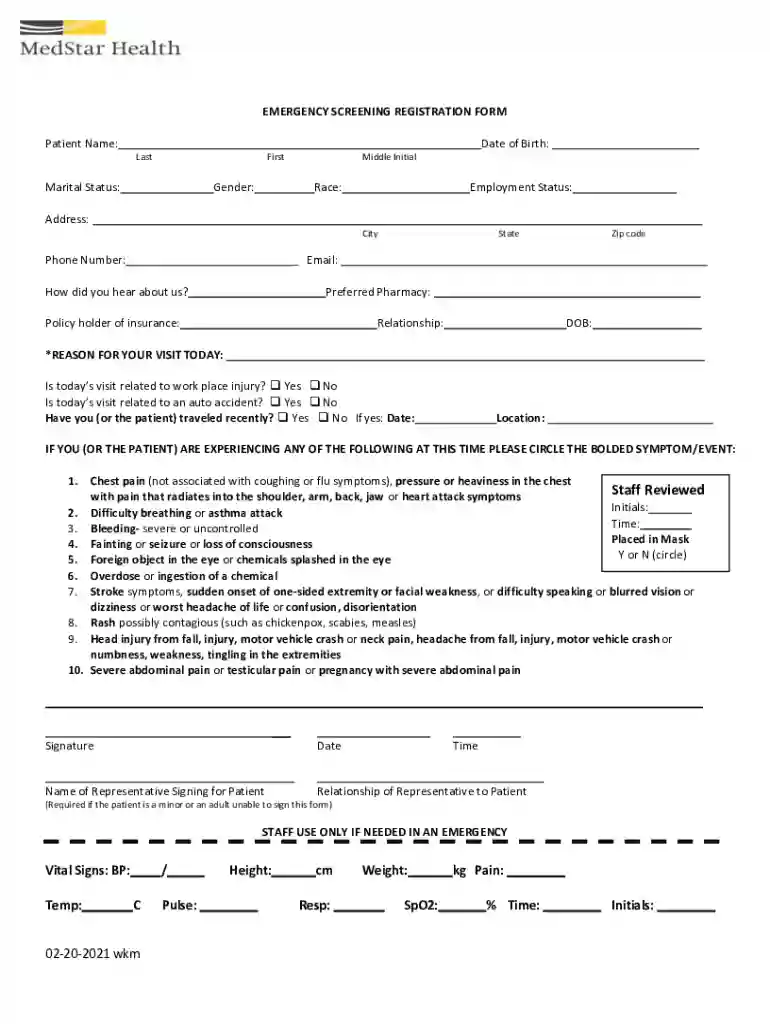
Definition & Purpose of the Emergency Screening Registration Form
The Emergency Screening Registration Form is a critical tool used by medical facilities to efficiently collect patient information during urgent care visits. It serves as a comprehensive document capturing personal details, medical history, consent for treatment, and other essential data relevant to emergency diagnosis and care. This form is designed to streamline the admission process, ensuring that healthcare providers have immediate access to crucial patient data, allowing for swift and effective medical intervention.
Essential Sections of the Form
- Personal Information: Captures basic data such as name, address, phone numbers, and emergency contact details, which are fundamental for patient identification and communication.
- Medical History: Encompasses past medical conditions, allergies, current medications, and surgical history to give healthcare professionals a holistic view of the patient's health background.
- Emergency Symptoms: A section where patients or guardians describe current symptoms or issues prompting the emergency visit, enabling more targeted medical assessments.
- Insurance Information: Collects the patient's insurance provider details, policy numbers, and other relevant financial data to facilitate billing and insurance claims processing.
- Consent for Treatment: Provides a space for patients to authorize medical treatment, ensuring legal and informed consent before any procedure is performed.
- Authorization for Release of Medical Information: Allows patients to specify if and how their medical information can be shared with other healthcare providers or insurance companies, safeguarding privacy and compliance with regulations such as HIPAA.
How to Use the Emergency Screening Registration Form
The effective use of the Emergency Screening Registration Form entails several systematic steps to ensure comprehensive and accurate information capture.
Step-by-Step Process
- Initiation: Once a patient arrives at the healthcare facility, staff provide them with the form to begin the registration process.
- Form Completion: Patients or their guardians fill out the form, ensuring that all sections are accurately completed. It's crucial to include all relevant details to avoid delays in diagnosis and treatment.
- Submission: The completed form is submitted to the healthcare facility's front desk or directly to the attending medical staff for review and analysis.
- Verification: Facility staff may verify the details provided, especially regarding insurance information and medical history, to ensure there are no discrepancies.
- Integration with Digital Systems: If the facility uses electronic health records (EHR), the form's data is entered into the system to maintain a digital record of the visit and streamline subsequent medical processes.
Obtaining the Emergency Screening Registration Form
Obtaining an Emergency Screening Registration Form is typically straightforward, with several methods available to patients and healthcare providers.
Sources for Form Acquisition
- Medical Facility Front Desk: The most common method is for patients to fill out the form upon arrival for their emergency appointment.
- Healthcare Provider Websites: Some facilities offer downloadable versions of the form on their websites, allowing patients to complete it beforehand for convenience.
- Electronic Health Record Systems: In digitally advanced facilities, the form may be part of the integrated patient intake process within the EHR system.
- Patient Portals: For establishments with online patient platforms, the form can often be accessed and submitted electronically, speeding up the registration process.
Steps to Complete the Emergency Screening Registration Form
Completing the Emergency Screening Registration Form requires attention to detail to ensure all necessary information is collected accurately.
Detailed Completion Instructions
- Begin with Personal Information: Fill in personal details including full name, date of birth, and contact information.
- Provide Medical History: Enter any known conditions, ongoing treatments, and allergies. It's imperative to be honest and thorough in this section as it directly affects medical care.
- Outline Emergency Symptoms: Clearly describe the symptoms or issues you are experiencing that prompted the visit. Be specific and include onset time and severity.
- Fill Out Insurance Information: Insert your insurance provider's name, policy number, and any other required financial data to avoid billing issues later.
- Sign the Consent Sections: Review consent statements carefully and sign to authorize treatment and information sharing, ensuring you understand the legal implications.
Key Elements of the Emergency Screening Registration Form
The Emergency Screening Registration Form includes several integral elements that cater to the primary needs of both patients and healthcare providers.
Core Components
- Comprehensive Patient Data Collection: Covers all necessary demographics, ensuring communication lines are open throughout the treatment process.
- Detailed Health History: Provides clinicians with a framework to understand pre-existing conditions that may impact current health situations.
- Immediate Symptoms Description: Offers a quick insight into the patient's condition, facilitating rapid medical response.
- Consent Authorizations: Protects both the patients' rights and the healthcare providers by securing informed consent for procedures and data sharing.
Legal Use and Compliance of the Emergency Screening Registration Form
The legal framework governing the usage of emergency screening registration forms aims to protect both patients and healthcare providers.
Legal Considerations
- Consent for Treatment: Ensures patient awareness and authorization of medical procedures, safeguarding against unauthorized treatments.
- HIPAA Compliance: Adheres to patient privacy and confidentiality regulations, ensuring information is shared only with authorized parties.
- Insurance Claims: Accurate completion ensures that claims can be processed without delay, avoiding potential legal and financial complications.
Who Typically Uses the Emergency Screening Registration Form
This form is predominantly used by a diverse range of parties involved in the urgent healthcare process.

Typical Users
- Patients: Individuals seeking urgent medical attention complete the form to expedite treatment.
- Guardians or Caregivers: Fill out the form on behalf of minors or patients unable to do so due to medical conditions or incapacitation.
- Healthcare Providers: Use the provided information to assess patient conditions and plan interventions accordingly.
- Administrative Staff: Manage and verify form details to ensure accuracy and facilitate a smooth registration process.
State-Specific Rules for the Emergency Screening Registration Form
While the form is standard across many facilities, certain state-specific regulations impact its completion and processing.
Regional Variations
- State Regulations: Different states may have varying requirements regarding the information needed on the form, influenced by local healthcare laws and regulations.
- Insurance Protocols: State-specific insurance policies can dictate the type of information required for processing emergency healthcare coverage.
- Consent and Legal Age: The legal age for consent varies by state, affecting who can legally authorize treatment and provide information on the form.