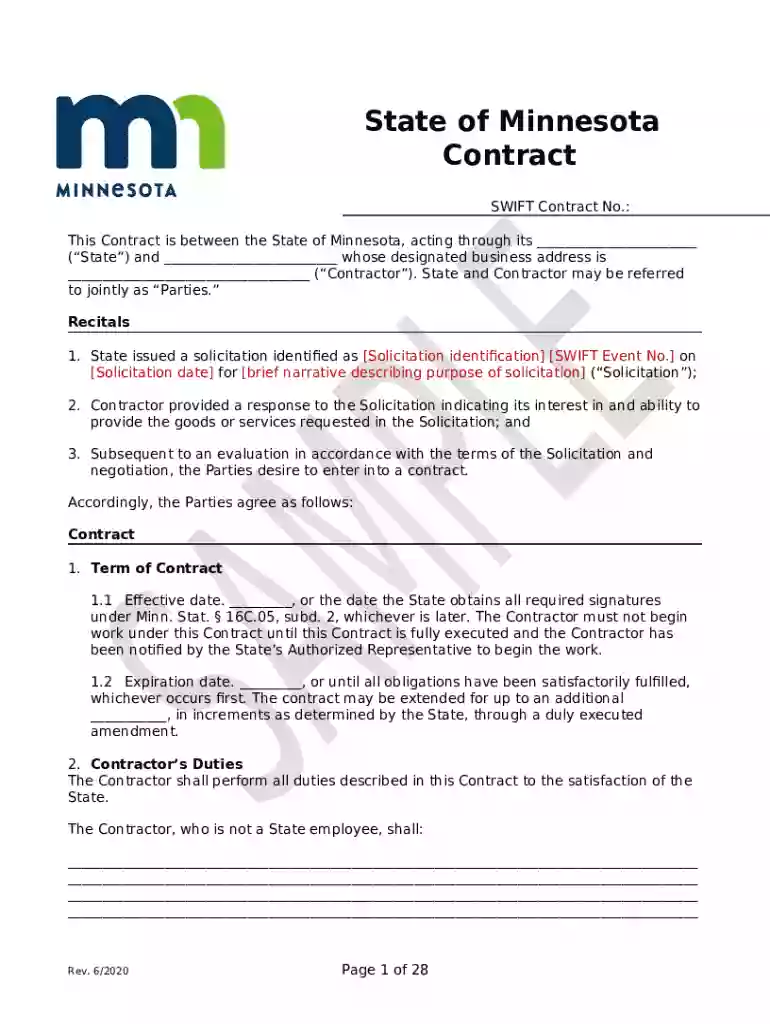
Definition and Importance
The "State of Minnesota, Department of Administration" refers to the state agency responsible for providing essential administrative services and support to other state entities. This department plays a vital role in ensuring the efficient and lawful functioning of the government by managing resources, facilitating procurements, and overseeing construction projects. It also provides guidance on compliance with state laws and regulations, thereby safeguarding the integrity of public operations.
Key Functions
- Resource Management: The department oversees the allocation and utilization of state resources, ensuring optimal efficiency and accountability.
- Procurement Services: It manages the procurement process for goods and services required by various state departments, promoting fair competition and transparency.
- Project Oversight: The department is responsible for supervising state construction projects, ensuring adherence to schedules, budgets, and quality standards.
Steps to Complete Duties with the Department
To fulfill responsibilities associated with the Department of Administration, certain steps must be adhered to, whether you're a contractor or a government entity involved in projects or services with this department.
Procedure
- Identify Needs: Determine the specific services or goods required for your project or operation.
- Submit Proposal: Prepare and submit a detailed proposal or application outlining your capabilities and compliance with state requirements.
- Review Process: Your submission will be reviewed by the department to ensure it meets all necessary criteria.
- Contract Execution: Upon approval, a formal contract will be executed, detailing the terms and conditions of the engagement.
- Implementation: Conduct operations as per the contract, maintaining diligent records and communication with the department.
- Performance Evaluation: The department will evaluate performance against the agreed-upon standards and deliverables.
How to Obtain Necessary Services or Support
Obtaining services or support from the Department of Administration requires engaging in a systematic process that aligns with state protocols.
Key Steps
- Application Submission: Engage with the department by submitting the required forms and applications that specify your service needs.
- Eligibility Check: Ensure your organization or project meets the eligibility criteria set by the department for the required services.
- Funding and Grants: Explore available funding opportunities or grants administered by the department for qualifying projects.
- Consultation Services: Leverage advisory services offered by the department to enhance project planning and execution.
Important Terms and Conditions
Understanding and adhering to the terms set forth by the Department of Administration is crucial for maintaining compliance and successful project execution.
Notable Terms
- Contract Duration: Specifies the time frame over which the project or services will occur, including any milestones or deadlines.
- Payment Terms: Details the compensation structure, including payment schedules, invoicing procedures, and financial accountability.
- Compliance Obligations: Outlines legal and regulatory standards that must be followed, including data protection and privacy regulations.
Legal Framework and Compliance Requirements
Navigating the legal landscape associated with the Department of Administration entails understanding several compliance obligations.
Compliance Aspects
- State Laws and Regulations: Ensure all activities comply with state legislation specific to procurement, labor, and environmental standards.
- Data Protection: Adhere to privacy laws governing the management and sharing of any sensitive or personal information.
- Audit Trails and Accountability: Maintain comprehensive documentation and records to facilitate audits and demonstrate compliance.
Key Elements to Consider
Several critical components must be recognized for effective interaction with the Department of Administration.
Core Components
- Performance Standards: Define the criteria for project success and the quality of deliverables expected by the department.
- Intellectual Property Rights: Establish the ownership terms of any intellectual property created during the contractual engagement.
- Termination Conditions: Specify under what circumstances and processes a contract can be terminated, including any penalties or remedial actions.
Examples and Case Studies
Illustrating the functionality and benefits provided by the Department of Administration through real-world examples and case studies can offer valuable insights.
Practical Scenarios
- Infrastructure Project Management: Review how the department aided a large-scale public infrastructure project, ensuring efficient use of resources.
- Resource Allocation Strategy: Analyze a case where optimized resource distribution led to cost savings and improved service delivery.
- Procurement Process Reform: Highlight an instance of reform in procurement processes that led to increased transparency and competitive bidding.
Digital vs. Paper Version
The choice between using digital or paper means for interacting with the Department of Administration involves understanding the advantages and limitations of each format.
Comparative View
- Digital Form: Allows for quicker submission, processing, and updates, reducing administrative burdens and enhancing efficiency.
- Paper Form: Provides a tangible record but may entail longer processing times and increased susceptibility to errors or misplacement.