





Definition and Meaning of the Board and Train Agreement
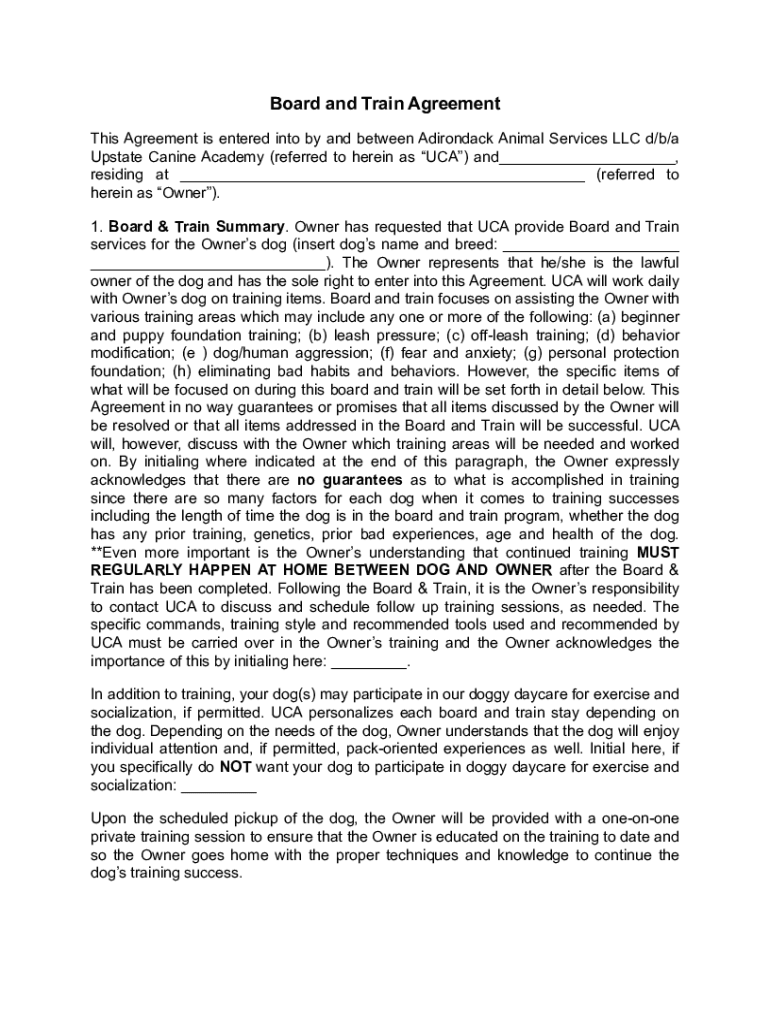
The Board and Train Agreement - Americas Canine Educator is a formal contract that outlines the terms and conditions between a dog owner and a canine training service provider. The agreement specifies the training objectives, financial obligations, care guidelines, and responsibilities of both parties. By defining the terms, the agreement ensures clear communication and mutual understanding, helping to mitigate potential disputes. The contract serves as a crucial document in delineating expectations and responsibilities, thus providing a framework for a structured and effective training program.
Purpose and Benefits
- Clarity in Training Goals: Specifying target behaviors and skills.
- Financial Transparency: Outlining payment terms and conditions.
- Responsibility Allocation: Defining roles and obligations for both parties.
- Legal Protection: Providing a basis for legal recourse if terms are not met.
Key Elements of the Board and Train Agreement
The Board and Train Agreement is a comprehensive document that covers several critical aspects to ensure a seamless partnership between the canine training service and the pet owner.
Training Focus
- Behavioral Objectives: Specific skills and behaviors to be instilled in the dog.
- Methods and Techniques: Training methodologies used to achieve goals.
Financial Details
- Payment Structure: Deposit, installment, and full payment schedules.
- Cancellation Policy: Conditions for refunds or transfers.
Care and Socialization
- Environmental Enrichment: Activities and arrangements for dog well-being.
- Socialization Plans: Interaction with other dogs and people.
Steps to Complete the Board and Train Agreement
Completing the Board and Train Agreement involves several steps to ensure that all parties fully understand and consent to the outlined terms.
- Initial Consultation: Meet with the trainer to discuss the dog's needs.
- Agreement Review: Carefully read and analyze each section of the contract.
- Signatures: Both owner and trainer sign the agreement to signify acceptance.
- Payment Arrangement: Settle initial deposits or full payment as required.
Common Considerations
- Review History: Verify previous training outcomes and testimonials.
- Clarify Ambiguities: Seek clarification on any vague or unclear terms.
Legal Aspects of the Board and Train Agreement
Given that this agreement is a legal document, it is essential to understand the legal implications it entails.
Liability Waivers
- Injury Provisions: Limits liability for injuries sustained during training.
- Behavior Guarantees: Acknowledgment that training outcomes are not guaranteed.
Compliance and Enforcement
- Dispute Resolution: Processes for resolving contractual disagreements.
- Applicable Laws: State or federal laws governing animal services contracts.
Important Terms Related to the Board and Train Agreement
This agreement incorporates specific terminologies crucial for understanding rights and obligations.
Contractual Terminology
- Indemnification Clause: Protects one party from potential lawsuits.
- Force Majeure: Conditions under which the contract may be voided due to unavoidable events.
Training-Specific Terms
- Positive Reinforcement: Reward-based techniques to encourage behavior.
- Aversive Methods: Discouraged techniques involving discomfort to shape behavior.
Who Typically Uses the Board and Train Agreement?
The Board and Train Agreement is primarily used by dog owners seeking expert assistance in canine training and service providers specializing in these services.


Typical Users
- Individual Dog Owners: Owners of dogs requiring behavioral modifications.
- Professional Dog Trainers: Entities offering specialized dog training services.
- Animal Shelters: Institutions aiming to improve adoptability of dogs.
State-Specific Rules for the Board and Train Agreement
The application and enforceability of the agreement can vary depending on the state regulations concerning animal services.
State Guidelines
- Licensing Requirements: Specific certifications required for trainers.
- Health Regulations: Vaccination and care protocols mandated by state law.
Variability in Terms
- Consumer Protection Laws: States may have distinct rules on contract termination and refunds.
- Mandatory Reporting: States may require reporting of incidents occurring during training.
Penalties for Non-Compliance
Failure to adhere to the terms set out in the Board and Train Agreement can result in significant consequences for either party.
Possible Consequences
- Financial Repercussions: Forfeit of deposits or additional charges.
- Legal Action: Potential lawsuits for breach of contract or negligence.
- Service Termination: Sudden termination of training services.