




01. Edit your form online
Type text, add images, blackout confidential details, add comments, highlights and more.

Type text, add images, blackout confidential details, add comments, highlights and more.

Draw your signature, type it, upload its image, or use your mobile device as a signature pad.

Send it via email, link, or fax. You can also download it, export it or print it out.
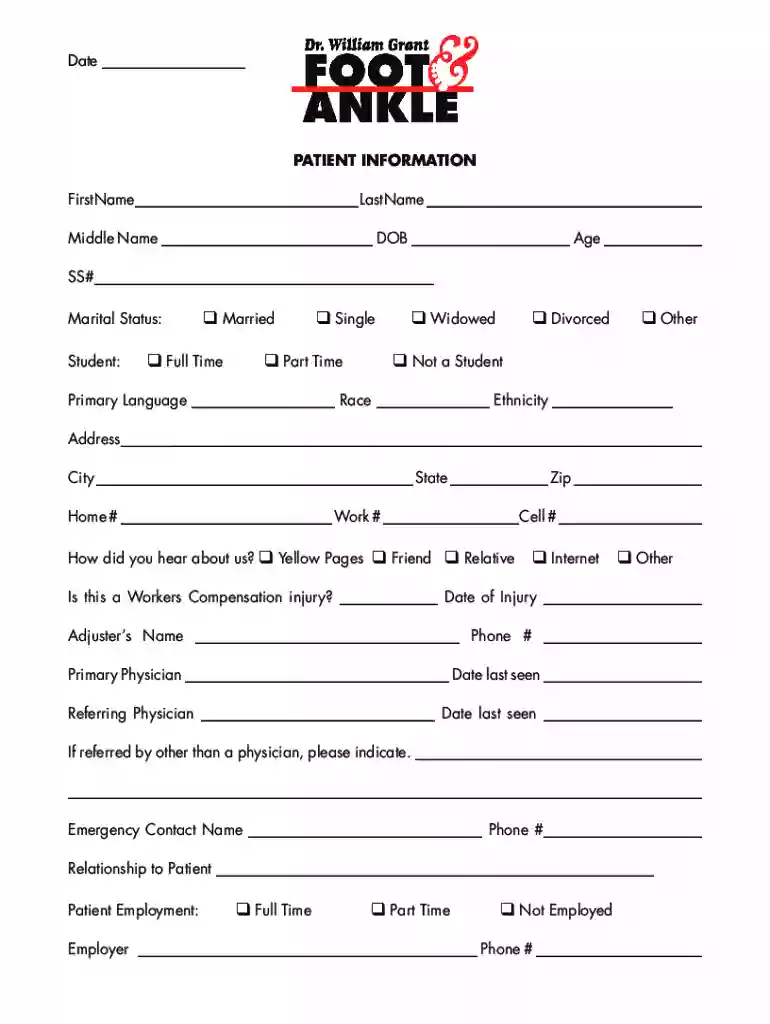
The "Patient Information Sheet Templates at" DocHub encompass standardized forms designed to gather essential patient details in a healthcare setting. These templates facilitate the collection of personal and medical information critical for providing high-quality patient care. Primarily, they serve medical professionals by streamlining the intake process and ensuring all necessary data is captured efficiently and accurately. These templates are particularly useful in environments where consistency and compliance are of utmost importance, such as hospitals, clinics, and private practices.
To use the Patient Information Sheet Templates effectively, begin by customizing them to fit your specific organizational needs. Start by reviewing the template to ensure it includes all relevant sections, such as personal details, medical history, and emergency contact information. You may add or modify fields as needed. Once the form is customized, distribute it to patients via email, enabling them to fill it out digitally before their appointment. This reduces waiting times and allows for an efficient check-in process.
Completing the Patient Information Sheet Templates involves a systematic approach to ensure every section is accurately filled out. Here are the steps:
Open the Template: Access the form in DocHub or your preferred document editor.
Patient Identification: Enter personal details such as full name, date of birth, and contact information.
Medical History: Complete sections on past medical conditions, surgeries, and current medications.
Referring Physician: Include details of any physician who referred the patient, if applicable.
Emergency Contacts: Provide names and contact details for emergency contacts.
Review: Double-check all entered information for accuracy and completeness.
Submit: Save the completed form and submit it to the healthcare provider via preferred methods such as email or a secure patient portal.
The templates cover several essential areas necessary for comprehensive patient records. Important elements include:
Each of these elements ensures healthcare providers have a well-rounded view of the patient's health background, facilitating informed medical decisions.
These templates are predominantly used by healthcare providers, including:


The use of Patient Information Sheet Templates is governed by legal and ethical standards to protect patient confidentiality and ensure compliance with regulations such as the Health Insurance Portability and Accountability Act (HIPAA):
Legal adherence ensures that both patient rights and institutional regulations are respected throughout the process of collecting and handling patient data.
While the templates provide a standard framework, certain states may have specific requirements:
Practitioners should remain aware of these state-specific rules to ensure compliance and avoid legal complications.
The digital version of the Patient Information Sheet Templates offers several advantages over paper forms:
However, the paper version remains a valid option for facilities lacking digital infrastructure, ensuring all patient demographics can be accommodated.
At DocHub, your data security is our priority. We follow HIPAA, SOC2, GDPR, and other standards, so you can work on your documents with confidence.

Jun 30, 2026 The templates on this page are appropriate for studies that require expedited or full committee review. There are separate consent templates
Mar 16, 2015 ServicePRO offers the ability to link these tasks together. From the Design tab, click on the Project Templates option .


