Salvage branding of New York State registered vehicles 2026

Get Form
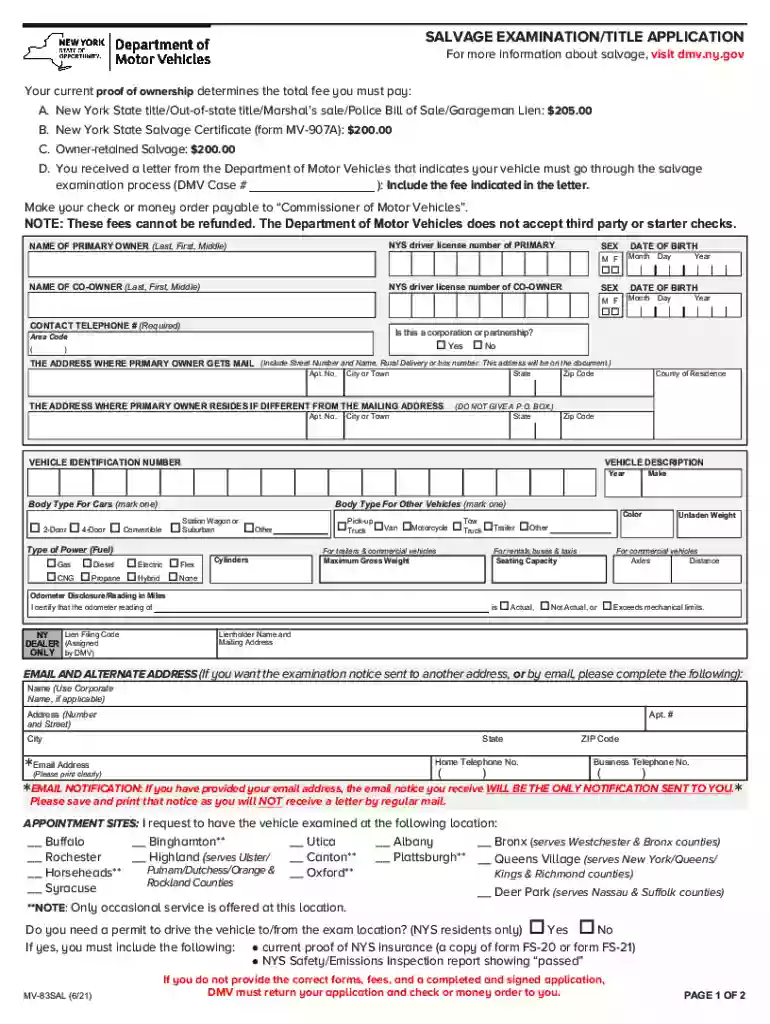
Salvage branding of New York State registered vehicles Preview on Page 1

Here's how it works

01. Edit your form online
Type text, add images, blackout confidential details, add comments, highlights and more.

02. Sign it in a few clicks
Draw your signature, type it, upload its image, or use your mobile device as a signature pad.

03. Share your form with others
Send it via email, link, or fax. You can also download it, export it or print it out.

Definition and Meaning

Salvage branding of New York State registered vehicles refers to the process of assigning a "salvage" title to vehicles that have been significantly damaged and deemed uneconomical to repair. This categorization helps identify vehicles that have undergone considerable changes in value and safety. In New York State, a vehicle receives a salvage branding if the repair costs exceed 75% of its pre-accident market value. This designation is crucial for potential buyers or insurers to understand the vehicle's history and current condition.

How to Use the Salvage Branding

Vehicle owners and potential buyers utilize the salvage branding to assess the safety, value, and insurance eligibility of a vehicle. By understanding this designation, individuals can make informed decisions about purchasing, insuring, or repairing a vehicle. Salvage-branding awareness is crucial during transactions to ensure that buyers are informed of the vehicle's history.

Practical Examples:

  • Car Dealerships: Before reselling, confirming if a vehicle holds a salvage title is essential for disclosure to buyers.
  • Insurance Companies: Determine eligibility for coverage; some insurers may not cover salvage-titled vehicles due to higher risk.

Steps to Complete the Salvage Branding Process

  1. Vehicle Inspection: Arrange for a salvage examination to determine the extent of damage and repair costs.
  2. Documentation Submission: Submit necessary documents, including proof of ownership, completed application forms, and evidence of repairs, to the Department of Motor Vehicles (DMV).
  3. Fee Payment: Pay the stipulated fees for the salvage branding process, which varies based on vehicle type and damage extent.
  4. Appointment Scheduling: Schedule an examination appointment with an authorized DMV inspector to assess the vehicle.
  5. Receive Salvage Certification: Upon successful completion of the process, receive a certificate designating the vehicle as salvage.

Key Considerations:

  • Accurate Information: Providing precise details prevents application rejection.
  • Timing: Prompt submission and scheduling can expedite the process.

Why Should You Salvage Brand a Vehicle?

This process is essential for maintaining transparency in vehicle transactions and ensuring road safety. Salvage branding aids in:

  • Prevention of Frauds: It eliminates the risk of buyers unknowingly purchasing damaged vehicles at full value.
  • Insurance Alignment: Aligns vehicle status with suitable insurance policies, preventing coverage issues in the future.

Required Documents

Gathering and submitting the correct documents is crucial for a smooth salvage branding process. Requirements generally include:

  • Proof of Ownership: Submit the title of the vehicle.
  • Completed Application Form: Fill out the official salvage inspection forms accurately.
  • Repair Receipts: Provide detailed receipts for all repairs conducted post-accident.
  • Personal Identification: Government-issued ID for verifying owner identity.

Importance of Accurate Reporting

Accurate documentation ensures seamless processing and prevents potential application denial. Discrepancies between reported and actual vehicle conditions can lead to legal complications or increased scrutiny.

Legal Usage and Compliance

Adhering to New York State's regulations on salvage branding ensures legal compliance and bids well in vehicle-related transactions. Owners must adhere to DMV guidelines, as non-compliance can result in penalties or legal action.

Legal Implications:

  • Vehicle Sales: Legally required to disclose salvage status to potential buyers.
  • Insurance Claims: Failures in reporting can result in denial of claims or policy cancellation.

State-Specific Regulations

New York has specific rules governing salvage branding, including:

  • Damage Threshold: Repair costs must surpass 75% of the vehicle's pre-accident market value.
  • Inspection Requirements: Vehicles must pass a DMV-led inspection process before receiving a salvage title.
  • Titling Post-Repair: Post-repair inspections must validate the safety of the vehicle before issuing a rebuilt title.

Key Elements of the Salvage Branding Process

Critical factors include damage assessment, the cost of repairs relative to the vehicle value, and rigorous inspection standards by the DMV. Ensuring compliance with these elements is necessary for achieving a legally recognized salvage status.

Example Case:

  • High-Impact Collision: A car involved in a major accident goes for repairs costing 80% of its original value; salvage branding is mandated to signify its significant alteration in status.
be ready to get more

Complete this form in 5 minutes or less

Get form

Got questions?

We have answers to the most popular questions from our customers. If you can't find an answer to your question, please contact us.
Contact us
Perhaps the biggest risk of buying a car with a salvage title is safety. These vehicles have often sustained severe structural damage in an accident, the extent of which you may never know. The repair shop may have taken shortcuts or used cheaper parts to fix the vehicle. Also, some damage may not be immediately known.
New York Salvage Vehicle Law A vehicle is considered a salvage vehicle if any of the following conditions are met: The cost to repair the vehicle exceeds 75% of the cars pre-damage value. The certificate of title states the car is a wreck vehicle.
A branded title covers a broader range of potential issues, while a salvage title falls under the branded title designation as a vehicle thats been labeled as a total loss by the insurance company.

Security and compliance

At DocHub, your data security is our priority. We follow HIPAA, SOC2, GDPR, and other standards, so you can work on your documents with confidence.

Learn more
ccpa2
pci-dss
gdpr-compliance
hipaa
soc-compliance
be ready to get more

Complete this form in 5 minutes or less

Get form