Definition of 14 208 Amendment of Invitation for Bids Acquisition
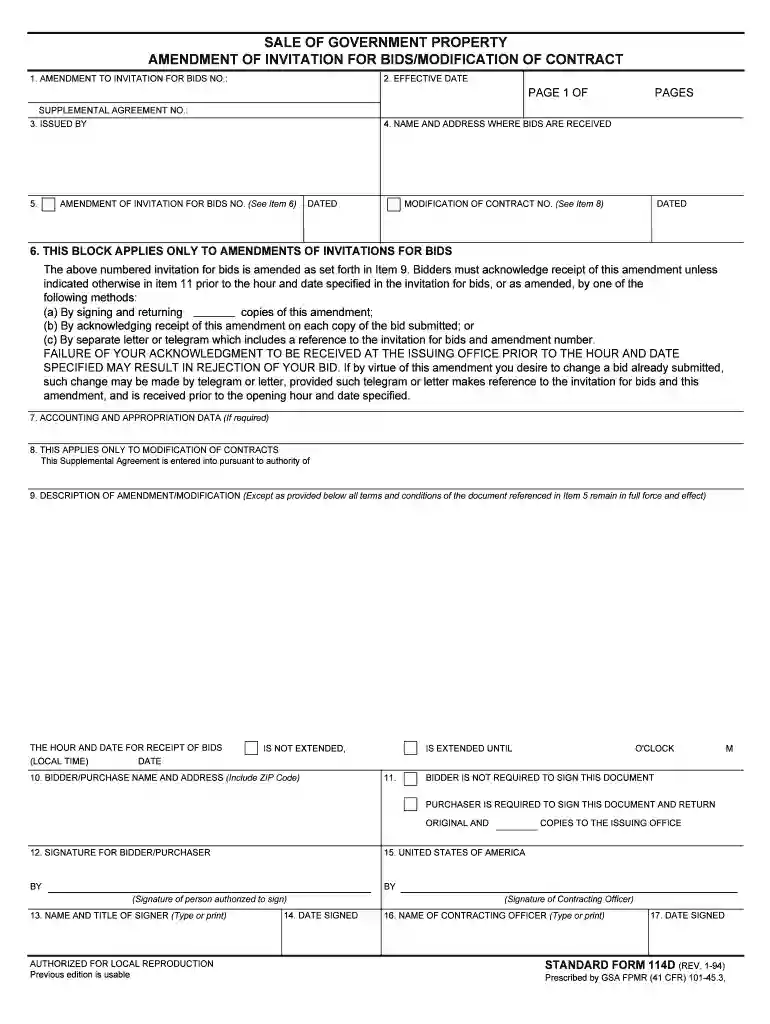
The 14 208 Amendment of Invitation for Bids Acquisition is a formal modification to an existing solicitation issued by a government agency responsible for acquiring property or services. This amendment allows for changes in the initial request for bids, which may involve adjustments in the scope of work, bidding schedules, or contractual terms. It essentially acts as an update or revision that bidders need to acknowledge and factor into their proposals to remain compliant and eligible for consideration.
Importance of Acknowledging Amendments
- Failure to acknowledge receipt of the amendment can result in bid rejection.
- Timely acknowledgment ensures all bidders are on equal footing with complete information.
- It allows bidders to adjust their proposals, ensuring alignment with new requirements.
Steps to Complete the 14 208 Amendment of Invitation for Bids Acquisition
Completing the amendment process involves a series of strategic steps bidders must follow:
- Review the Amendment Details: Thoroughly read the amendment to understand changes, additional requirements, and new deadlines.
- Acknowledge Receipt: Formally acknowledge receiving the amendment as specified in the instructions, often requiring a signature or similar acknowledgment.
- Adjust Bid Proposal: Revise your bid submission to reflect the changes prompted by the amendment. This might include pricing adjustments or logistical alterations.
- Submit Revised Proposal: Ensure that the revised bid is submitted within the new deadline issued in the amendment.
Key Considerations
- Double-check revisions to ensure no discrepancies or missing responses.
- Ensure all changes reflect a comprehensive understanding of the new requirements.
Key Elements of the 14 208 Amendment
Several critical elements are present in an amendment document:
- Modified Terms and Conditions: Outlines changes in the original bid terms that competitors must adhere to.
- Schedule Adjustments: Updates deadlines or timelines which directly impact project delivery and execution plans.
- Clarifications and Corrections: Resolves ambiguities or incorrect information from the original invitation.
Impact on Contractual Obligations
- Changes may affect key contract deliverables and performance metrics.
- Bidders must align their resources and capabilities to meet new obligations.
Legal Use of the 14 208 Amendment
The amendment adheres to legal standards and procurement policies that ensure transparency and fairness in the bidding process:
- Compliance with the Federal Acquisition Regulation (FAR): Ensures adherence to standardized government procurement rules.
- Due Process and Fair Competition: Guarantees that all eligible parties have equal access to updated bidding criteria.
Common Legal Terms Found in Amendments
- Offeror: Refers to the entity submitting a bid.
- Solicitation: The original request for bids before the amendment.
- Modification: Any official change to the solicitation terms.
Important Terms Related to the Amendment
Understanding specific terminology used in the amendment ensures clear communication and compliance:
- Bid Security: Financial assurance submitted with a bid.
- Invitation for Bids (IFB): The initial request for public bidding on a government contract.
- Responsive Bid: A bid that adequately complies with all conditions and requirements set out in the solicitation.
Who Typically Uses the 14 208 Amendment
The amendment process is usually relevant to:

- Government Agencies: Responsible for issuing invitations for bids as part of procurement or asset disposition.
- Private Contractors and Vendors: Entities competing for government contracts who need to adjust their bids based on modifications.
- Legal Consultants: Professionals advising clients on compliance and strategic responses to amendments.
Impact on Different Business Types
- Large Corporations: Often have dedicated teams to manage bid compliance and amendments.
- Small Businesses: Must efficiently manage resource allocation to comply with new terms swiftly.
Examples of Using the 14 208 Amendment
Several real-world scenarios illustrate the amendment process in action:
- Construction Contracts: Modifications to material specifications, requiring re-assessment of project costs.
- IT Procurement: Changes in software requirements leading to technical proposal adjustments.
- Service Contracts: Altered service level agreements impacting resources and delivery timelines.
Practical Effects
- Allows for dynamic adjustment to evolving project needs.
- Ensures procurement processes remain fair and competitive for all parties involved.
State-Specific Rules for the 14 208 Amendment
While federal guidelines provide a framework, states may have specific adaptations:
- State Procurement Codes: Each state may have distinct statutes that govern amendments to bids.
- Local Compliance Considerations: Variations in legal requirements that might influence how an amendment is acknowledged or processed.
Notable State Examples
- California: Emphasizes environmental considerations in procurement amendments.
- Texas: Might focus on regional economic impacts when altering bid proposals.
Each of these sections provides comprehensive guidance on utilizing the 14 208 Amendment of Invitation for Bids Acquisition effectively, ensuring transparency, adherence to legal norms, and competitive fairness in the bidding process.