




01. Edit your form online
Type text, add images, blackout confidential details, add comments, highlights and more.

Type text, add images, blackout confidential details, add comments, highlights and more.

Draw your signature, type it, upload its image, or use your mobile device as a signature pad.

Send it via email, link, or fax. You can also download it, export it or print it out.
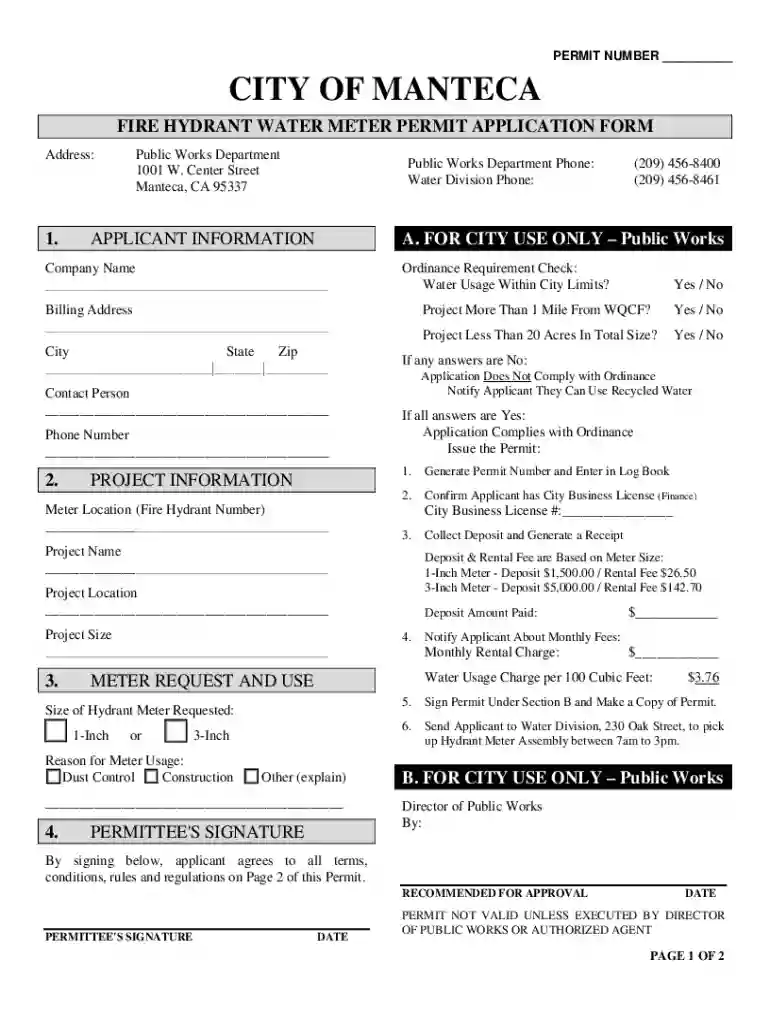
A Fire Hydrant Water Permit from the City of Manteca is an official authorization required to access and use water from fire hydrants within the city limits. This permit is necessary for various projects, such as construction or landscaping, where large volumes of water are needed temporarily. The permit ensures that water use is monitored and adheres to city regulations, preventing unauthorized use and ensuring fair billing practices for the water used.
Once obtained, the Fire Hydrant Water Permit allows the permit holder to install a water meter on designated hydrants across Manteca for the project's duration. The permit specifies how to connect temporary piping or hoses to the hydrant. Users must ensure that their equipment is compatible and complies with city safety standards to prevent any damage to the public water system. It is crucial to follow usage guidelines, including turning the hydrant on and off carefully to maintain system integrity.
To obtain a Fire Hydrant Water Permit in Manteca, applicants must submit a completed application form to the city's water utility department. The application should include detailed information about the project, such as location, purpose, and estimated water usage. A processing fee, determined by the city, may be required. Once submitted, the application undergoes a review process, and, upon approval, the applicant receives the permit, detailing specific conditions for water use.
Legal use of hydrant water via the permit involves strictly adhering to the terms and conditions set by the city, which include using water only for specified purposes and within designated areas. Misuse of hydrant water, such as exceeding allowed withdrawal limits or unauthorized meter relocation, is subject to penalties. The permit also mandates compliance with environmental and safety regulations to minimize the impact on the local water infrastructure.
Eligibility for the Fire Hydrant Water Permit in Manteca typically requires that the applicant has a legitimate purpose for the water use, such as construction, road work, or large-scale landscaping. The applicant must demonstrate the necessity of using hydrant water rather than other available sources. Furthermore, applicants should have a plan for safeguarding public water resources and infrastructure, including backflow prevention measures.


We've got more versions of the Fire Hydrant Water Permit - City Of Manteca form. Select the right Fire Hydrant Water Permit - City Of Manteca version from the list and start editing it straight away!
At DocHub, your data security is our priority. We follow HIPAA, SOC2, GDPR, and other standards, so you can work on your documents with confidence.
Surface water would be provided by the Turlock Irrigation District utilizing water. If surface water is found not to be feasible, the City will increase its
Nov 11, 2013 The plans shall show all electric, telephone, water service, fire water service, cable, and fire alarm facilities installed in accordance withRead more


