






Definition and Meaning
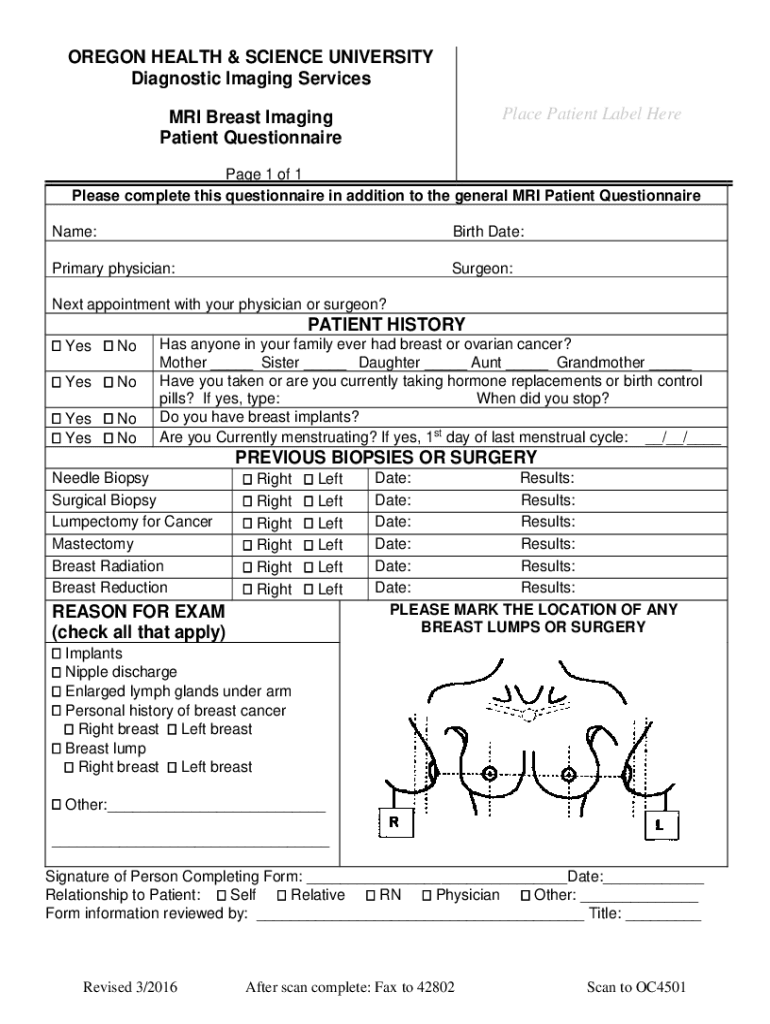
The "MRI Breast Imaging Patient Questionnaire - OHSU" is a comprehensive document used to collect necessary personal and medical history from patients undergoing MRI breast imaging at Oregon Health & Science University. This form captures details such as family medical history, hormone use, previous surgeries, and the reasons for the exam. The information gathered is crucial in tailoring the diagnostic approach and ensuring accurate interpretation of MRI results.
How to Use the MRI Breast Imaging Patient Questionnaire - OHSU
This form is generally completed by patients prior to their scheduled MRI appointments. It serves as a preparatory tool, enabling healthcare providers to better understand each patient’s medical background, thus facilitating a more personalized and accurate imaging process. To use the form effectively:
- Review each section carefully.
- Provide detailed responses in all applicable areas.
- Sign and date the form to verify the authenticity and completeness of the information.
Steps to Complete the MRI Breast Imaging Patient Questionnaire - OHSU
Completing the questionnaire involves several clear steps to ensure all necessary information is accurately captured:
-
Personal Information: Start by filling out your full name, date of birth, and contact details. This section ensures that your responses are associated with your medical records.
-
Medical History: Provide accurate history regarding breast health, including previous diagnoses, treatments, surgeries, and family history of breast or ovarian cancer.
-
Hormone Use: Detail any current or past hormone therapies you have undergone, as these can impact imaging results.
-
Reason for Exam: Clearly state the purpose of the MRI, whether it's routine screening or in response to a specific concern.
-
Signature and Date: Ensure the form is signed and dated appropriately to validate the data.
Key Elements of the MRI Breast Imaging Patient Questionnaire - OHSU
The form contains essential sections critical for the healthcare team’s understanding:
-
Family Health History: Inquiring about any relatives diagnosed with breast or ovarian cancer to assess genetic risk factors.
-
Surgical History: Detailing any previous breast surgeries or biopsies and marking any relevant locations on provided diagrams.
-
Current Breast Concerns: Noting any lumps, pain, or other symptoms currently experienced.
-
Consent and Certification: Confirming the accuracy of the information provided and consenting to the MRI procedure.
Who Typically Uses the MRI Breast Imaging Patient Questionnaire - OHSU
Primarily utilized by patients scheduled for breast MRI imaging at OHSU, it encompasses:
- Patients: Providing the necessary personal and medical information.
- Healthcare Providers: Reviewing the information to plan and interpret imaging studies effectively.
- Radiologists and Technologists: Using it to understand the patient's breast health history and current concerns for optimized imaging.


Examples of Using the MRI Breast Imaging Patient Questionnaire - OHSU
-
Routine Screening: A patient with a family history of breast cancer completing the form for a scheduled MRI screening.
-
Diagnostic Imaging: A patient experiencing new breast symptoms, such as a palpable lump, completes the form to facilitate a focused diagnostic assessment.
-
Follow-up After Surgery: Someone with a history of breast surgery uses the questionnaire to ensure the imaging considers past procedures and focuses on areas of concern.
Legal Use of the MRI Breast Imaging Patient Questionnaire - OHSU
It plays a legal role in the diagnostic process:
-
Informed Consent: The signature section acts as an acknowledgment of consent for undergoing the MRI procedure.
-
Medical Documentation: Information provided becomes part of the patient's medical record, subject to HIPAA regulations for patient privacy and data security.
-
Insurance Claims: Used to substantiate medical necessity for insurance coverage of imaging procedures.
Important Terms Related to the MRI Breast Imaging Patient Questionnaire - OHSU
-
Biopsy: A medical test involving the removal of cells or tissues for examination.
-
Hormone Therapy: Treatment involving the use of hormones, often relevant in breast health concerning menopause or breast cancer treatment.
-
HIPAA: U.S. law designed to provide privacy standards to protect patients' medical records and other health information.
Digital vs. Paper Version
The questionnaire can be completed in both digital and paper formats:
-
Digital: Offers convenience by allowing patients to fill in the form via online platforms, which can be directly integrated into digital medical records.
-
Paper: Provides an option for individuals who prefer hard copies or lack access to digital devices, but requires manual entry of data into medical records by healthcare staff.
Eligibility Criteria
Eligibility to complete the form typically includes:
-
Scheduled for MRI: Patients who have been advised by their healthcare provider to undergo breast MRI.
-
Consent: Must be able to provide consent, acknowledging understanding of the procedure and related risks.
This comprehensive coverage ensures that the "MRI Breast Imaging Patient Questionnaire - OHSU" form meets its purpose in collecting detailed and relevant patient information for enhanced diagnostic accuracy.