




01. Edit your form online
Type text, add images, blackout confidential details, add comments, highlights and more.

Type text, add images, blackout confidential details, add comments, highlights and more.

Draw your signature, type it, upload its image, or use your mobile device as a signature pad.

Send it via email, link, or fax. You can also download it, export it or print it out.
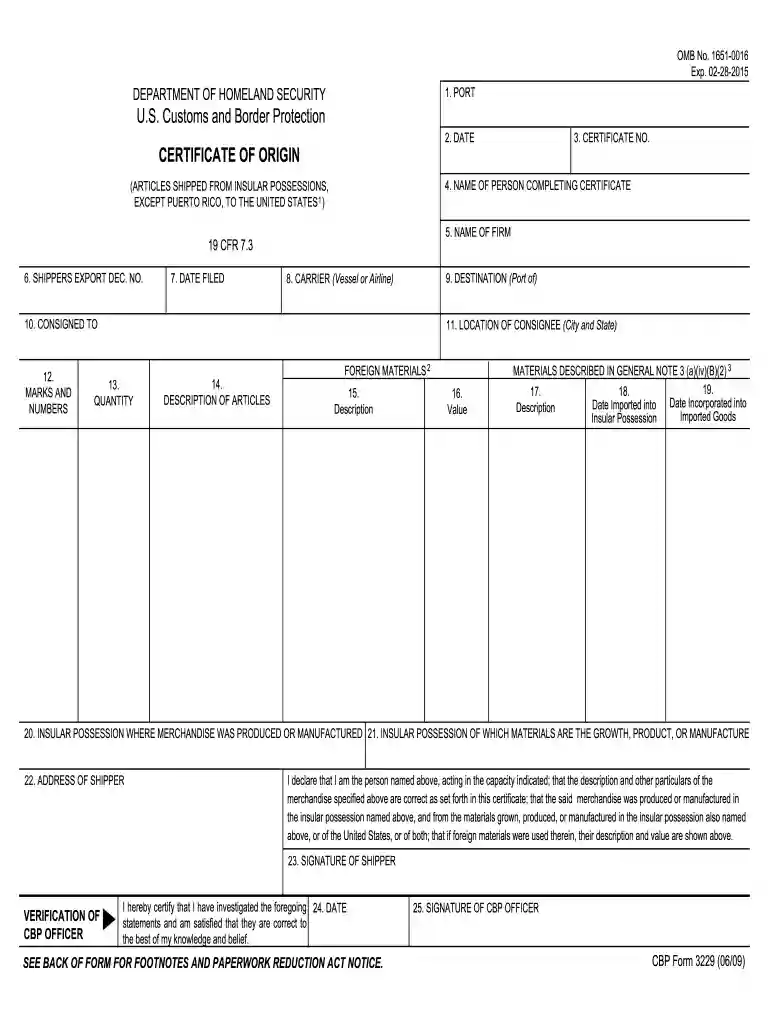
The FedEx Certificate of Origin form is a crucial document used in international trade to certify the country of manufacture for goods being shipped. This form ensures compliance with trade agreements and customs regulations, facilitating smooth cross-border transactions. It verifies the origins of exported merchandise, which can affect duty rates, tariffs, and eligibility for preferences under certain trade treaties. The form acts as an attestation by the exporter that the products meet the specific rules of origin requirements of the importing country.
To effectively use the FedEx Certificate of Origin form, shippers must complete it with accurate details about the manufactured goods. The document should specify the exporter and consignee's information, a detailed description of the goods, and data about their country of origin. Additionally, a contact person in the U.S. who can verify the contents of the form should be provided. The completed form must be submitted to customs as part of shipping documentation, usually accompanying the commercial invoice and packing list.
Accurate completion of the FedEx Certificate of Origin form is essential to avoid delays in shipping. Here’s a step-by-step guide:
The FedEx Certificate of Origin form is critical for ensuring compliance with international trade laws and regulations. It supports the classification of goods for tariff purposes and can aid in obtaining reduced duty rates under free trade agreements. Utilizing this form helps expedite customs clearance and minimizes the risk of shipment delays or penalties due to documentation errors.
Understanding the terminology associated with the FedEx Certificate of Origin form is vital for correct usage. Here are key terms:
The form comprises several crucial sections that must be accurately completed:
The FedEx Certificate of Origin form is commonly used by businesses engaged in international trade. This includes manufacturers, exporters, and freight forwarders who seek to ensure their goods meet the origin criteria of the importing country. It is especially relevant for companies looking to take advantage of preferential tariffs and for those whose goods fall under specific trade agreements.


The FedEx Certificate of Origin form is available in both digital and paper formats, each offering distinct advantages. The digital version provides ease of use, with potential integrations into document management platforms for streamlined processing. It allows for electronic completion and submission, reducing paper waste and speeding up interactions with customs brokers. Conversely, the paper format is traditional and required in regions where digital acceptance is not yet standard.
By comprehensively understanding and utilizing the FedEx Certificate of Origin form, businesses can effectively navigate international trade regulations, optimizing their shipping processes and ensuring compliance with customs requirements.
At DocHub, your data security is our priority. We follow HIPAA, SOC2, GDPR, and other standards, so you can work on your documents with confidence.
FedEx FedEx Commercial Invoice - Original three copies required on all International packages. (Document-only shipments do not require a Commercial Invoice.)Read more
NRI who are Indian citizens apply using Form 49A. Use PAN Card Express Foreign citizens of Indian origin (apply via Form 49AA). or Indian birth certificate (if


