




01. Edit your form online
Type text, add images, blackout confidential details, add comments, highlights and more.

Type text, add images, blackout confidential details, add comments, highlights and more.

Draw your signature, type it, upload its image, or use your mobile device as a signature pad.

Send it via email, link, or fax. You can also download it, export it or print it out.
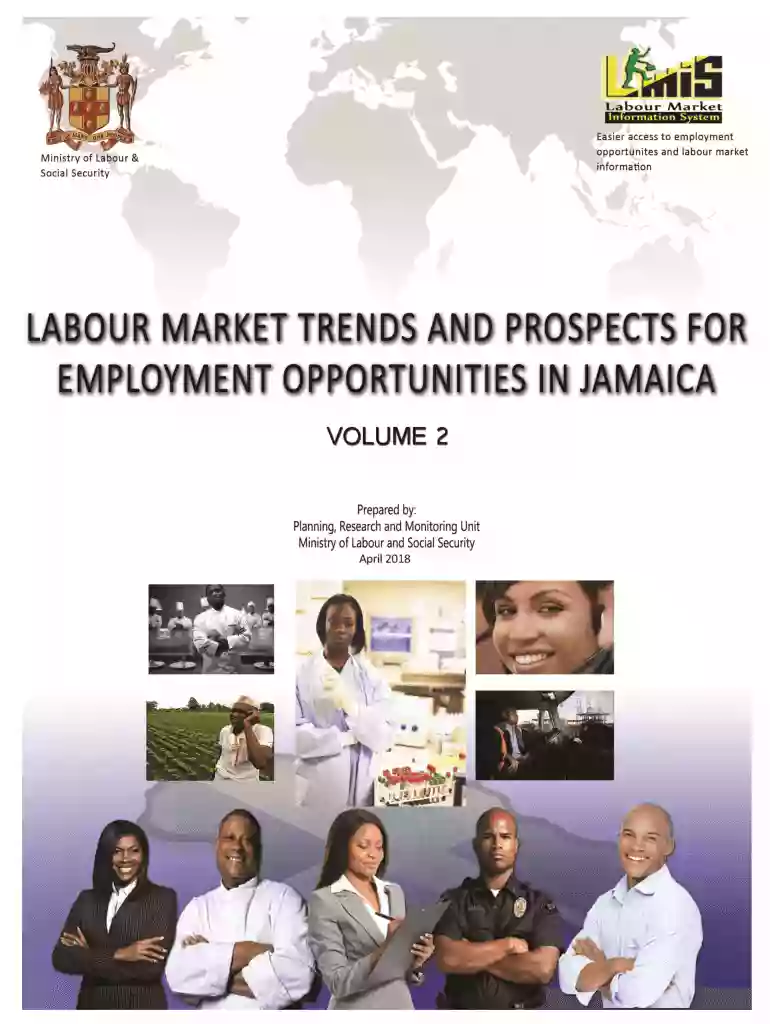
The "Labour Market Trends and Prospects for Employment Opportunities in Jamaica" is a comprehensive document that provides an analysis of current labor market conditions in Jamaica. It covers areas such as existing employment trends, the supply of skills provided by educational institutions, and growth opportunities within various economic sectors. This document is essential for understanding the correlation between educational outcomes and labor market demands, and how these elements can drive economic expansion in Jamaica.
Several important components are included within this document, enhancing its utility for stakeholders:
Understanding these components can help policymakers, educational institutions, and employers make informed decisions to align with labor market requirements.
To maximize the utility of this document, follow these steps:
Examples illustrate the document's practical applications:
The document is pivotal for several reasons:
This document is typically utilized by:
The document serves as a valuable resource for all stakeholders involved in economic development and workforce planning in Jamaica.


Certain terminology is critical for full comprehension:
Understanding these terms enhances the reader's grasp of the document’s scope and focus.
While the document primarily serves informational purposes, its findings can underpin:
Legal experts and policy developers often consult this document when crafting labor-related policies or initiatives.
The document is available in both digital and paper formats. The digital version provides ease of access and the ability to conduct keyword searches, while the paper version might be preferred in settings with limited digital infrastructure. Both formats aim to ensure that the insights are accessible to a wide audience, regardless of technological limitations.
We've got more versions of the LABOUR MARKET TRENDS AND PROSPECTS FOR EMPLOYMENT OPPORTUNITIES IN JAMAICA form. Select the right LABOUR MARKET TRENDS AND PROSPECTS FOR EMPLOYMENT OPPORTUNITIES IN JAMAICA version from the list and start editing it straight away!
| Versions | Form popularity | Fillable & printable |
|---|---|---|
| 2018 | 4.4 Satisfied (26 Votes) |
At DocHub, your data security is our priority. We follow HIPAA, SOC2, GDPR, and other standards, so you can work on your documents with confidence.
Jan 15, 2026 Overview of best prospect sectors, major infrastructure projects, DocHub government procurements and business opportunities.
Apr 12, 2024 Millions of historical employment records show the British workforce turned sharply towards manufacturing jobs during the 1600s.


