
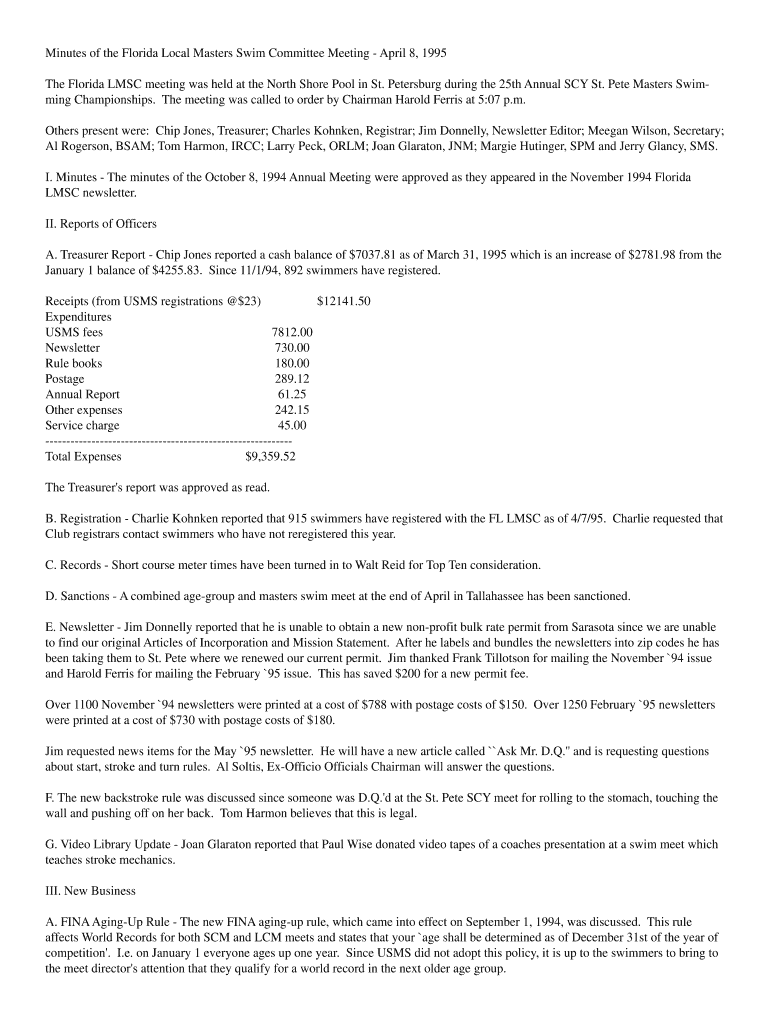







Definition and Purpose of the Minutes of the Florida Local Masters Swim - Florida LMSC
The Minutes of the Florida Local Masters Swim - Florida LMSC serve as the official written record of discussions and decisions made during committee meetings of the Florida Local Masters Swim Committee. These documents provide comprehensive coverage of agenda topics, including financial updates, swimmer registrations, rule amendments, and strategic planning for upcoming events. The minutes ensure transparency and continuity for all committee members and stakeholders.
How to Use the Minutes
Utilizing the minutes effectively involves reviewing them for detailed insight into past meeting discussions and decisions. Meeting attendees and committee members can reference the minutes to prepare for future meetings and understand the context of ongoing projects. This documentation allows stakeholders to stay informed about changes in regulations, financial health, and operational strategies.
Steps to Complete Meeting Minutes
-
Attend the Meeting: Begin by attending the committee meeting to capture all discussions accurately. It is important to have a comprehensive understanding of the topics being covered.
-
Take Detailed Notes: Record key contributions, decisions, and motions. Include who made each motion and the vote outcome.
-
Draft the Minutes: Compile the notes into a structured document. Ensure each agenda item is addressed, and summarize discussions succinctly.
-
Review and Approve: Share the draft minutes with the committee for corrections and additional input. Once reviewed, seek formal approval at the next meeting.
-
Distribute to Members: After approval, distribute the finalized minutes to all relevant members and stakeholders for their records.
Key Elements of the Minutes
- Agenda Items: Details the specific topics discussed during the meeting.
- Attendance: Lists all attendees, noting any absentees and their reasons if provided.
- Motions and Decisions: Outlines each motion raised, including proposers, seconders, and voting outcomes.
- Action Points: Specifies tasks assigned to members, with deadlines and responsible parties.
- Financial Reports: Includes summaries of financial updates provided in the meeting.
Important Terms and Terminology
- LMSC: Local Masters Swim Committee, responsible for local swim meet management and regulations.
- FINA: Fédération Internationale de Natation, the international federation recognized by the International Olympic Committee for administering international competition in water sports.
- Treasurer's Report: A financial summary presented during the meeting, detailing income, expenditures, and cash balance.
Who Typically Uses the Minutes
The primary users of the minutes are current and past committee members, sub-committee leaders, stakeholders in the Florida Local Masters Swim community, and other affiliated organizations. These individuals use the minutes to track progress, accountability, and planning.


Legal Considerations of the Minutes
The documentation must comply with organizational bylaws and any state regulations governing non-profit organizations. Minutes should be kept as a permanent record and may be subject to audits or legal reviews to ensure compliance and transparency.
How to Obtain the Minutes
-
Request Through the Committee: The most direct way is to contact the Florida Local Masters Swim Committee administration directly.
-
Member Access: If you are a member, access may be granted through member portals or during meetings.
-
Public Records: Depending on state regulations, minutes might be accessible as public records. Check with local regulatory bodies.
State-Specific Considerations
While the procedure to obtain and document minutes follows a general standard, specific requirements may vary according to Florida's state laws. This includes the format, distribution, and archival of such documentation.
Examples of Use
Minutes might be used to:
- Plan upcoming swim meets and discuss logistical arrangements.
- Evaluate past meeting performance and adjust strategies.
- Address any disputes or clarifications about past discussions.
Remember, thorough documentation, accurate capture of discussions, and adherence to protocol ensure that the minutes serve effectively as both a historical record and a strategic tool for future planning and collaboration.




