




01. Edit your form online
Type text, add images, blackout confidential details, add comments, highlights and more.

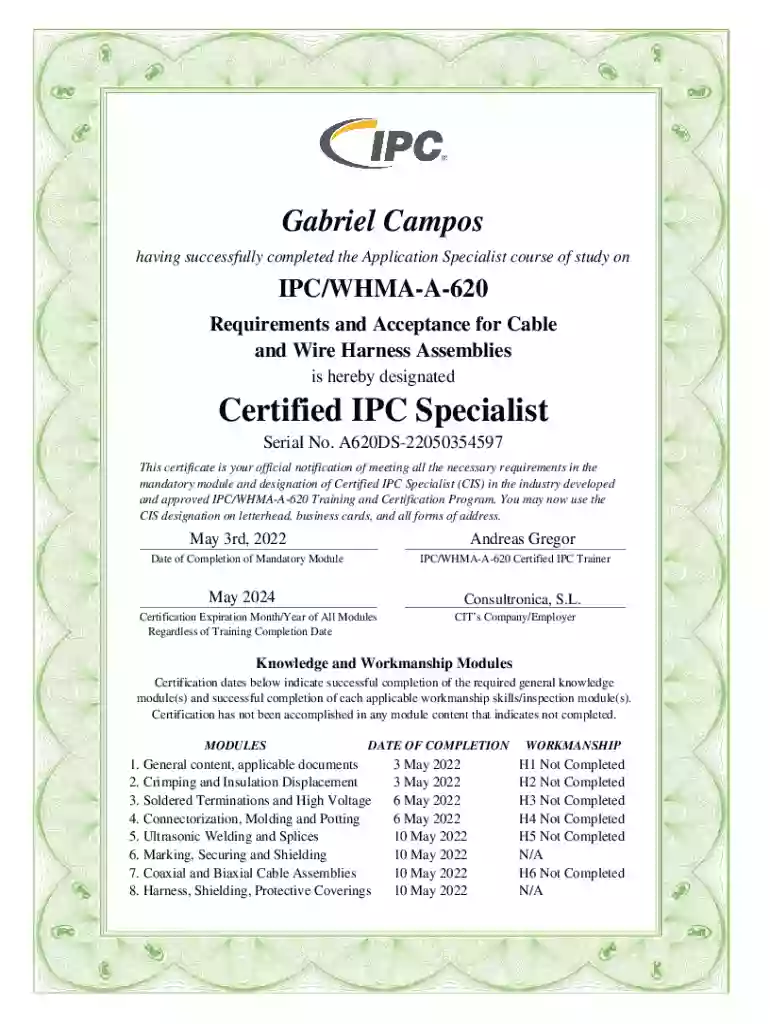
Type text, add images, blackout confidential details, add comments, highlights and more.

Draw your signature, type it, upload its image, or use your mobile device as a signature pad.

Send it via email, link, or fax. You can also download it, export it or print it out.
The Certificate of Completion IPC/WHMA-A-620D is an official document signifying that an individual has successfully completed the IPC/WHMA-A-620 training course. This certification is widely recognized within the electronics industry, specifically in the field of cable and wire harness assemblies. The certification indicates proficiency in the standards governing these components, ensuring that the holder has a clear understanding of industry best practices and quality guidelines.
While anyone working in cable and wiring roles can benefit, this certification is particularly valuable for:
Obtaining the IPC/WHMA-A-620D Certificate involves a structured process that includes training and assessment. Understanding the steps involved can help candidates prepare effectively.
The certification process culminates in an exam where candidates must demonstrate:
For those pursuing this certification, the following steps outline the general process:
The IPC/WHMA-A-620D certification involves several key components that candidates need to master. These components ensure comprehensive knowledge of the field.
The IPC/WHMA-A-620D certification finds its use in various contexts, each requiring adherence to industry standards.
To ensure readiness for certification, candidates must meet particular eligibility criteria.


Candidates may need to provide:
Candidates can choose between digital and paper formats for the certification process, each with distinct advantages.
The IPC/WHMA-A-620D certification not only assures compliance with industry norms but also comes with specific legal considerations.
Acts as verified proof of skill adherence to legal standards
Supports legal compliance in contracts and quality assurance protocols
Important for gaining client trust and meeting contractual obligations
At DocHub, your data security is our priority. We follow HIPAA, SOC2, GDPR, and other standards, so you can work on your documents with confidence.
(IPC/WHMA-A-620 Certification). Topics covered and skills to be demonstrated are: soldered terminations, crimp terminations, insulation displacement
The Certificate of Completion (CCL) in Cable and Wire Harness Assembly will prepare the successful student to receive the Certified IPC Specialist (CIS) WHMA


