




01. Edit your form online
Type text, add images, blackout confidential details, add comments, highlights and more.

Type text, add images, blackout confidential details, add comments, highlights and more.

Draw your signature, type it, upload its image, or use your mobile device as a signature pad.

Send it via email, link, or fax. You can also download it, export it or print it out.
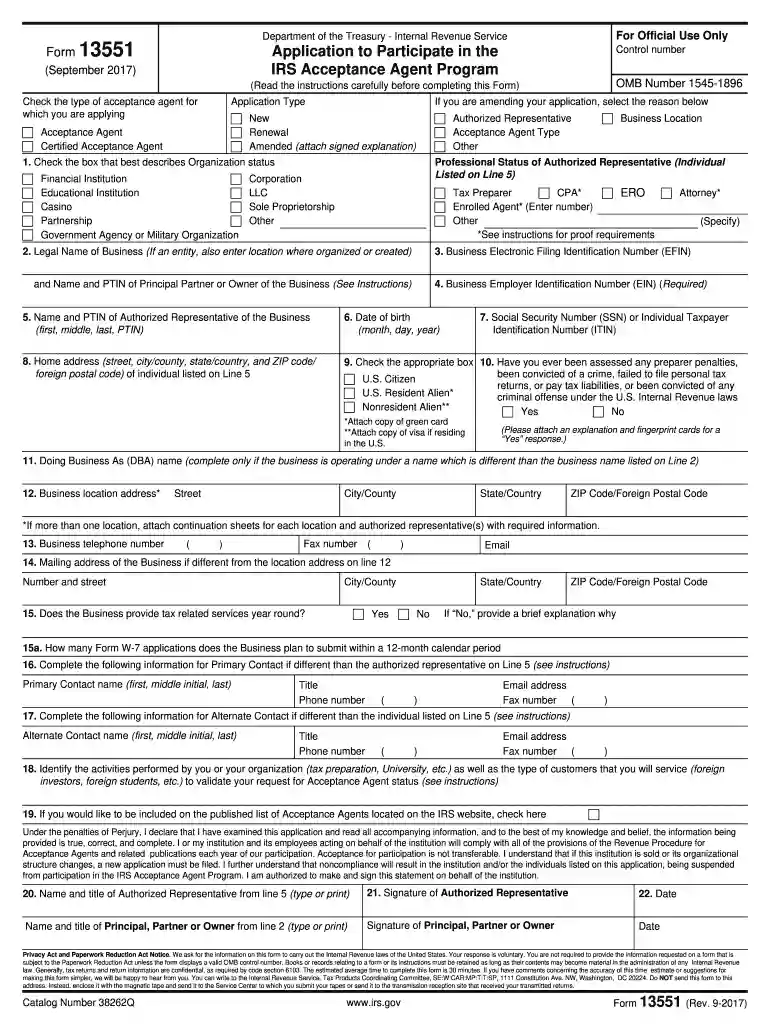
The “form acceptance 2” refers to the period of regulatory and procedural framework within which specific application forms were standardized for accepting new applicants under various U.S. governmental programs. Typically associated with documents such as the IRS Form 13551, which is part of the IRS Acceptance Agent Program, these forms allow individuals and organizations to assist those needing Taxpayer Identification Numbers (TINs). They include all relevant details for compliance, submission, and participation requirements, making them vital for administrative and legal documentation processes during this time frame.
To effectively use the form acceptance 2, one should follow several key steps:
Review the Instructions: Each form includes detailed instructions for completion. It is crucial to thoroughly understand these guidelines to ensure accuracy.
Gather Necessary Information: Collect all required information beforehand, such as personal identification, organizational details, or financial documents, to streamline the process.
Complete the Form: Fill out the form as per the guidance provided, ensuring all fields are correctly and completely filled.
Verify Information: Double-check your entries against the guidelines to prevent errors that might delay processing or acceptance.
Submit to Appropriate Channel: Depending on the form type, submit it through recommended methods—online, via mail, or in-person.
Completing the form requires several structured steps:
Step One: Obtain the Form
Access the form through official government websites or authorized distribution centers that provide these documents.
Step Two: Fill Out Personal or Organizational Details
Enter all personal or organizational data required. This typically includes names, addresses, TINs, and any other relevant identifiers.
Step Three: Compliance and Certification
Fill out sections that require statements of compliance and certification to confirm adherence to program guidelines.
Step Four: Sign and Date the Form
After verifying that all information is accurate, sign and date the document where required.
Using the form acceptance 2 is essential for compliance with specific programs and regulatory requirements enveloped within these forms. It ensures that individuals and organizations working within these frameworks are appropriately registered and authorized. This not only safeguards against potential legal issues but also facilitates smoother operations and interactions with governmental agencies.
Several critical elements define the usefulness and necessity of the form acceptance 2, including:
Identification Information: Sections dedicated to gathering detailed identification and verification information from the applicant.
Compliance Statements: Parts where applicants attest to their adherence to relevant regulations.
Authorization Consents: Required sections to authorize interactions with designated government departments or agencies.
Instructions and Guidelines: Include mandatory protocols that must be followed for successful form completion.
For forms like Form 13551 within the form acceptance 2 framework, adherence to IRS guidelines is crucial:
Accuracy: Ensure all information is correctly documented.
Timeliness: Submit documents within the prescribed timeframe to meet deadline requirements.
Security: Maintain confidentiality of sensitive data as per IRS standards during the submission process.
The form acceptance period from 2 typically outlines key deadlines for annual form submission and interim updates. This includes but is not limited to quarterly or annual filing periods, with specific due dates that ensure continued compliance with federal program requirements.
To complete forms within the acceptance framework:
Identification Proof: Such as government-issued IDs or organizational certification documents.
Financial Records: Relevant, when applicable, to validate information such as revenue streams or tax payment history.
Authorization Letters: When forms involve representation or filings on behalf of third parties.
Highlighting the structured process and necessary components of the form acceptance guidelines ensures applicants are fully prepared for participation, enhancing seamless integration into regulatory systems.
We've got more versions of the form acceptance 2017-2019 form. Select the right form acceptance 2017-2019 version from the list and start editing it straight away!
With DocHub, it’s pretty simple. The platform offers users an add-on called DocHub for Gmail, which you can locate in the Google Workspace Marketplace free of charge. Install it and give it access to your Google account. Open your email with your form acceptance 2017-2019 attached and click on the add-on button in the right-side panel. Sign in to your DocHub account, and import the file to our editor, where you can complete it and sign.
If your go-to email service is Gmail, you can easily incorporate your DocHub editor in your work. Edit your form acceptance 2017-2019 with DocHub instruments and connect it to your drafts in Gmail. See how straightforward it can be to exchange documents and work together with a swift PDF editing solution at hand.
At DocHub, your data security is our priority. We follow HIPAA, SOC2, GDPR, and other standards, so you can work on your documents with confidence.
Jul 2, 2019 An indication of change starts with acceptance and admitting a very real problem. A true testament to the seriousness of a universitysRead more
This report is required to be filed in the 2017-2019 RES Reports as required per the Comprehensive Settlement. Agreement. Finally, Attachment K is an anotherRead more


