
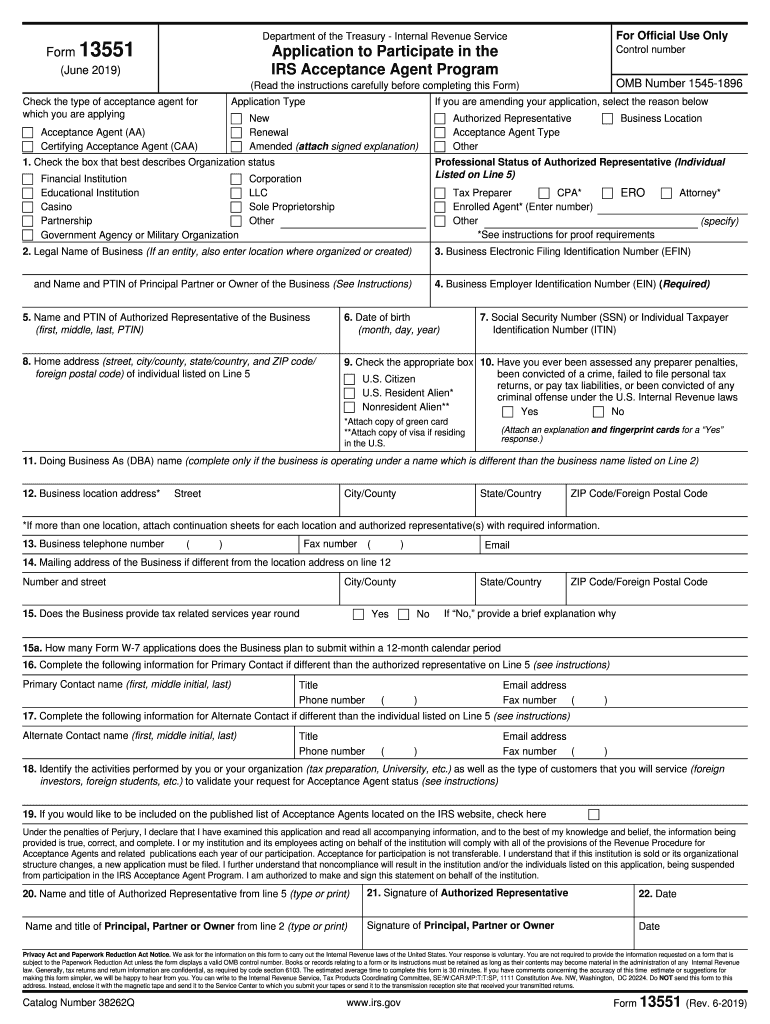







Definition and Purpose of IRS Form 13551
IRS Form 13551 is formally known as the application for participation in the IRS Acceptance Agent Program. This form is used by individuals and entities to become acceptance agents who assist foreign individuals in obtaining Taxpayer Identification Numbers (TINs). Acceptance agents play a crucial role in the tax filing process for foreign persons by helping them properly prepare and submit the required documentation to the IRS. The form outlines specific eligibility requirements, compliance obligations, and information that applicants must provide.
Acceptance agents, upon approval, facilitate the process for foreign taxpayers and entities, ensuring they meet U.S. compliance requirements. The form also serves to regulate and standardize the application process, ensuring that only qualified individuals and organizations are authorized to act as acceptance agents.
Steps to Complete IRS Form 13551
-
Gather Required Information: Before completing IRS Form 13551, gather essential organizational details, authorized representative information, and any existing qualifications related to tax preparation or advising.
-
Complete Organizational Details: Fill out the sections concerning your organization's details such as business name, address, and Employer Identification Number (EIN).
-
Provide Authorized Representative Information: Identify the individuals who will serve as the contact person between your organization and the IRS. These representatives should have specific knowledge about tax processes and compliance standards.
-
Confirm Eligibility and Compliance: The form requires applicants to attest to their eligibility and understanding of the compliance obligations associated with becoming an acceptance agent.
-
Submit Legal Declarations: The application must include declarations confirming that all information provided is accurate and that the applicant meets all necessary qualifications and ethical standards.
-
Review and Submit: Double-check the entire form for accuracy before submission. Ensuring all fields are properly filled out will mitigate delays or rejection in the application process.
Legal Use of IRS Form 13551
The legal use of IRS Form 13551 is strictly regulated by the IRS to maintain the integrity of the tax collection process from foreign nationals and entities. By becoming an acceptance agent, individuals and businesses agree to adhere to IRS compliance guidelines and facilitate the correct filing of tax forms. These agents must operate within strict guidelines, ensuring that foreign taxpayers provide authentic documentation for TINs. Misuse of the role or false application submissions can lead to penalties or revocation of the acceptance agent status. Compliance with the legal mandates ensures the legitimacy and efficiency of tax processing for foreign individuals.
Eligibility Criteria for IRS Form 13551
To qualify as an acceptance agent with IRS Form 13551, applicants must meet certain criteria:
-
Professional Expertise: Applicants must possess a background in accounting, taxation, or related fields, demonstrating a clear understanding of IRS requirements and tax processes.
-
Reputation and Integrity: Individuals and entities should have a proven track record of honesty and integrity within their professional practices. This includes having no previous IRS sanctions or felony convictions.
-
Understanding of Compliance Obligations: Applicants must be capable of fulfilling the compliance obligations associated with the acceptance agent role, including verification of documents, maintaining confidentiality, and ensuring correct procedures are followed.


Key Elements of IRS Form 13551
Several key elements form the backbone of IRS Form 13551, each of which must be meticulously addressed:
-
Application Type: Specify if this is a new application or a renewal.
-
Organizational Structure: Indicate whether the entity is a sole proprietorship, partnership, corporation, or other structure.
-
Authorized Signatures: The form must be signed by authorized individuals, confirming the accuracy of the information provided.
-
Supporting Documentation: Enclose any credentials or supporting documents that affirm the suitability and qualifications of the applicants.
By ensuring these elements are completed with precision, applicants enhance their likelihood of acceptance into the program.
Application Process and Approval Timeline
The process of applying using IRS Form 13551 involves several distinct stages, each with its own timeline:
-
Form Submission: Once completed, the form should be submitted following the specific instructions provided by the IRS. This may involve mailing the form or using an electronic submission platform.
-
Review Period: After submission, the IRS will review the application for completeness and accuracy. This review process can take several weeks to months, depending on the volume of applications and complexity of the case.
-
Approval Notification: If the application is approved, the applicant receives a notification along with their acceptance agent number. This number is essential for performing their duties as an acceptance agent.
IRS Guidelines for Acceptance Agents
Acceptance agents must adhere to stringent IRS guidelines to maintain their status:
-
Confidentiality: Agents must protect the privacy and confidentiality of taxpayer information at all times.
-
Compliance Training: Regular training sessions are often required to keep agents up-to-date with current tax laws and IRS procedures.
-
Renewal and Reporting: Agents are often required to renew their certification periodically and submit compliance reports to the IRS.
Strict adherence to these guidelines ensures that the tax identification processes are carried out effectively and accurately.
Penalties for Non-Compliance
Failure to comply with the regulations associated with IRS Form 13551 can lead to several repercussions:
-
Revocation of Acceptance Agent Status: Non-compliance might result in the immediate revocation of the authority to act as an acceptance agent.
-
Fines and Penalties: The IRS might impose fines for gross negligence or intentional misrepresentation.
-
Legal Action: In severe cases, legal prosecution could occur if fraudulent activities are discovered in connection with Form 13551 submissions.
Understanding these penalties reinforces the importance of maintaining strict compliance with all IRS guidelines and procedures.




