Definition & Meaning
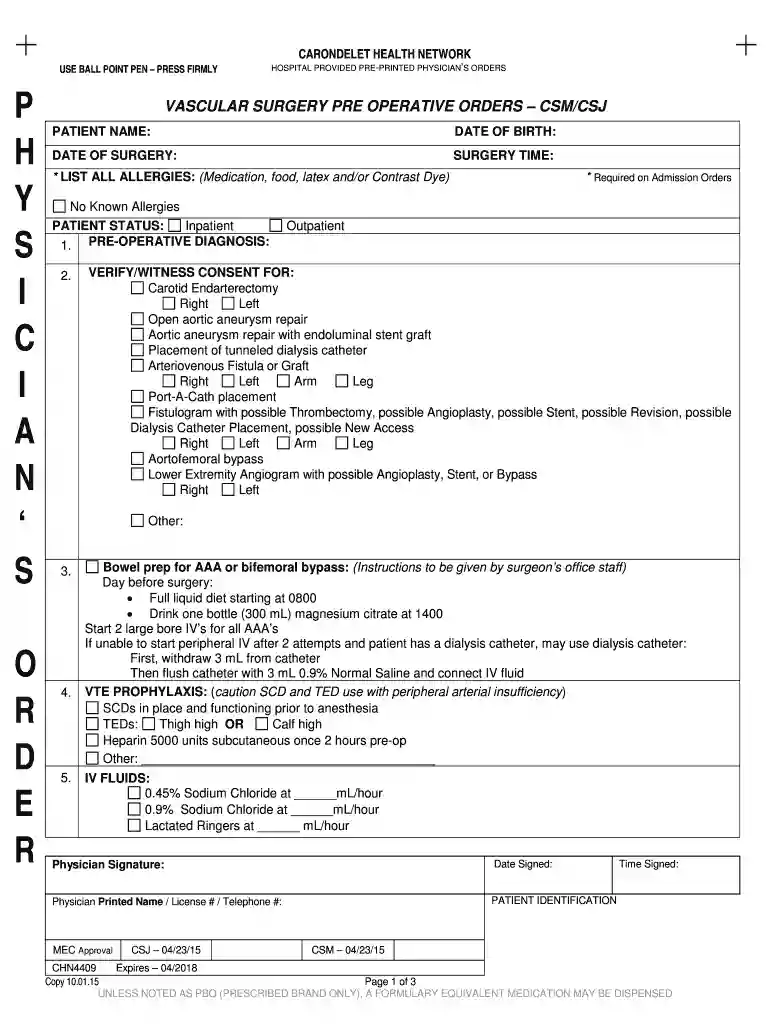
The "Vascular Surgery Pre-Operative Orders CSMCSJ - Dr Carondelet" form is a crucial document used within the Carondelet Health Network to ensure comprehensive pre-surgical preparation for patients undergoing vascular surgery. It includes specific instructions and protocols that healthcare professionals need to follow to optimize patient safety and surgical outcomes. This form typically covers patient demographics, consent verification, specific medical orders such as antibiotic prophylaxis, and other preparatory measures.
How to Use the Vascular Surgery Pre-Operative Orders CSMCSJ - Dr Carondelet
To utilize the Vascular Surgery Pre-Operative Orders CSMCSJ form correctly, healthcare providers must meticulously adhere to the instructions outlined. The process includes:
-
Patient Information Entry:
- Complete patient demographics, including name, age, medical history, and any known allergies.
-
Consent Verification:
- Ensure that the patient or their guardian has signed the informed consent section, acknowledging the understanding of the surgical procedure and its associated risks.
-
Pre-Operative Diagnosis:
- Record the pre-operative diagnosis justifying the need for surgery, which will guide the surgical and anesthesia teams in their preparations.
-
Medication and IV Orders:
- Specify any medications the patient should continue or discontinue, and detail IV fluid instructions for hydration management.
-
Additional Instructions:
- Include any special instructions deemed necessary by the attending physician or surgical team, such as pre-operative exercises or dietary restrictions.
Steps to Complete the Vascular Surgery Pre-Operative Orders CSMCSJ - Dr Carondelet
Completing the Vascular Surgery Pre-Operative Orders CSMCSJ form involves several critical steps:
-
Patient Evaluation:
- Conduct a thorough assessment to gather all necessary medical information, which will be documented on the form.
-
Review Surgical Protocols:
- Go through the protocol checklist to ensure compliance with hospital standards and patient-specific needs.
-
Seek Clarification:
- If there are uncertainties or additional instructions needed, confer with the surgical team or the patient's primary care provider.
-
Final Check:
- Prior to surgery, review the completed form for accuracy and completeness to ensure all orders are up to date and signed by authorized personnel.
-
Documentation Submission:
- Submit the finalized form to the surgical scheduling team and include it in the patient's medical record for reference during and after surgery.
Key Elements of the Vascular Surgery Pre-Operative Orders CSMCSJ - Dr Carondelet
Several key elements are vital to the effectiveness of the Vascular Surgery Pre-Operative Orders:
-
Patient Demographics and Medical History:
- Essential for tailoring care and anticipating potential complications.
-
Surgical Consent:
- Legal and ethical requirement, ensuring patient awareness and agreement.
-
Pre-Operative Orders:
- Detailed instructions related to medication, diet, and protocols for surgical preparation.
-
Diagnostic and Laboratory Tests:
- Information on necessary pre-surgical tests to validate surgical readiness.
-
Antibiotic Prophylaxis:
- Guidelines on the use of antibiotics to prevent infection, crucial for patient safety and recovery.
Important Terms Related to Vascular Surgery Pre-Operative Orders CSMCSJ - Dr Carondelet
Understanding the terminology used in the form is essential for both completing and interpreting it accurately:
-
Antibiotic Prophylaxis:
- Preventative use of antibiotics to reduce the risk of post-surgical infection.
-
Informed Consent:
- Process by which a patient learns about and understands the purpose, benefits, and risks of a surgical procedure.
-
Pre-Operative Diagnosis:
- The medical reason or condition that necessitates the surgery.
-
Anesthesia Protocol:
- Steps and considerations for safely administering anesthesia to the patient.
Who Typically Uses the Vascular Surgery Pre-Operative Orders CSMCSJ - Dr Carondelet
The form is primarily used by:
-
Surgeons and Surgical Teams:
- As a guide for pre-surgical preparation specific to each patient.
-
Nurses:
- For implementing pre-operative care and coordinating with other healthcare professionals.
-
Anesthesiologists:
- To assess patient readiness and plan anesthesia care.
-
Administrative Staff:
- For scheduling and documentation purposes within the hospital system.
Examples of Using the Vascular Surgery Pre-Operative Orders CSMCSJ - Dr Carondelet
To illustrate the practical application of the form:
-
Case Example 1:
- A 65-year-old patient with hypertension is scheduled for a carotid endarterectomy. The form details cessation of certain blood pressure medications and includes instructions for fasting and hydration management.
-
Case Example 2:
- A 45-year-old diabetic patient requires peripheral artery bypass surgery. The orders specify blood glucose monitoring protocols and pre-operative antibiotic administration.
Legal Use of the Vascular Surgery Pre-Operative Orders CSMCSJ - Dr Carondelet
The legal use of the Vascular Surgery Pre-Operative Orders ensures:
-
Patient Safety:
- Through adherence to standardized protocols that minimize surgical risks.
-
Regulatory Compliance:
- Meeting state and federal healthcare regulations on documentation and informed consent.
-
Legal Protection:
- Providing a documented trail that can be used for compliance verification and legal protection in case of disputes or complications.
By following the above-mentioned topics with meticulous detail and accuracy, healthcare professionals are equipped to effectively utilize the Vascular Surgery Pre-Operative Orders CSMCSJ to uphold the highest standards of patient care and safety in vascular surgical procedures.