




01. Edit your form online
Type text, add images, blackout confidential details, add comments, highlights and more.

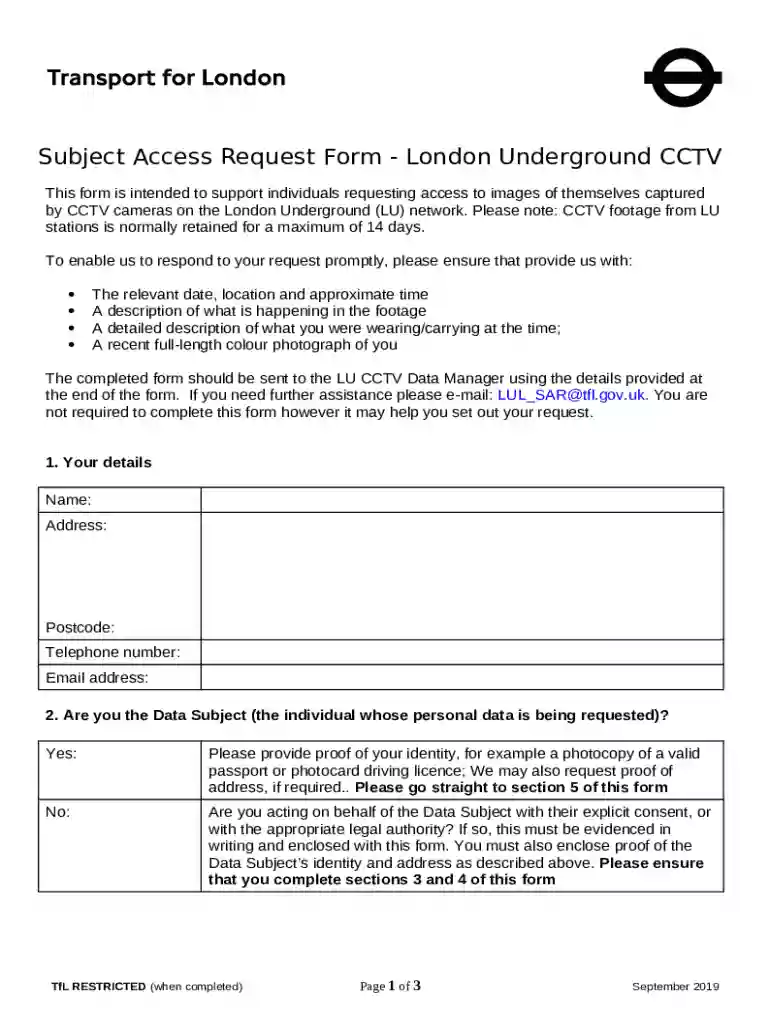
Type text, add images, blackout confidential details, add comments, highlights and more.

Draw your signature, type it, upload its image, or use your mobile device as a signature pad.

Send it via email, link, or fax. You can also download it, export it or print it out.
The traffic-monitoring CCTV subject access request form is designed for individuals who seek access to CCTV footage that captures their image within traffic monitoring systems. This request is typically submitted to the entity responsible for managing the CCTV data, ensuring the applicant's rights to access personal information as governed by privacy laws. The form facilitates the process by detailing the necessary information and documentation required to validate and fulfill the individual's request.
To effectively utilize the traffic-monitoring CCTV subject access request form, the individual must accurately fill out the required fields, which typically include personal identification information, specific details pertinent to the timeframe, and location where the CCTV footage was captured. Ensuring all sections of the form are completed with precision is crucial, as incomplete requests may lead to processing delays or denial.
Identify Yourself: Provide personal details such as your full name, date of birth, and contact information to help the data manager verify your identity.
Specify the CCTV Location and Date: Accurately note the location and time where the CCTV footage was recorded. This may involve specifying the street, intersection, or area monitored by traffic cameras.
Include Additional Identifiers: Mention any distinguishing features or attire that could aid in locating the relevant footage.
Attach Necessary Documentation: Prepare to include a copy of a government-issued ID and any other documentation that confirms your right to access the footage.
Review and Submit: Double-check all entered information and submit the form via the specified method, whether by mail, in-person delivery, or an online portal if available.
To obtain a copy of the traffic-monitoring CCTV subject access request form, individuals can often access it on the official website of the organization managing the CCTV data. Alternatively, they may pick up a physical form at relevant government offices or request one to be sent to them via mail.
Several critical components must be included when filling out the traffic-monitoring CCTV subject access request form:
The legal framework surrounding the use of the traffic-monitoring CCTV subject access request form is rooted in privacy laws, which empower individuals to access personal data collected by surveillance systems. This ensures that individuals can verify the accuracy of their data and seek correction if necessary. Compliance with the specified legal guidelines is paramount to maintaining the integrity of both personal privacy and data collection practices.
Before submitting the form, ensure you have gathered all necessary documents:
Individuals have multiple options for submitting the traffic-monitoring CCTV subject access request form:
Several real-world scenarios highlight the use of this form:
These examples demonstrate the form's versatility in various contexts where access to recorded footage is necessary for documentation or evidence.
At DocHub, your data security is our priority. We follow HIPAA, SOC2, GDPR, and other standards, so you can work on your documents with confidence.


