





Definition & Meaning of the Medical Work Restriction Agreement
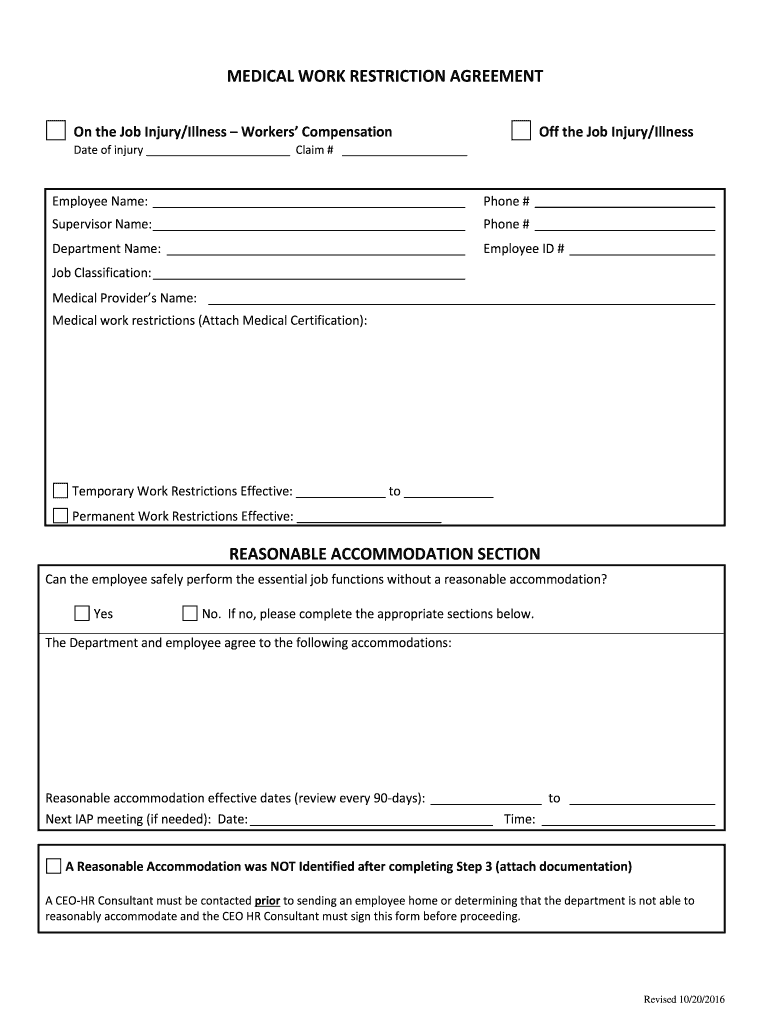
The Medical Work Restriction Agreement (MWRA) is a formal document used to outline the accommodations and restrictions necessary for employees with medical limitations to perform their job functions safely. This agreement involves a collaborative process among the employee, medical professionals, and employers to ensure that the individual can continue working without compromising their health or productivity. The MWRA serves as a record of the agreed-upon work modifications and any limitations regarding the employee's current medical condition.
How to Use the Medical Work Restriction Agreement
To effectively utilize the MWRA, both employees and employers should follow a structured process:
- Identify the Need: Recognize when an employee requires medical accommodations based on medical certificates or health discussions.
- Initiate a Meeting: Arrange a meeting involving the employee, management, and Human Resources (HR) to discuss potential restrictions and accommodations.
- Draft the Agreement: Use input from medical professionals to draft the MWRA, detailing specific work restrictions and accommodations.
- Review and Revise: Go over the document with all parties to confirm accuracy and make necessary adjustments.
- Implement and Monitor: Roll out the agreed-upon accommodations and monitor the employee's progress for any needed changes.
Steps to Complete the Medical Work Restriction Agreement
Completing an MWRA involves several critical steps to ensure thoroughness and compliance with workplace regulations:
- Gather Required Information: Collect medical certifications and any other documentation supporting the need for work restrictions.
- Collaborate with Relevant Parties: Engage in discussions with supervisors, HR personnel, and the employee to determine viable accommodations.
- Draft the Document: Create the agreement using all gathered information, ensuring clarity in language and specifics about restrictions.
- Seek Feedback: Obtain feedback from all stakeholders to ensure the agreement aligns with the employee's medical needs.
- Finalize the Document: Formalize the agreement with necessary signatures from all parties involved.
- Record and Share: Record the approved MWRA in workplace records and share a copy with the employee for their records.
Key Elements of the Medical Work Restriction Agreement
The MWRA should include several essential components to ensure comprehensive coverage of all necessary accommodations:
- Employee Details: Full name and position within the organization.
- Medical Certification: A brief description of the medical condition without breaching privacy.
- Work Restrictions: Clearly defined limitations on duties that the employee cannot undertake.
- Accommodations: Specific adjustments made to the employee's workspace or responsibilities.
- Duration of Agreement: Timeframe for how long the accommodations will be in effect.
- Review Dates: Scheduled dates for reviewing and updating the agreement if needed.
- Signatures and Dates: Executed by all parties to confirm acceptance of terms.
Who Typically Uses the Medical Work Restriction Agreement
The MWRA is commonly used by several groups within the workforce:
- Employees with Medical Conditions: Those who require workplace adjustments to safely perform their job tasks.
- Human Resources Departments: Professionals responsible for implementing and managing employee accommodations.
- Supervisors and Managers: Overseeing the implementation of work restrictions and accommodations.
- Medical Professionals: Providing necessary documentation and guidance for applicable work restrictions.


Legal Use of the Medical Work Restriction Agreement
Legally, the MWRA plays a vital role in maintaining workplace compliance with health and safety regulations. It ensures that employees with medical conditions are not discriminated against and have fair access to job modifications when necessary. Compliance with the Americans with Disabilities Act (ADA) is critical, as this law mandates reasonable accommodations for employees with disabilities. An MWRA aligns closely with ADA requirements by documenting agreed-upon adjustments and demonstrating the employer’s commitment to accommodating medical needs.
Important Terms Related to the Medical Work Restriction Agreement
Several key terms should be understood in the context of an MWRA:
- Reasonable Accommodation: Adjustments to the work environment or process enabling employees to perform essential job functions.
- Essential Job Functions: The fundamental duties required by a job position, as opposed to marginal tasks.
- Interactive Process: The ongoing dialogue between employers and employees to assess and implement reasonable accommodations.
- ADA Compliance: Adhering to the legal standards set forth by the Americans with Disabilities Act.
Examples of Using the Medical Work Restriction Agreement
Utilizing the MWRA can occur in various instances, such as:
- Chronic Conditions: An employee with a chronic back condition might use an MWRA to arrange for an ergonomic workstation.
- Recovery from Surgery: An employee recovering from surgery may require temporary limitations on physical labor.
- Mental Health: Accommodations for reduced work hours might be necessary for employees managing mental health conditions.
By understanding these elements, organizations can ensure effective application and compliance of the Medical Work Restriction Agreement within their operational framework. The MWRA supports a safe, inclusive, and legally compliant workplace for all employees.