




01. Edit your implant consent form pdf online
Type text, add images, blackout confidential details, add comments, highlights and more.

Type text, add images, blackout confidential details, add comments, highlights and more.

Draw your signature, type it, upload its image, or use your mobile device as a signature pad.

Send ada dental implant consent form via email, link, or fax. You can also download it, export it or print it out.
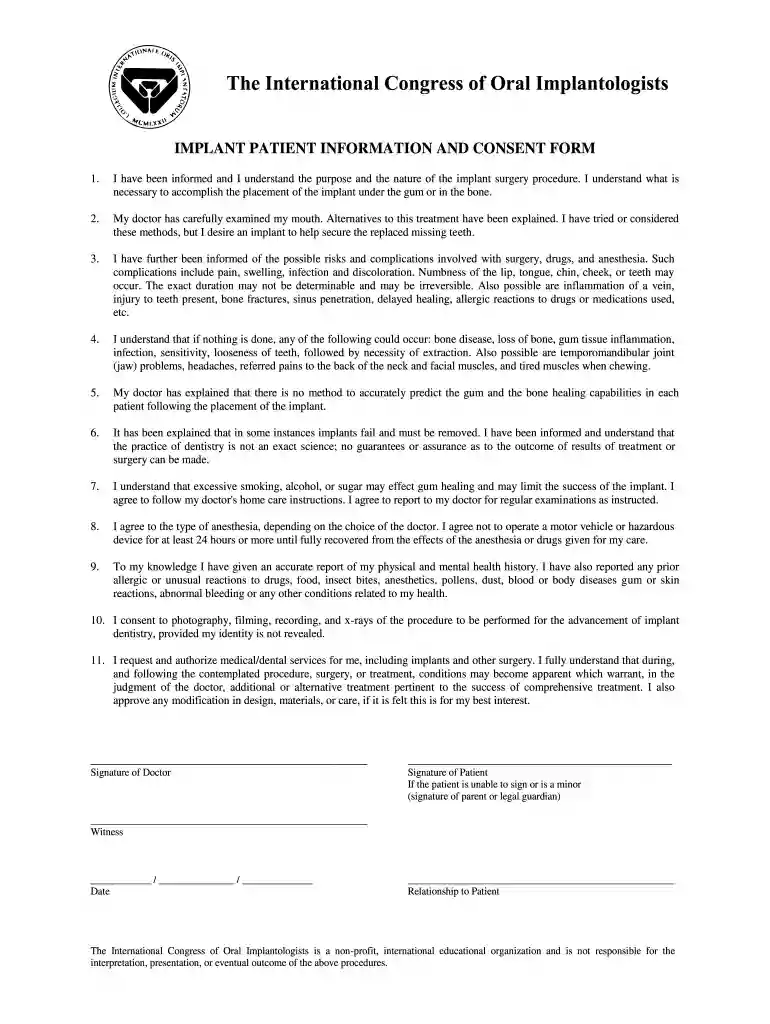
The Implant Patient Information and Consent Form is a critical document in the dental and oral surgery field. It serves various purposes, primarily informing patients about the dental implant process and obtaining their consent to proceed. This form covers essential details related to the procedure, potential risks, post-operative care, and alternative treatment options.
This section outlines the key components that make up the implant patient information consent form.
Patient Understanding: The form emphasizes the patient's comprehension of the implant surgery, including the sequence of events leading to the procedure. Patients need to be informed about the steps involved and what to expect during and after surgery.
Potential Risks and Complications: A crucial part of the consent form discusses the possible risks associated with dental implant surgery. These might include infection, nerve damage, sinus issues, or failure of the implant. By highlighting these risks, the form ensures that patients are fully aware of the implications.
Alternatives to Treatment: Patients are provided with information about alternative treatment options, enabling them to make informed decisions. This may include non-surgical solutions or other types of dental restorations. Understanding these alternatives is essential for patients to feel confident in their treatment choice.
Post-operative care is a vital element of the dental implant process, significantly influencing recovery and implant success.
Follow-up Appointments: The consent form specifies the necessity of follow-up visits with the dental practitioner. This allows the professional to monitor healing and ensure the implant is integrating properly.
Care Instructions: Patients receive detailed instructions on how to care for their implants and surrounding teeth post-surgery. These may include guidelines for oral hygiene, dietary restrictions, and warning signs that may require immediate medical attention.
The consent form explicitly states that outcomes of the dental implant procedure cannot be guaranteed.
Patient Acceptance: It illustrates the understanding that while dental implants have a high success rate, individual results can vary based on several factors such as the patient's health, adherence to post-operative care, and lifestyle choices.
Informed Consent: By signing the form, patients acknowledge their awareness of these factors, ensuring that they are taking responsibility for their choices in the treatment process.
To enhance efficiency, many dental practices use standardized templates for implant consent forms.
Templates for Consistency: Utilizing templates allows for consistent information sharing across different patients and cases. It also ensures compliance with legal requirements, as standard information is represented uniformly.
Customization for Specific Cases: Though templates exist, customization is necessary to tailor the consent form to each patient's unique needs and medical history. This flexibility is essential, particularly in identifying any specific risks based on the patient’s dental condition.
Legal compliance is a fundamental aspect of using implant patient information consent forms.
HIPAA Compliance: Dental practitioners must comply with the Health Insurance Portability and Accountability Act (HIPAA) regarding patient information confidentiality. This involves safeguarding personal health information and ensuring that consent forms are stored securely.
Documentation Retention: Consent forms should be properly retained in accordance with state regulations. This allows for proper medical record keeping and offers legal protection for both the provider and the patient in the event of disputes.
Understanding the typical scenarios can further clarify how the implant patient information consent form is utilized.
Initial Consultations: During the first visit, the dentist explains the procedure and presents the consent form for the patient to review.
Before Surgery: The consent form is presented shortly before the surgery date, giving the patient time to contemplate the information before proceeding.
Patient Education: The consent form provides an educational resource for patients, often used to facilitate detailed discussions about implant surgery within the context of their overall dental health.
An understanding of the implant patient information consent form is essential for patients considering dental implants.
Comprehensive Information: The form encapsulates critical information regarding the procedure, including risks and obligations.
Empowerment Through Knowledge: By actively engaging with the details of the consent form, patients are empowered to participate in their treatment decisions proactively.
Foundation for Trust: A transparent consent process helps build trust between the patient and the dental practitioner, essential for a positive patient experience.
This depth of information aids in ensuring that patients are not only informed but also feel confident in their choices regarding dental implants.
At DocHub, your data security is our priority. We follow HIPAA, SOC2, GDPR, and other standards, so you can work on your documents with confidence.
I have discussed the planned procedure, including the potential for any transfusion of blood products or receipt of tissue as necessary, expected benefits, theRead more
Apr 18, 2025 All patients who signed a Statement of Informed Consent are accounted for in this report. professional fitting and information guide, andRead more
Mar 3, 2025 I hereby consent to the insertion of the contraceptive implant and understand that it is effective until, at which time I mustRead more


