Emergency Response Plan + TemplateStep-by- 2026

Get Form
Emergency Response Plan + TemplateStep-by- Preview on Page 1

Here's how it works

01. Edit your form online
Type text, add images, blackout confidential details, add comments, highlights and more.

02. Sign it in a few clicks
Draw your signature, type it, upload its image, or use your mobile device as a signature pad.

03. Share your form with others
Send it via email, link, or fax. You can also download it, export it or print it out.

Definition & Meaning

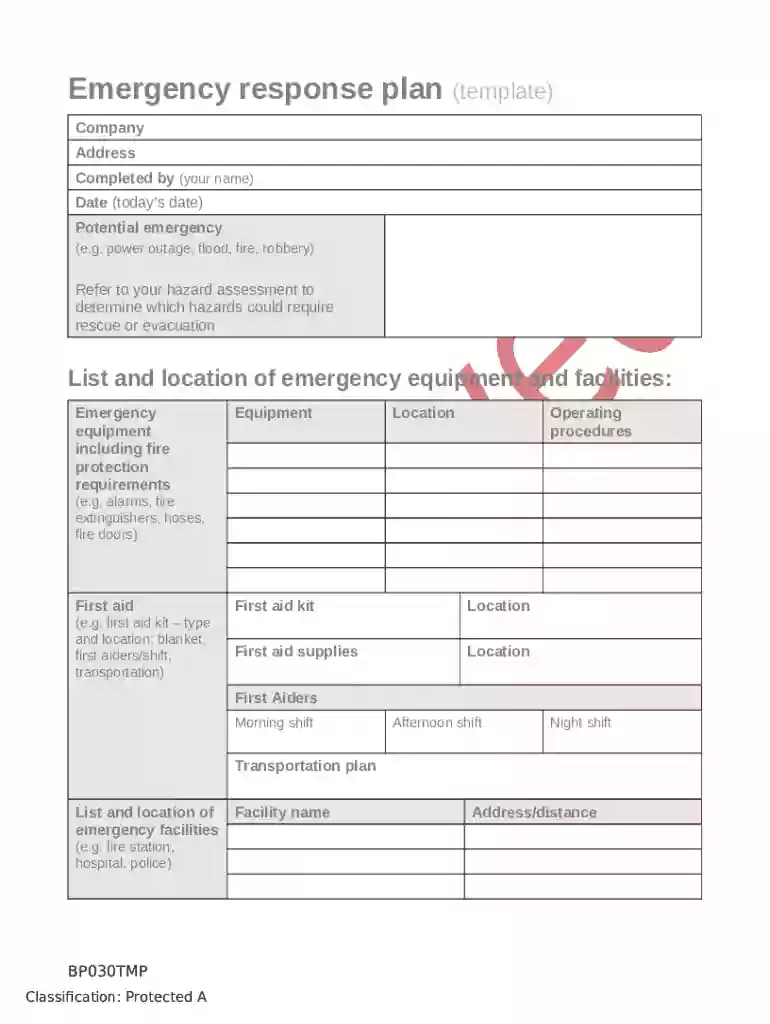
The "Emergency Response Plan Template" is a structured framework designed to assist organizations in preparing for various emergencies like power outages, floods, fires, and robberies. This template provides a comprehensive guideline for creating an effective response strategy, ensuring that organizations can quickly and efficiently manage unforeseen events. By standardizing response protocols, it enhances the ability to safeguard employees and assets while maintaining compliance with relevant legislation.

Components of the Plan

  • Hazard identification
  • Emergency equipment listing
  • Evacuation procedures
  • Emergency training requirements
  • Contact information for services

Each component plays a vital role in forming a cohesive plan, tailored to the specific needs and circumstances of an organization.

How to Use the Emergency Response Plan Template

Organizations can use the template as a blueprint to customize their emergency response strategies. By following the structured outline provided, businesses can identify potential hazards unique to their operations and formulate action plans to mitigate the associated risks. The template also enables the assignment of responsibilities, ensuring that each team member understands their role during an emergency.

Steps for Implementation

  1. Assessment: Evaluate the specific needs and risks of your organization.
  2. Customization: Modify sections of the template to align with your organizational structure.
  3. Training: Conduct training sessions to familiarize employees with the plan.
  4. Review: Regularly review and update the plan to adapt to new challenges or regulatory changes.

Steps to Complete the Emergency Response Plan Template

Completing the template involves a systematic approach to consider all critical aspects of emergency management.

Step-by-Step Process

  1. Identify Potential Emergencies: Consider the types of emergencies your organization could face, such as natural disasters or security threats.
  2. Develop Procedures: Create detailed response procedures for each identified emergency scenario.
  3. Assign Roles and Responsibilities: Clearly designate team roles and responsibilities in the event of an emergency.
  4. Resource Allocation: Ensure necessary resources and equipment are readily available and clearly listed in the plan.
  5. Communication Protocols: Establish clear communication channels to ensure information flows effectively among stakeholders during crises.
  6. Training and Simulation: Plan regular drills to verify the efficiency of the emergency response and make necessary adjustments.

Key Elements of the Emergency Response Plan Template

For the template to be effective, it must consist of key elements that address all aspects of emergency preparedness.

Vital Components

  • Hazard Identification: Detailed assessment and documentation of potential hazards.
  • Evacuation Plans: Clear evacuation routes and procedures for different types of emergencies.
  • Resource Inventory: Comprehensive list of equipment and resources necessary during emergencies.
  • Training Programs: Regularly scheduled training and drills to maintain readiness.

These elements ensure that organizations have a thorough and actionable plan for addressing emergencies efficiently.

Who Typically Uses the Emergency Response Plan Template

The template is commonly utilized by a wide range of organizations, each with their unique operational demands and compliance requirements.


decoration image ratings of Dochub

Common Users

  • Corporations: Large businesses that require detailed emergency protocols to protect vast employee and customer bases.
  • SMEs: Small and medium enterprises looking for cost-effective ways to manage potential crises effectively.
  • Educational Institutions: Schools and universities focusing on student safety and emergency preparedness.
  • Healthcare Facilities: Hospitals and clinics that must ensure patient and staff safety during emergencies.

These groups use the template to develop plans that are practical, cost-efficient, and compliant with safety regulations.

decoration image

Legal Use of the Emergency Response Plan Template

Using the emergency response plan involves adherence to legal and regulatory requirements, which can vary by industry and locale.

Regulatory Compliance

  • Occupational Safety and Health Administration (OSHA): Ensures plans meet workplace safety standards.
  • Local Government Regulations: Compliance with state or city-specific emergency management requirements.
  • Industry-Specific Guidelines: Adherence to standards unique to sectors, such as healthcare or education.

Having a legally compliant emergency response plan is crucial for liability protection and safeguarding organizational assets.

State-Specific Rules for the Emergency Response Plan

Emergency management requirements may differ across states, influencing the customization of your emergency response plan.

State Variations

  • Regulatory Differences: Some states have specific requirements for evacuation procedures or safety drills.
  • Local Emergency Services: Coordination with state-specific emergency services for tailored response plans.
  • Climate Considerations: Regional climate risks, such as hurricanes or earthquakes, that require specific preparations.

Understanding state-specific rules ensures that the emergency response plan is both compliant and effective within its operating region.

Examples of Using the Emergency Response Plan Template

Demonstrating practical applications of the template can provide insight into its versatility and effectiveness in various scenarios.

Practical Usage Scenarios

  • Natural Disaster Preparedness: A school utilizes the plan to manage responses to hurricanes, ensuring student safety and efficient communication.
  • Fire Safety: A corporate office adapts the template to design comprehensive fire evacuation procedures and training.
  • Healthcare Facilities: Hospitals use the template to coordinate multi-department responses to medical emergencies like pandemics or mass casualty events.

These examples illustrate how diverse organizations effectively employ the emergency response plan template to safeguard their operations.

be ready to get more

Complete this form in 5 minutes or less

Get form

Got questions?

We have answers to the most popular questions from our customers. If you can't find an answer to your question, please contact us.
Contact us
Prevention, mitigation, preparedness, response and recovery are the five steps of Emergency Management. Prevention. Actions taken to avoid an incident. Mitigation. Preparedness. Response. Recovery.
5 phases of emergency management Prevention. Prevention focuses on preventing hazards from occurring, whether they are natural, technological or caused by humans. Mitigation. Mitigation is the effort to reduce loss of life and property by lessening the impact of disasters and emergencies. Preparedness. Response. Recovery.

Security and compliance

At DocHub, your data security is our priority. We follow HIPAA, SOC2, GDPR, and other standards, so you can work on your documents with confidence.

Learn more
ccpa2
pci-dss
gdpr-compliance
hipaa
soc-compliance