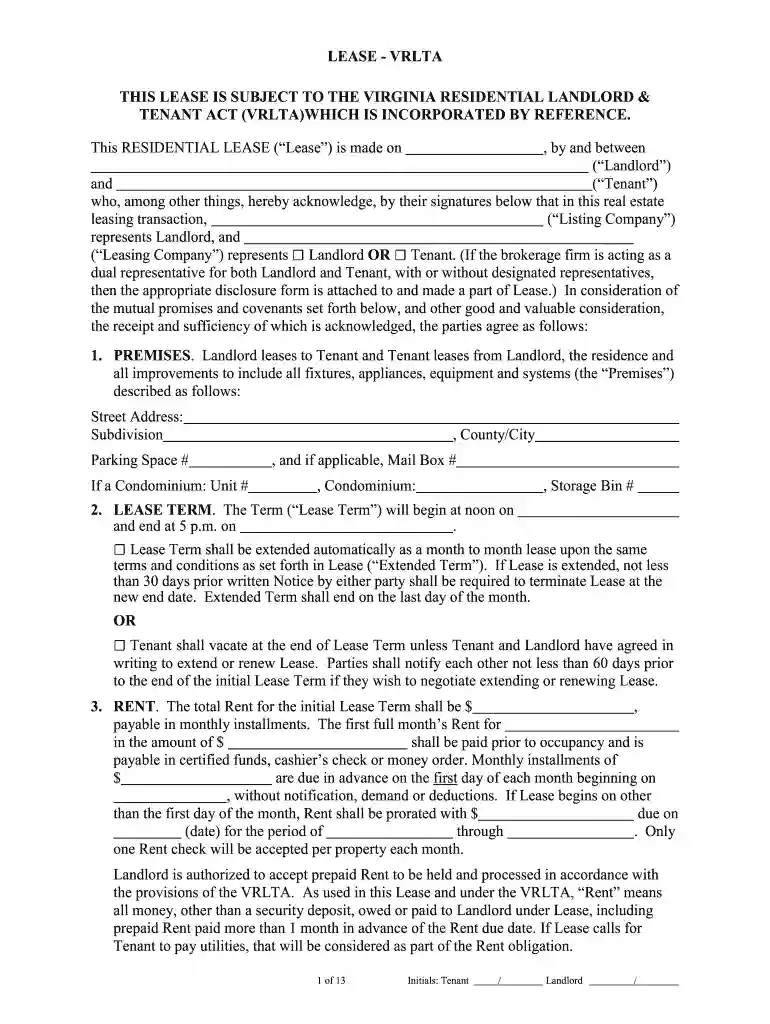
Lease VRLTA- K1354 2026

Get Form
k1354 Preview on Page 1

Here's how it works

01. Edit your k1354 online
Type text, add images, blackout confidential details, add comments, highlights and more.

02. Sign it in a few clicks
Draw your signature, type it, upload its image, or use your mobile device as a signature pad.

03. Share your form with others
Send it via email, link, or fax. You can also download it, export it or print it out.

Definition and Meaning of Lease VRLTA- K1354

The Lease VRLTA- K1354 is a residential lease agreement governed by the Virginia Residential Landlord and Tenant Act (VRLTA). This legal document establishes a contract between a landlord and a tenant, delineating specific terms and conditions under which the tenant agrees to rent a residential property. Key aspects often include the lease term, rent payment schedule, responsibilities for property maintenance, and provisions for the termination of the lease. This agreement ensures both parties are clear on their obligations and rights, thereby reducing the risk of disputes.

  • Lease Term: Specifies the duration of the agreement, which could be a month-to-month basis or a fixed term such as one year.
  • Rent Payment: Outlines the amount due, the due date, and accepted payment methods.
  • Maintenance Responsibilities: Details the roles of both tenant and landlord in maintaining the premises.
  • Termination Conditions: Explains circumstances under which the lease can be ended before the expiration date.

How to Use the Lease VRLTA- K1354

Using the Lease VRLTA- K1354 involves several key steps to ensure its effectiveness and legality.

  1. Review the Document: Thoroughly read through the entire lease to understand the terms, conditions, rights, and obligations.
  2. Seek Legal Advice: If any clauses are unclear, consider consulting a legal professional to avoid future misunderstandings.
  3. Complete the Document Properly: Fill in necessary information such as tenant and landlord names, property address, and contact information.
  4. Signature and Date: Both parties must sign and date the agreement to make it legally binding.
  5. Retain a Copy: Both tenant and landlord should keep a signed copy for record-keeping and potential future reference.

Steps to Complete the Lease VRLTA- K1354

Completing the Lease VRLTA- K1354 is essential for ensuring the legal protection of both parties.

  1. Gather Necessary Information: Prepare details about the rental property, identification for both parties, and financial details such as rent amount.
  2. Fill in Tenant Details: Include names, addresses, and contact information for all tenants.
  3. Address Specific Clauses: Pay attention to clauses about pets, utilities, or any other special conditions unique to your agreement.
  4. Rent and Payment Terms: Specify the amount of rent, due dates, and payment methods.
  5. Security Deposit Protocol: Outline the amount required and conditions under which it will be returned.

Important Terms Related to Lease VRLTA- K1354

Understanding important terms within the lease agreement is crucial.

  • Premises: Refers to the property being rented, including any specified inclusions like garages or storage units.
  • Security Deposit: Money held as a guarantee for the tenant's performance under the lease terms.
  • Late Fees: Penalties charged for late rent payments.
  • Utilities: Services such as water, electricity, and gas, and how their costs will be allocated between tenant and landlord.

Legal Use of the Lease VRLTA- K1354

The Lease VRLTA- K1354 must adhere to legal standards to be considered valid.

  • Compliance with Local Laws: It must conform to Virginia’s rental statutes and regulations.
  • Fair Housing Practices: Ensure the lease does not discriminate against protected classes.
  • Recourse for Violation: Include processes for addressing non-compliance by either party.
  • Military Clauses: Special provisions for tenants in military service, aligning with federal laws.

Key Elements of the Lease VRLTA- K1354

The effectiveness of the Lease VRLTA- K1354 consists of several key elements:

  • Clause on Property Access: Landlord rights to access the property with notice.
  • Insurance Requirements: Coverage obligations for both property and renter’s insurance.
  • Repair and Maintenance: Division of responsibilities for repairs and upkeep.
  • Renewal Options: Conditions under which the lease can be renewed or extended.

State-Specific Rules for the Lease VRLTA- K1354

The Lease VRLTA- K1354 is influenced by specific rules in Virginia.

  • Security Deposit Cap: Maximum allowable deposit amount as stipulated by state law.
  • Mandatory Disclosures: Requirement for disclosing hazards like lead-based paint.
  • Procedure for Eviction: Legal process for eviction differs based on cause and should be closely followed to avoid legal ramifications.

Examples of Using the Lease VRLTA- K1354

Real-world scenarios help illustrate the application of the lease:

  • Family Rental Situation: A family renting a home and negotiating terms for pet accommodations within the lease.
  • College Student Lease: Students signing a lease closer to campus with specific clauses about subletting.
  • Senior Citizens: Tailored provisions for mobility accommodations and long-term lease benefits.
be ready to get more

Complete this form in 5 minutes or less

Get form

Got questions?

We have answers to the most popular questions from our customers. If you can't find an answer to your question, please contact us.
Contact us
Go To Your Landlord or Management Company For example, property owners in California must: Provide a copy of the rental agreement or lease to the tenant within 15 days of its execution by the tenant.
Lease Renewal: The most docHub difference between leases inside and outside the LTA 1954 is the right to lease renewal. Inside the Act, tenants have an automatic right to renew their lease, while outside the Act, the renewal is subject to negotiation.
Detailed Examination of Clauses After the initial overview, dive deeper into the specific clauses and provisions of the contract. Analyze each section carefully, focusing on rent payments, lease duration, renewal options, maintenance responsibilities, and any additional terms outlined.
BdocHub of Lease Definition: When a Tenant bdocHubes the lease, the Landlord may request that the court evict of the Tenant. This process can only be used for seeking an eviction. For obtaining money damages, please see; Lawsuits for Money Damages after Tenant Leaves.
One of the most common problems landlords face is unpaid rent. Lease agreements should state the due date for payments, so even a single late payment can constitute a violation of the agreement.

Security and compliance

At DocHub, your data security is our priority. We follow HIPAA, SOC2, GDPR, and other standards, so you can work on your documents with confidence.

Learn more
ccpa2
pci-dss
gdpr-compliance
hipaa
soc-compliance
be ready to get more

Complete this form in 5 minutes or less

Get form

People also ask

The 2 biggest signs are not keeping up with basic maintenance. And asking for illegal terms in the lease agreement.
The Virginia Residential Landlord and Tenant Act (VRLTA), Sections 55.1-1200 through 55.1-1262 of the Code of Virginia, establishes the rights and obligations of residential landlords and tenants in the Commonwealth, but only the courts can enforce those rights and obligations.
Maintenance and repair responsibilities are one of the most critical clauses in a lease or rental agreement. Specify who is responsible for maintaining the property. For example, the property manager or landlord may handle major repairs, while the tenant must take care of minor fixes or routine maintenance.

Related links