




01. Edit your ocdp board online
Type text, add images, blackout confidential details, add comments, highlights and more.

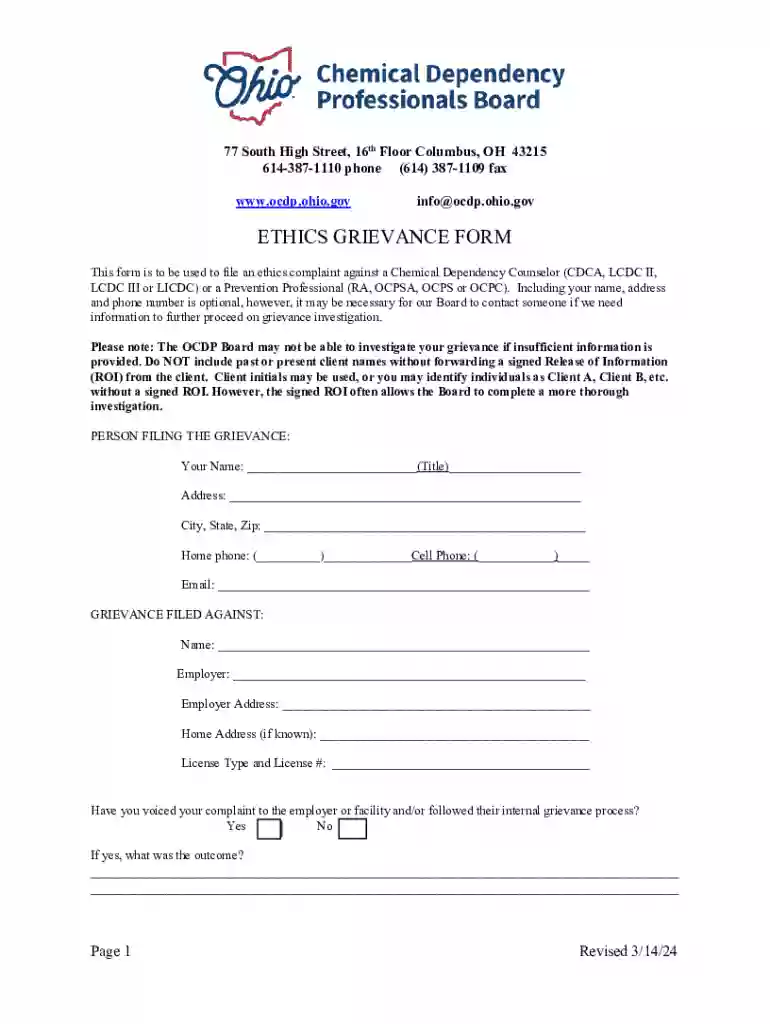
Type text, add images, blackout confidential details, add comments, highlights and more.

Draw your signature, type it, upload its image, or use your mobile device as a signature pad.

Send ohio chemical services via email, link, or fax. You can also download it, export it or print it out.
Attorney ethics refers to the set of rules and principles that govern the professional conduct of lawyers. These guidelines ensure that attorneys maintain high standards of integrity, professionalism, and fairness in their practice. Each state in the United States has its own set of ethical codes often based on the American Bar Association's Model Rules of Professional Conduct. These rules cover various aspects such as client confidentiality, conflict of interest, and duty of competence. Understanding these ethics is crucial for attorneys to navigate legal responsibilities effectively while upholding the law's integrity and their profession's reputation.
The Attorney Ethics form is a crucial tool for reporting and examining potential ethical violations by attorneys. This form provides a structured approach to submitting complaints and initiating investigations. Users must detail the unethical behavior, including the time, place, and nature of the incident. To ensure a comprehensive submission, include any supporting documentation, such as emails, contracts, or witness statements. The completed form should be submitted to the appropriate state bar association or ethics committee for review. Proper use of this form ensures that complaints are taken seriously and investigated thoroughly, maintaining the profession's integrity.
Each state may have variations in its rules and procedures for handling attorney ethics complaints. Certain jurisdictions might have additional criteria or specific forms tailored to local bar association requirements. It is imperative to check the specific requirements of the state in which the alleged ethical breach occurred to ensure compliance with all necessary protocols. This might involve visiting the state's bar association website or contacting their offices directly for guidance on filing the ethics form and understanding any unique state modifications.
Attorneys found in violation of ethical standards may face several penalties, ranging from censure and fines to suspension or disbarment from practicing law. The severity of the penalty often corresponds to the nature and gravity of the ethical breach, with more serious violations attracting harsher repercussions. In some cases, the attorney might be required to undergo additional training or monitoring as part of the disciplinary action. Understanding these penalties underscores the importance of adhering strictly to ethical standards in legal practice.
The attorney ethics form is primarily used by clients or individuals who believe a lawyer has violated ethical standards. It can also be utilized by fellow attorneys or colleagues within the legal profession who have witnessed unethical behavior. Regulatory bodies, such as state bar associations, frequently engage with these forms as part of their oversight and disciplinary functions. Ensuring that this form is used appropriately helps maintain the high ethical standards expected within the legal industry.


Using the attorney ethics form effectively can address these and other scenarios, reinforcing the importance of ethical vigilance in the legal field.
We've got more versions of the ocdp board form. Select the right ocdp board version from the list and start editing it straight away!
At DocHub, your data security is our priority. We follow HIPAA, SOC2, GDPR, and other standards, so you can work on your documents with confidence.


