




01. Edit your mpi sheet online
Type text, add images, blackout confidential details, add comments, highlights and more.

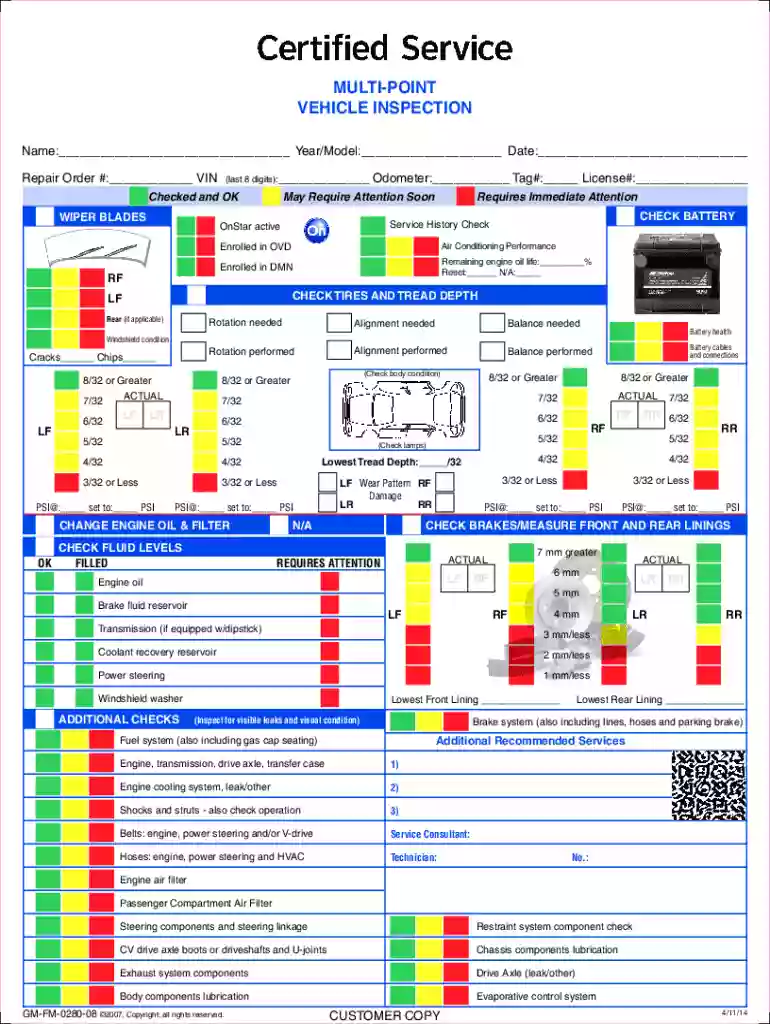
Type text, add images, blackout confidential details, add comments, highlights and more.

Draw your signature, type it, upload its image, or use your mobile device as a signature pad.

Send free printable multi point vehicle inspection form pdf via email, link, or fax. You can also download it, export it or print it out.
A printable multi point vehicle inspection is a systematic checklist designed to assess key components and systems of a vehicle to ensure it is operating safely and efficiently. This inspection typically covers various parts of the vehicle, including but not limited to:
The inspection categorizes findings into three classifications: 'Checked and OK', 'May Require Attention Soon', or 'Requires Immediate Attention'. This structured approach ensures that vehicle owners receive a clear understanding of their vehicle's maintenance needs, helping to enhance safety and prolong the life of the vehicle.
Using a printable multi point vehicle inspection form involves a few simple steps to properly assess your vehicle. Follow this structured approach:
Download and Print: Access a free printable multi point vehicle inspection form in PDF format. This form is designed to be user-friendly and easy to print.
Gather Required Tools: Prior to conducting the inspection, ensure you have necessary tools like a tire pressure gauge, fluid check dipsticks, and a flashlight for detailed viewing.
Inspect Each Item Thoroughly: Work through the checklist, starting with exterior checks such as the condition of wiper blades and headlights, and proceed to interior systems like the horn and dashboard indicators.
Mark the Findings: As you assess each component, use the form’s categories to note the condition. This helps in prioritizing repairs and ensuring significant issues are addressed.
Review and Act: After completing the inspection, review the findings. Identify any items marked as requiring attention and take appropriate action, whether it's scheduling repairs or performing simple maintenance.
Completing the multi point vehicle inspection is straightforward. Here are the detailed steps you should follow:
Preparation: Gather your tools and download the printable form. Familiarize yourself with the checklist layout so you can efficiently mark observations.
Conduct Visual Checks: Walk around the vehicle and start with an external inspection. Look for any obvious signs of wear or damage.
Utilize Tools for Testing: Use a tire gauge for checking pressure and a dipstick for fluid levels. These tests provide objective data about vehicle health.
Document Findings: Systematically fill out the form as you examine each part. For example, if the tires have low tread depth, mark it as ‘Requires Immediate Attention.’
Follow-Up: Summarize the results and plan your next steps accordingly. If needed, seek professional assistance for items that require technical attention.
Conducting regular multi point vehicle inspections is vital for several reasons:
Safety: Ensures all critical components, such as brakes and tires, are functioning properly to minimize the risk of accidents.
Cost Efficiency: Identifying issues early can prevent more extensive damage and costly repairs later. Regular inspections often lead to significant savings over time.
Enhanced Vehicle Longevity: Routine maintenance helps in prolonging the lifespan of the vehicle by ensuring it is running optimally.
Resale Value: Keeping a documented history of inspections adds value to the vehicle, which can benefit when it is time to sell or trade-in.
The printable multi point vehicle inspection form is beneficial for a variety of users, including:


A comprehensive multi point vehicle inspection form typically includes several key elements to facilitate thorough evaluations:
Comprehensive Checklist: Areas to evaluate include the engine, exhaust system, lights, and electrical components.
Categorization of Findings: Clearly defined categories help in prioritizing which issues need immediate action and which can be monitored.
Signature Block: A section for the inspector's signature to verify that the inspection was conducted properly.
Space for Notes: Room for additional comments or specific observations that provide context to the findings.
Follow-Up Actions: Instructions for scheduling repairs or maintenance based on the inspection results.
Here are specific scenarios showcasing the use of multi point vehicle inspection forms in practical settings:
Routine Maintenance: A vehicle owner decides to conduct a multi point inspection before a long road trip, identifying a worn-out battery that needs replacing.
Selling a Vehicle: A seller uses the form to demonstrate the vehicle's condition to potential buyers, presenting a well-documented inspection record that boosts buyer confidence.
Fleet Management: A fleet manager regularly schedules inspections using these forms for all vehicles, helping to minimize downtime and ensure all vehicles are operational.
Safety Compliance: A transportation company utilizes the inspection sheet to maintain compliance with safety regulations, ensuring all fleet vehicles meet state standards before being dispatched.
At DocHub, your data security is our priority. We follow HIPAA, SOC2, GDPR, and other standards, so you can work on your documents with confidence.
Please note that this manual applies to all models and explains all equipment, including options. Therefore, you may find some explanations for equipmentRead more
MULTI-POINT. VEHICLE INSPECTION. Name: Year/Model: Repair Order #:. VIN (last 8 digits). Odometer: Date: Tag#:. Checked and OK. May Require Attention Soon.Read more
MULTI-POINT. VEHICLE INSPECTION. Name: Year Record all vehicle observations on Inspection Form and discuss findings with customer.Read more


