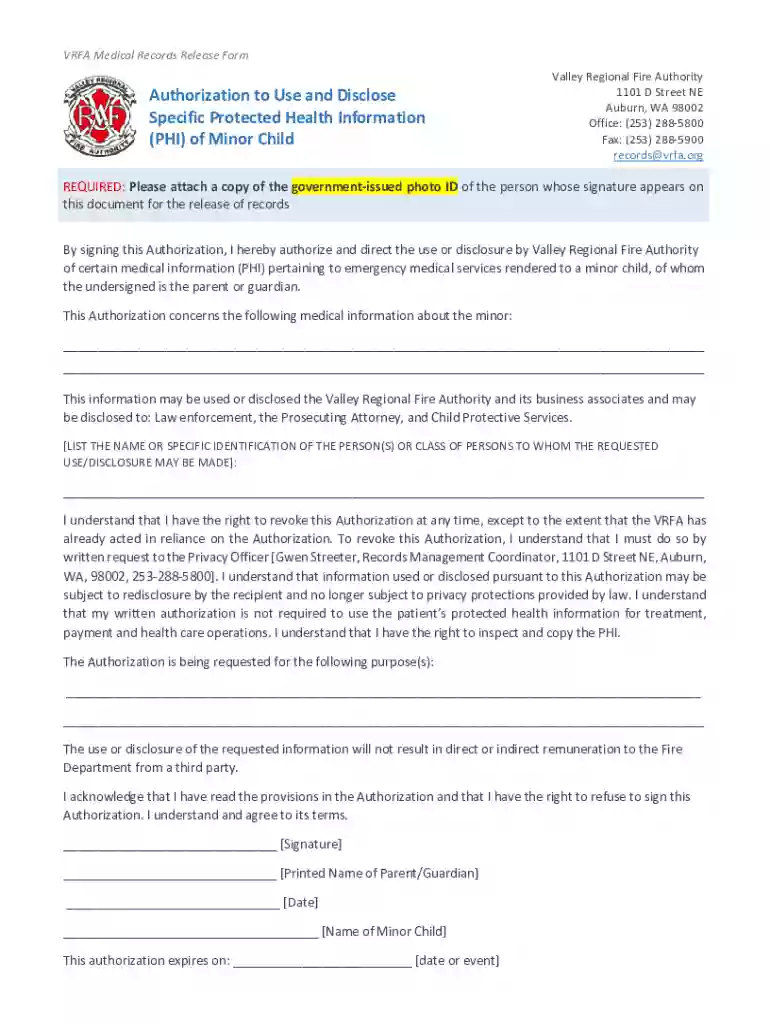
Definition and Purpose of the VRFA Medical Authorization Form - Minor Patient
The VRFA Medical Authorization Form - Minor Patient is a document used to authorize the Valley Regional Fire Authority to access, use, and disclose protected health information (PHI) of a minor patient for emergency medical services. This form ensures that relevant medical information can be shared with the necessary parties in situations where the minor may require immediate emergency care. It mandates parent or guardian consent, thereby offering legal protection and administrative clarity during the data sharing process.
Key Features of the Form
- Authorization for PHI Use: The form explicitly permits the sharing of a minor's medical records.
- Emergency Service Authorization: Ensures timely access to medical information in emergencies.
- Parental Consent Requirement: Involves the approval of a parent or legal guardian.
How to Obtain the VRFA Medical Authorization Form - Minor Patient
Access Points
The VRFA Medical Authorization Form can be obtained through various channels to ensure accessibility:
- Online Access: Typically available through the Valley Regional Fire Authority's official website for easy download and printing.
- In-Person: Forms may be collected from local fire stations if direct online access is not viable.
- Health Care Providers: Hospitals and clinics associated with Valley Regional Fire Authority may also provide the form when needed for patient admission or emergency services.
Practical Guidance
- Visit the Valley Regional Fire Authority's official website.
- Navigate to the Forms or Resources section.
- Download the form and print it for completion.
Steps to Complete the VRFA Medical Authorization Form - Minor Patient
Detailed Step-by-Step Process
- Personal Information Section: Fill out the minor's full name, date of birth, and contact information.
- Parent/Guardian Information: Enter the full name and contact details of the parent or guardian authorizing the release.
- Designated Health Information: Specify the types of medical information authorized for release.
- Signatures: Obtain a signature from the parent or guardian along with a valid date.
- ID Verification: Attach a copy of a government-issued photo ID for identity verification purposes.
- Submission: Submit the completed form to the intended authority, either in person or via mail.
Common Mistakes to Avoid
- Incomplete ID verification may lead to form rejection.
- Ensure that all signature fields are completed, as missing signatures can prevent processing.
Importance of the VRFA Medical Authorization Form - Minor Patient
Benefits and Considerations
- Peace of Mind: Knowing medical staff have access to critical information during emergencies.
- Legal Compliance: Staying compliant with HIPAA and other privacy laws protecting minors.
- Efficient Healthcare Delivery: Facilitates quicker medical responses by ensuring that first responders have all necessary information.
Key Elements of the VRFA Medical Authorization Form - Minor Patient
Essential Components
- Contact Information: Clear and accurate details for easy verification and contact.
- Authorization Scope: Defines the extent and limits of information sharing.
- Revocation Rights: Allows parents to revoke consent under certain conditions, demonstrating flexibility.
State-Specific Rules for VRFA Medical Authorization Form - Minor Patient
U.S. Regional Variations
- Name and Address Requirements: These may slightly vary depending on state health regulations.
- Additional Signatures: Some states may require additional witnesses or notary services.
- Form Duration: The validity of the authorization may vary by state, often ranging from six months to a year.
Typical Users and Scenarios
- Parents and Guardians: Need to authorize emergency care providers to access critical health information.
- Healthcare Providers: Utilize the form to comply with legal standards and ensure they have requisite consent for treating minors.
- Emergency Responders: Depend on this form to swiftly access a minor's medical history in crisis situations.
Legal Use of the VRFA Medical Authorization Form - Minor Patient
Legal Compliance and Considerations
- HIPAA Compliance: Ensures all information handling adheres to health privacy laws.
- Revocation Clause: Legally respected right for parents to revoke consent at any point, provided it is in writing.
- Scope Limitation: Clearly defined scope of what information can be shared to prevent unauthorized access or misuse.
Examples of Using the VRFA Medical Authorization Form - Minor Patient
Real-World Applications
- School Emergencies: Authorizes school nurses or administrators to disclose essential medical records to paramedics.
- Summer Camps: Ensures camp personnel have authorization to communicate with medical staff in case of injuries or health events.
Case Studies
- School Field Trips: An example where a timely authorized form facilitated emergency treatment, preventing further health complications.
By covering these comprehensive aspects of the VRFA Medical Authorization Form - Minor Patient, the complete utility and relevance of the form in different scenarios are captured, aligning the information with practical usage and compliance requirements.