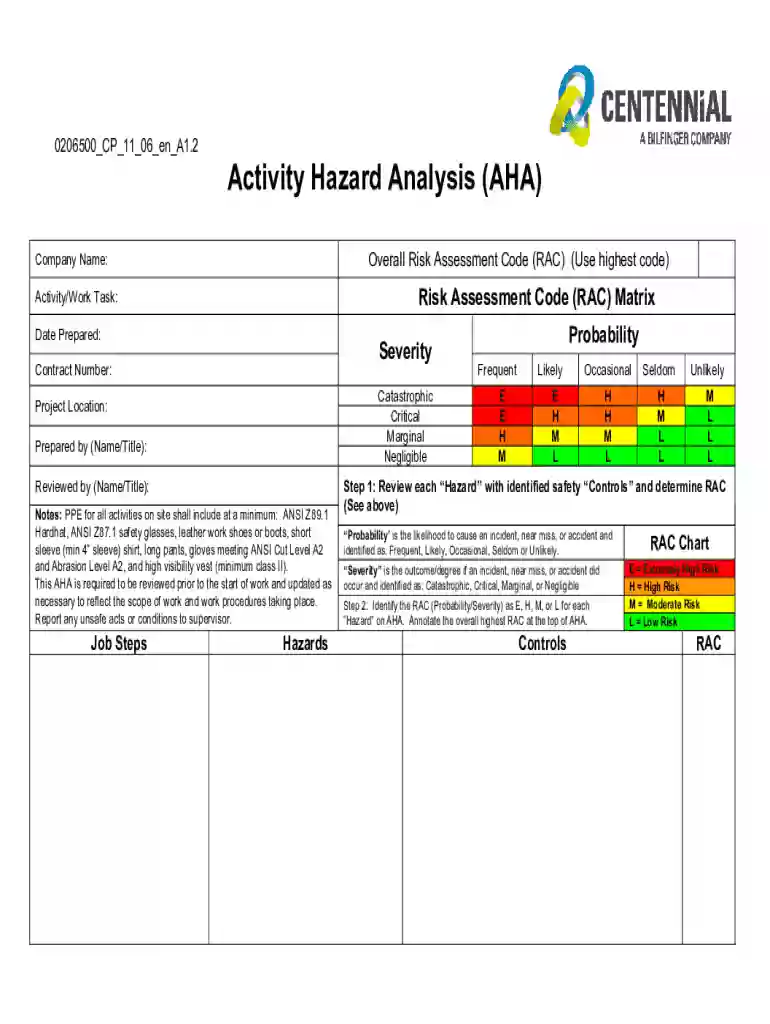
Definition and Meaning of 6 1 2 Activity Hazard Analysis
The "6 1 2 Activity Hazard Analysis" is a methodological form utilized to assess risks associated with specific work tasks. It involves identifying potential hazards, determining the likelihood of incidents, and assessing the potential severity of outcomes. The form is integral to promoting workplace safety and compliance with regulations by outlining necessary precautions, such as personal protective equipment (PPE), safety controls, and training efforts. The analysis is a proactive approach ensuring that tasks are reviewed periodically and necessary updates are made to adapt to any new safety challenges or process changes.
Key Elements of the 6 1 2 Activity Hazard Analysis
The 6 1 2 Activity Hazard Analysis form consists of several critical components that are tailored to effectively evaluate workplace hazards:
- Risk Identification: This section captures all possible hazards related to a specific task.
- Probability and Severity Assessment: Rates the likelihood of each hazard occurring and its potential impact.
- Mitigation Measures: Lists preventive strategies and controls, such as engineering controls, administrative policies, and PPE requirements.
- Training Requirements: Specifies necessary training for personnel to ensure safe execution of tasks.
- Review and Update Protocols: Ensures that the analysis is regularly reviewed and stays up-to-date with any changes in procedures or regulations.
How to Use the 6 1 2 Activity Hazard Analysis
Utilizing the 6 1 2 Activity Hazard Analysis involves a systematic approach to identifying and mitigating risks:
- Gather a Team: Assemble a group with diverse expertise relevant to the task being analyzed.
- Task Breakdown: Divide the task into smaller components to facilitate detailed analysis.
- Hazard Identification: For each task component, list potential hazards.
- Assess Risks: Evaluate each hazard in terms of probability and severity.
- Develop Controls: Establish safety measures to mitigate identified risks.
- Assign Responsibilities: Ensure that specific team members are accountable for implementing controls.
- Documentation and Communication: Record findings and communicate them effectively to all stakeholders.
- Monitor and Review: Continuously monitor task performance and review analyses to adapt to any changes.
Steps to Complete the 6 1 2 Activity Hazard Analysis
Completing the form involves a detailed and thorough process:
- Describe the Task: Clearly define the task and its scope.
- List Hazards: Identify all potential dangers associated with each step of the task.
- Risk Evaluation: Determine the likelihood of an incident occurring and its potential consequences.
- Implement Safety Controls: Decide on practical measures to either eliminate or control each risk.
- Specify PPE: List required equipment to protect workers.
- Training Plan: Outline any training sessions needed for personnel.
- Approval and Sign-Off: Obtain necessary approvals from safety officers or managers before task initiation.
- Ongoing Updates: Regularly update the form as tasks evolve or if incidents occur.
Why Conduct a 6 1 2 Activity Hazard Analysis
Conducting this analysis is crucial due to:
- Regulatory Compliance: Helps organizations adhere to OSHA and other regulatory agency guidelines.
- Accident Prevention: Reduces the risk of workplace accidents by preemptively addressing hazards.
- Improving Safety Culture: Fosters a proactive approach towards maintaining a safe working environment.
- Resource Efficiency: By avoiding accidents, organizations save costs related to healthcare, legal fees, and downtime.
Examples of Using the 6 1 2 Activity Hazard Analysis
Real-world applications of the analysis illustrate its importance:
- Construction Site Setup: Identifying slip, trip, and fall hazards when scaffolding is erected.
- Manufacturing Line Modification: Evaluating risks when new machinery is integrated.
- Chemical Handling: Assessing exposure risks and implementing protective measures for lab technicians.
- Remote Field Work: Analyzing the safety needs for teams working in isolated locations with difficult terrains.
Legal Use and Compliance of the 6 1 2 Activity Hazard Analysis
Legal compliance is a cornerstone of the form's implementation:
- OSHA Standards: The analysis helps organizations meet occupational safety standards.
- Insurance Requirements: Many insurers require documented safety analyses to provide coverage.
- Incident Investigation: The form can serve as critical documentation during legal investigations or audits, proving that due diligence was exercised in hazard management.
Using the 6 1 2 Activity Hazard Analysis is not only about regulatory compliance but is a fundamental part of an organization’s commitment to safety and employee well-being.