







Definition and Purpose of the NIHB Orthodontic Summary Sheet
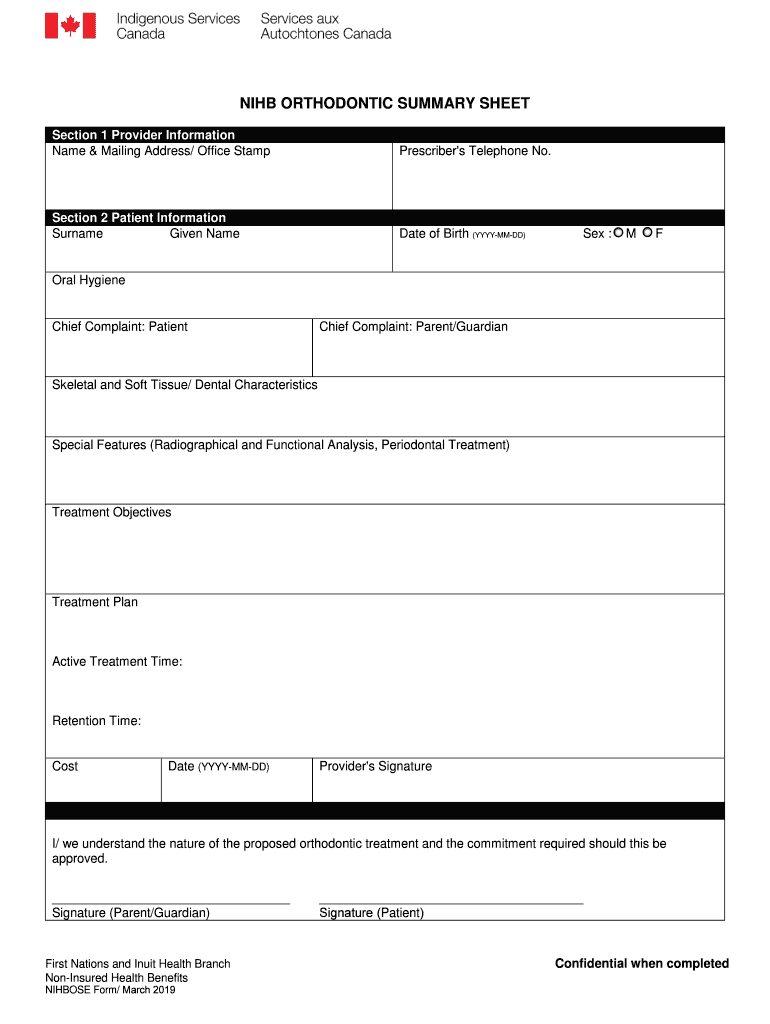
The NIHB Orthodontic Summary Sheet is a crucial document for Non-Insured Health Benefits (NIHB) providers. It is used to gather important information about orthodontic treatment plans for patients within eligible groups. This form records provider and patient details, treatment goals, and the analysis of both skeletal and dental characteristics. It is essential for outlining a comprehensive treatment plan, ensuring all relevant data are captured.
NIHB providers use this document to maintain thorough documentation of patient cases, which helps coordinate care and ensure that treatments align with prescribed objectives. The summary sheet is crucial for tracking the progression of orthodontic procedures and ensuring compliance with program requirements.
How to Use the NIHB Orthodontic Summary Sheet
Using the NIHB Orthodontic Summary Sheet effectively involves understanding its sections and required information. Begin by filling out patient data, including demographics and case specifics. Next, clearly outline treatment objectives, specifying desired outcomes based on initial assessments. The sheet requires detailed analyses, so include model, radiographic, and functional analyses as required.
Providers should follow guidelines for completing the form, ensuring accuracy and completeness in each section. The document should be updated regularly to reflect any changes in the treatment plan, allowing for adjustments based on patient progress.
Steps to Complete the NIHB Orthodontic Summary Sheet
- Gather Patient and Provider Information: Collect essential details such as names, identification numbers, and contact information.
- Outline Treatment Objectives: Specify the goals of orthodontic treatment, considering both short-term and long-term aims.
- Conduct Model Analysis: Document findings from dental models, focusing on alignment and occlusion.
- Perform Radiographic Analysis: Include necessary radiographic findings that impact the treatment plan.
- Complete Functional Analysis: Assess functional aspects such as bite or temporomandibular joint status.
- Describe Periodontal Assessment: Note any periodontal conditions that could affect treatment.
- Document Treatment Plan: Provide a comprehensive overview of proposed orthodontic interventions.
- Review for Accuracy: Ensure all information is correct and complete before submission.
Key Elements of the NIHB Orthodontic Summary Sheet
- Patient and Provider Information: Essential identifiers for case attribution.
- Treatment Objectives: Clear articulation of intended outcomes.
- Analysis Sections: Comprehensive model, radiographic, and functional evaluations.
- Periodontal Assessment: Evaluation of gum health related to orthodontic procedures.
- Treatment Plan: Detailed strategy comprising all procedural steps and timelines.
Who Typically Uses the NIHB Orthodontic Summary Sheet
The primary users of the NIHB Orthodontic Summary Sheet are health professionals providing orthodontic care to eligible groups under the NIHB program. These include:
- Licensed Orthodontists: Specialists overseeing treatment.
- Dental Clinics: Facilities that offer orthodontic services under the NIHB umbrella.
- NIHB Program Coordinators: Individuals ensuring compliance with program standards.


Obtaining the NIHB Orthodontic Summary Sheet
The NIHB Orthodontic Summary Sheet can typically be obtained through the NIHB program's official channels. Providers may access it via authorized online portals or request physical copies from NIHB administrative offices. Ensuring access to the most recent version of the form is crucial for compliance.
Important Terms Related to the NIHB Orthodontic Summary Sheet
- Skeletal Characteristics: Pertains to bony structures assessed during orthodontic treatment planning.
- Model Analysis: Evaluation of dental casts or digital models to determine abnormalities.
- Radiographic Analysis: Imaging reviews necessary for comprehensive orthodontic diagnostics.
Digital vs. Paper Version
With advancements in technology, the NIHB Orthodontic Summary Sheet is available in both digital and paper formats. While the digital version allows for easier updates and data sharing, some providers may still prefer paper for its tangibility or ease of access in certain scenarios. Ensuring all submitted copies, digital or paper, meet the program's criteria is crucial.
Software Compatibility
The NIHB Orthodontic Summary Sheet is compatible with various document management platforms like DocHub, allowing providers to edit and handle forms efficiently. Utilizing compatible software helps streamline workflows, ensuring information is kept secure while facilitating collaboration among team members.




