







Definition and Meaning of the CA Meal Break Form
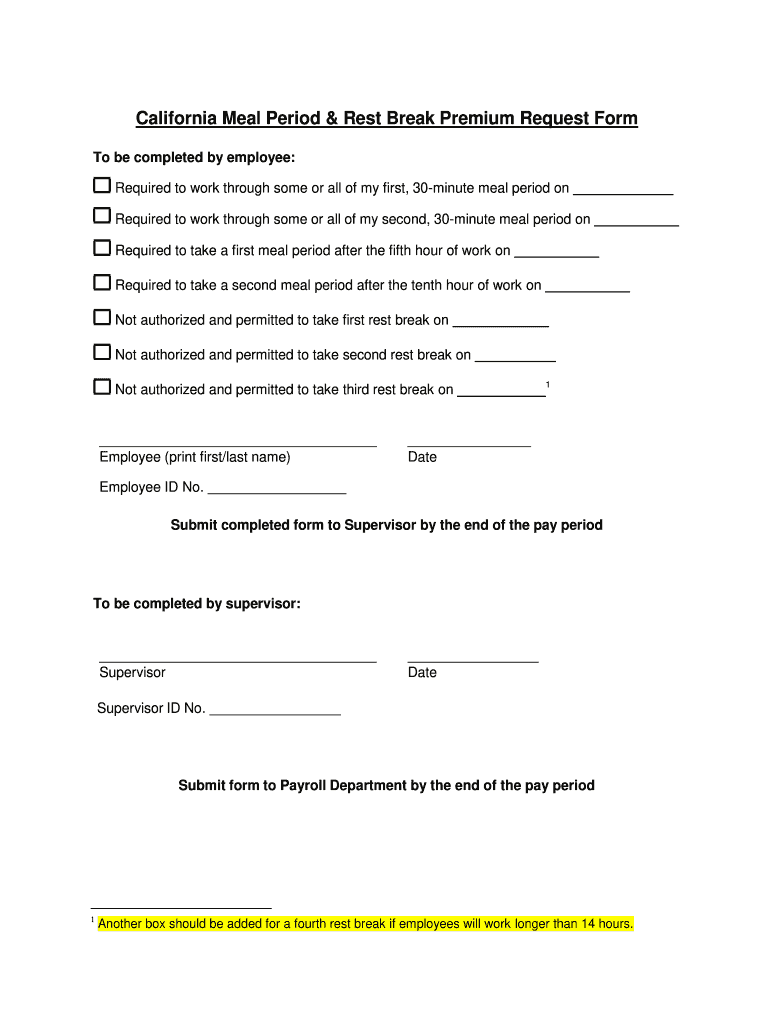
The CA Meal Break Form, also known as the California Meal Period and Rest Break Premium Request Form, is a vital document for employees in California. It serves as a mechanism for reporting instances when employees were forced to work through their entitled meal and rest breaks. This form allows employees to document the specific dates and times when these breaks were missed, which is crucial for ensuring compliance with California labor laws regarding meal breaks and rest periods.
Importantly, the form typically requires an employee's signature to certify the accuracy of the information provided. When completed, the form is submitted to the employee's supervisor and subsequently sent to the Payroll Department for processing. This process is essential for employees seeking compensation for lost meal or rest break periods, as mandated by California law. The completion of the CA Meal Break Form can include details like the length of the missed break and whether the employee had a reasonable opportunity to take their break.
Understanding the meaning and purpose of the CA Meal Break Form helps both employees and employers navigate the complexities of workplace regulations in California. Ensuring all parties recognize their rights and responsibilities can facilitate a smoother process when addressing missed breaks and associated compensation.
Steps to Complete the CA Meal Break Form
Filling out the CA Meal Break Form requires careful attention to detail to ensure all necessary information is accurately captured. The following steps outline the process:
-
Obtain the Form: Access the CA Meal Break Form through your HR department or download it from an official source such as an employee portal.
-
Fill in Personal Information: Provide your full name, employee ID, department, and contact details at the top of the form. This section ensures that your submission can be accurately tracked and processed.
-
Document Missed Breaks:
- Specify the dates and times when the meal and rest breaks were not provided.
- Include details on the duration of each missed break to support your request for compensation.
-
Supervisor Section: After completing your section, present the form to your supervisor. They will need to review, sign, and add any necessary comments regarding the missed breaks.
-
Submission: Send the completed form to the Payroll Department as instructed by your employer. Verify the method of submission (email, in person, or online form) to ensure timely processing.
Completing the form accurately and adhering to the required steps improves the chances of a successful claim for any missed meal and rest breaks.
Important Terms Related to the CA Meal Break Form
Understanding the terminology associated with the CA Meal Break Form can help clarify its purpose and the processes involved. Here are some key terms:
-
Meal Period: A designated break during an employee's work shift, typically lasting at least thirty minutes for shifts longer than five hours.
-
Rest Break: A brief period allotted for employees to rest, usually consisting of a ten-minute break for every four hours worked.
-
Premium Pay: Compensation provided to employees when they do not receive their legally mandated meal or rest breaks, typically calculated at a rate of one hour's pay for each missed break.
-
Employer Liability: The legal responsibility of employers to ensure employees take their entitled meal and rest periods as stipulated by state law.
-
Waiver: A formal agreement where employees voluntarily forgo their right to a meal or rest break, which must meet specific legal criteria in California.
Familiarity with these terms enhances comprehension of the form's implications for both employees and employers within the context of California labor regulations.
Examples of Using the CA Meal Break Form
Practical scenarios can illustrate when and how to use the CA Meal Break Form effectively. Here are a few examples:
-
Example One: Missed Meal Break During a Busy Shift
An employee working in a restaurant was scheduled for an eight-hour shift and was unable to take their mandatory meal break due to a high volume of customers. After discussing the situation with their manager and confirming the missed break, the employee fills out the CA Meal Break Form to request premium pay for the lost meal period. -
Example Two: Extended Shift Without Breaks
A nurse working a double shift in a hospital reports missing both their meal and rest breaks. The nurse completes the CA Meal Break Form, documenting the specific times when they were busy attending to patients without an opportunity to take breaks. This ensures they receive proper compensation for their missed breaks. -
Example Three: Multiple Instances of Missed Breaks
An office worker documents several days where they had to skip lunch because of project deadlines. The employee completes the CA Meal Break Form indicating all the dates they missed their breaks, which helps to establish a pattern of violation for discussions with HR regarding compensation.
These examples demonstrate the form's practical application in different work environments, highlighting its importance in safeguarding employee rights concerning meal and rest periods.
Legal Use of the CA Meal Break Form
The legal framework surrounding the CA Meal Break Form is shaped by California labor laws, which emphasize the rights of employees regarding meal and rest breaks. Here are some critical aspects of its legal use:
-
Compliance with California Labor Code: Employers are required to adhere to the California Labor Code, which mandates that employees receive meal breaks after a specified period of work. Failing to do so may lead to claims for premium pay.
-
Documentation for Claims: The CA Meal Break Form serves as formal documentation of instances where breaks were missed, providing a basis for claims. Properly filled forms support employees in seeking recompense for violations of their rights.
-
Enforcement of Employee Rights: The form empowers employees to assert their rights regarding mandatory breaks, which can lead to investigations and corrective actions by employers.
-
Retention of Records: Employers are typically required to keep these forms for a certain period as part of their record-keeping practices, facilitating compliance checks and audits related to labor laws.
Understanding the legal context of the CA Meal Break Form is essential for both employees and employers to ensure rightful adherence to the relevant regulations.
Final Thoughts on the CA Meal Break Form
By grasping the intricacies of the CA Meal Break Form, employees can effectively navigate their responsibilities and rights concerning meal and rest breaks in California. Awareness of the form's utility, completion procedures, important terms, and legal implications aids in fostering a fair workplace environment, ultimately enhancing compliance with state labor laws.


