




01. Edit your form online
Type text, add images, blackout confidential details, add comments, highlights and more.

Type text, add images, blackout confidential details, add comments, highlights and more.

Draw your signature, type it, upload its image, or use your mobile device as a signature pad.

Send it via email, link, or fax. You can also download it, export it or print it out.
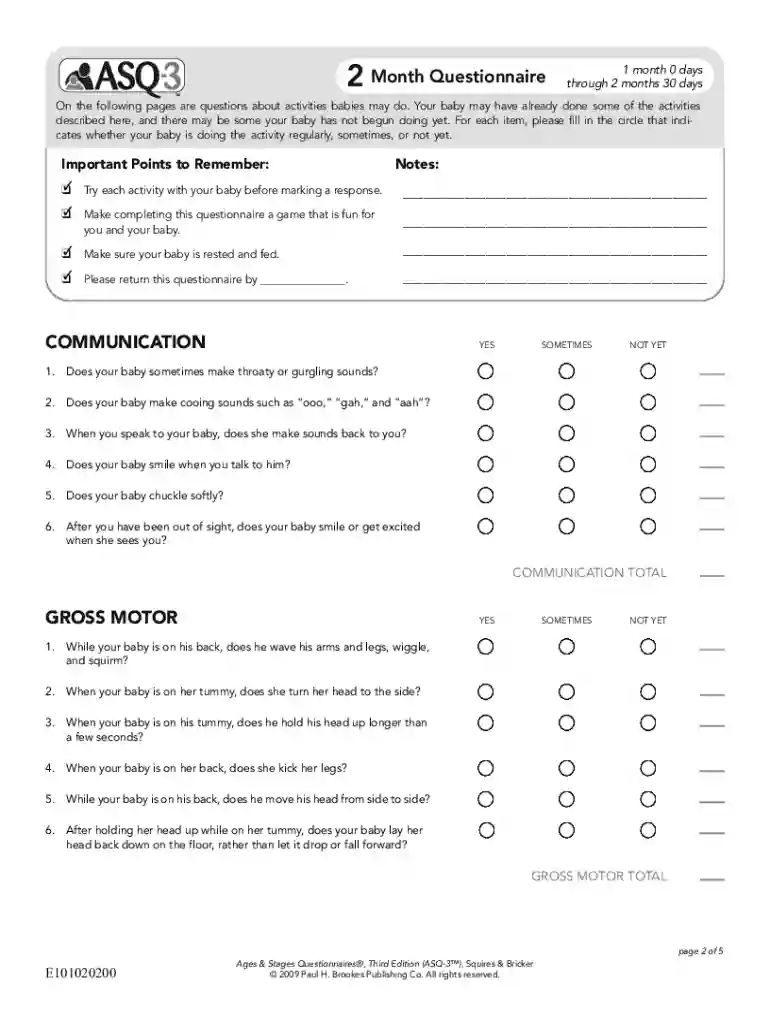
The "Questionnaires - 1 month 0 days through 2 months 30 days" is a developmental assessment tool designed for infants within this specific age range. It serves as a structured method to observe, measure, and document early developmental milestones. The questionnaire focuses on areas such as communication, gross motor skills, fine motor skills, problem-solving abilities, and personal-social interactions. It is used by parents to understand their infant's progress and can help identify any areas needing attention or further assessment by healthcare professionals.
The questionnaire is divided into several sections, each targeting specific developmental areas:
Each section includes specific actions or responses that parents need to mark as being performed regularly, sometimes, or not yet by the infant.
Using the questionnaire involves a few straightforward steps:
The developmental questionnaire can typically be acquired in the following ways:
Ensure to use reputable sources to obtain an authentic and accurate version of the questionnaire.
Completing the questionnaire requires attention to detail and patience:
The primary users of this questionnaire include:


Understanding the terminology used in the questionnaire is essential:
Grasping these concepts helps in accurately completing and interpreting the questionnaire results.
While the questionnaire itself is not a legal document, its results can be formally presented when seeking additional interventions or assessments from healthcare services. It is essential:
Understanding these aspects ensures the effective and secure use of the questionnaire in supporting infant development.
At DocHub, your data security is our priority. We follow HIPAA, SOC2, GDPR, and other standards, so you can work on your documents with confidence.
On the following pages are questions about activities children may do. Your child may have already done some of the activities described here, and there mayRead more
On the following pages are questions about activities babies may do. 1. Does your baby make high-pitched squeals? 2. When playing your baby make grunting,
These FAQs generally apply to transactions involving digital assets completed before Jan. 1, 2025.


