




01. Edit your form online
Type text, add images, blackout confidential details, add comments, highlights and more.

Type text, add images, blackout confidential details, add comments, highlights and more.

Draw your signature, type it, upload its image, or use your mobile device as a signature pad.

Send it via email, link, or fax. You can also download it, export it or print it out.
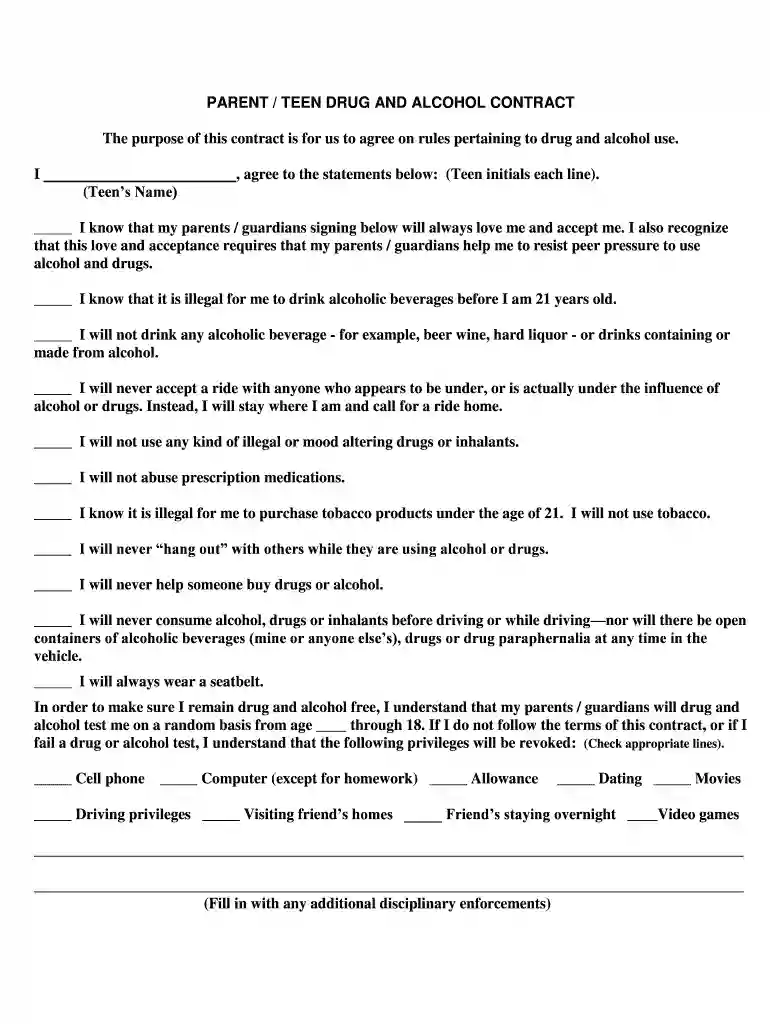
The Parent Teen Drug and Alcohol Contract is a formal agreement designed to set clear guidelines and responsibilities between parents and their teenagers regarding the use and abstinence from drugs and alcohol. It serves as a preventative tool that outlines specific commitments for maintaining a drug-free lifestyle, alongside clearly identified consequences for any breaches of the agreement. This contract also strengthens parental support and emphasizes communication, aiming to foster an environment of trust and mutual understanding.
This contract is a tool primarily meant for guiding family discussions and promoting healthy decisions rather than serving as a legally binding document. While it's not typically enforceable in a court of law, it holds significant weight within the family setting by establishing expected behaviors and accountability measures for both parents and teens.
This contract is primarily used by families in the U.S. with teenagers. Parents who are concerned about potential substance use may adopt this contract as part of broader prevention and communication strategies. It is also valuable for parents seeking a structured approach to discussing drug and alcohol use with their teens.


Crafting this contract helps clarify expectations and responsibilities, thereby reducing ambiguity around substance use. It supports a proactive approach to parenting, encouraging dialogue about the risks associated with drug and alcohol use, while simultaneously fostering trust and accountability between parents and teens.
At DocHub, your data security is our priority. We follow HIPAA, SOC2, GDPR, and other standards, so you can work on your documents with confidence.
by NB McGillicuddy 2007 Cited by 38 Parent-adolescent agreement regarding the frequency of adolescent alcohol use, marijuana use, and substance use days was fair-to-good (see Table 3).
Nov 6, 2024 Check out these Talk. They Hear You. campaign resources to help you startand keep upthe conversation about the dangers of drinking alcoholRead more


