





Definition & Meaning of the RHA Rental Application
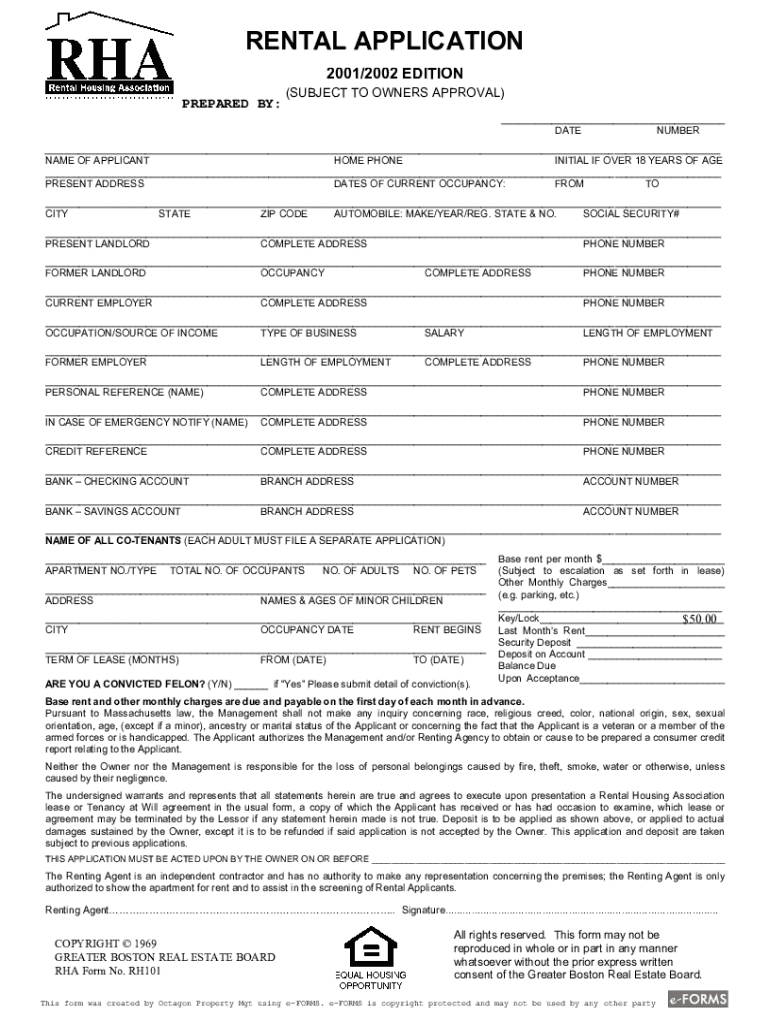
The RHA Rental Application is a standardized form used by prospective tenants to apply for rental properties. This document entails detailed personal information, employment history, references, and financial disclosures. It's an essential tool for landlords to screen tenants and assess their suitability for the rental property. By capturing comprehensive data ranging from contact details to income verification, the RHA Rental Application provides landlords with a clear view of a tenant’s background and financial capability.
Key Components
- Personal Information: Basic details like full name, date of birth, and contact numbers.
- Employment History: Current and previous places of work, job titles, and tenure.
- Financial Details: Monthly income, bank account information, and credit references.
- References: Both personal and professional references to gauge the applicant's reliability.
- Rental History: Current and former addresses along with landlord contacts.
Steps to Complete the RHA Rental Application
Completing the RHA Rental Application involves several steps, requiring attention to detail to ensure the form is filled out accurately and completely.
- Gather Required Information: Collect documentation including pay stubs, banking statements, and reference contacts.
- Fill Out Personal and Employment Details: Provide accurate data on employment history and personal identification.
- Include Financial Information: Document all income sources and other financial obligations.
- Provide References: List personal and professional references with current contact information.
- Review and Sign: Double-check all information for accuracy before signing the application.
Common Mistakes to Avoid
- Omitting Information: Failing to fill out sections completely can delay the processing of your application.
- Providing Incorrect Contact Information: Ensure all phone numbers and emails are current.
- Missing Signature: The application must be signed to be considered valid.
How to Obtain the RHA Rental Application
Obtaining the RHA Rental Application can be straightforward, and is typically accessible through various channels:
Sources for Obtaining the Form
- Online Real Estate Platforms: Many rental listings provide a downloadable link to the RHA Rental Application.
- Property Management Companies: These companies often have forms available directly on their websites or offices.
- Direct from Landlords: Landlords may send the form via email or provide a hard copy during property viewings.
Who Typically Uses the RHA Rental Application
The primary users of the RHA Rental Application are prospective tenants, landlords, and property management firms.


Purpose for Each User
- Prospective Tenants: Utilize the application to formally express interest in a rental property.
- Landlords: Use the application to screen applicants and determine the best fit for their property.
- Property Management Firms: Leverage the form to streamline the tenant selection process and maintain standardized records.
Legal Use of the RHA Rental Application
The legal use of the RHA Rental Application is primarily focused on ensuring fair and non-discriminatory practices in tenant selection.
Legal Considerations
- Non-Discrimination Laws: Landlords must comply with the Fair Housing Act, avoiding discrimination based on race, gender, religion, or other protected statuses.
- Privacy and Data Protection: Personal information collected must be protected according to state and federal privacy laws.
Key Elements of the RHA Rental Application
Understanding the key elements of the RHA Rental Application is vital for both landlords and tenants, as it forms the basis of tenant screening.
Key Sections
- Applicant Information: Collects essential identification data.
- Tenant History: Provides insight into the reliability of the applicant based on rental history.
- Employment Verification: Determines financial stability through job details and income proof.
State-Specific Rules for the RHA Rental Application
State-specific rules can influence how the RHA Rental Application is used and processed.
Examples of Variation
- Security Deposit Regulations: The amount and handling of security deposits may vary by state.
- Tenant Rights: States may have specific rights regarding what information can be requested from a tenant.
Form Submission Methods for the RHA Rental Application
The method of submitting the RHA Rental Application can vary depending on the landlord's or property manager’s preference.
Submission Options
- Online: Many landlords accept applications through secure online platforms.
- Mail: Physical copies can be mailed to the landlord's address.
- In-Person: Some landlords prefer to collect applications during property showings.
Advantages and Disadvantages
- Online: Offers convenience and speed but may require digital savviness.
- Mail: Secure yet time-consuming with potential for delivery delays.
- In-Person: Provides personal interaction but requires scheduling and travel.
By focusing on these critical sections of the RHA Rental Application, both tenants and landlords can navigate the rental application process more efficiently and effectively.