



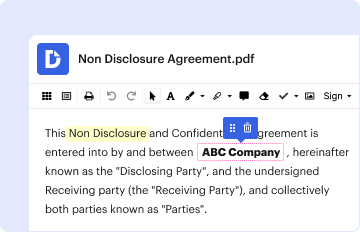
01. Edit your form online
Type text, add images, blackout confidential details, add comments, highlights and more.

Type text, add images, blackout confidential details, add comments, highlights and more.
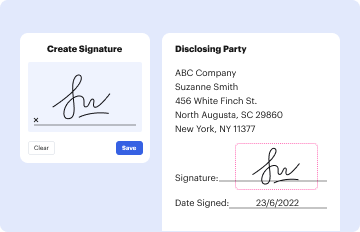
Draw your signature, type it, upload its image, or use your mobile device as a signature pad.

Send it via email, link, or fax. You can also download it, export it or print it out.
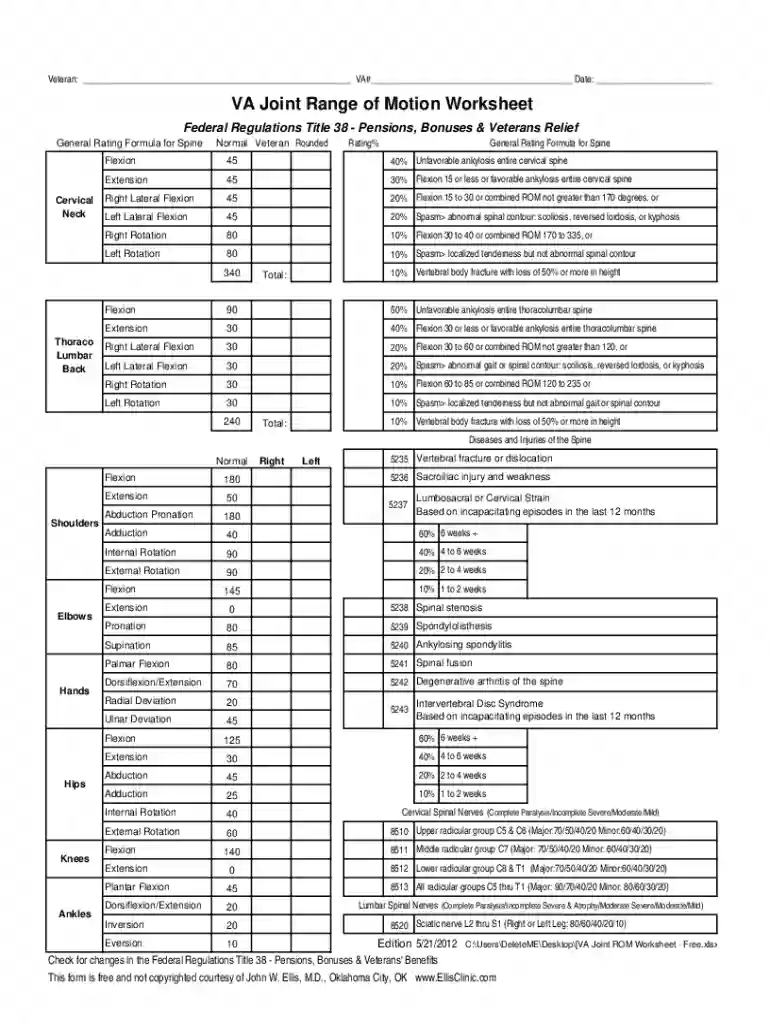
The VA Joint ROM (Range of Motion) Worksheet - FreeG1 xls is a detailed form used by veterans to outline their spinal conditions for disability rating purposes. It encompasses the general rating formula for spinal conditions, highlighting various ranges of motion. This worksheet is crucial for documenting cervical and thoracolumbar spine movements and evaluating joints like shoulders and knees, aiding in assessing the severity of spinal diseases and injuries. It is a critical tool for veterans to ensure they receive accurate disability ratings based on federal regulations.
Using the VA Joint ROM Worksheet efficiently involves comprehending its layout and sections. Users should first gather relevant medical records and measurements that detail their range of motion. Practically, each section of the worksheet requires specific data; for example, the cervical spine section needs the range of flexion, extension, and lateral flexion. The step-by-step approach involves:
Completing the VA Joint ROM Worksheet involves a structured approach to ensure all critical areas are addressed. The steps below offer a guideline to efficiently manage this process:
The worksheet comprises various sections integral to capturing the complete scope of joint mobility. Key elements include:
Understanding terminology is vital when dealing with the VA Joint ROM Worksheet. Some important terms include:
Familiarity with these terms helps ensure accurate data entry on the worksheet.
This worksheet is predominantly used by:
Each group participates in different stages, from data collection to final assessment.


The VA Joint ROM Worksheet must be completed in compliance with federal guidelines. Legal use involves:
Understanding these legal frameworks is essential for correct form submission and compliance with VA regulations.
Practical scenarios illustrate the worksheet's application:
These examples demonstrate the worksheet's role in supporting accurate disability evaluations for veterans under federal care.
At DocHub, your data security is our priority. We follow HIPAA, SOC2, GDPR, and other standards, so you can work on your documents with confidence.


