




01. Edit your form online
Type text, add images, blackout confidential details, add comments, highlights and more.

Type text, add images, blackout confidential details, add comments, highlights and more.

Draw your signature, type it, upload its image, or use your mobile device as a signature pad.

Send it via email, link, or fax. You can also download it, export it or print it out.
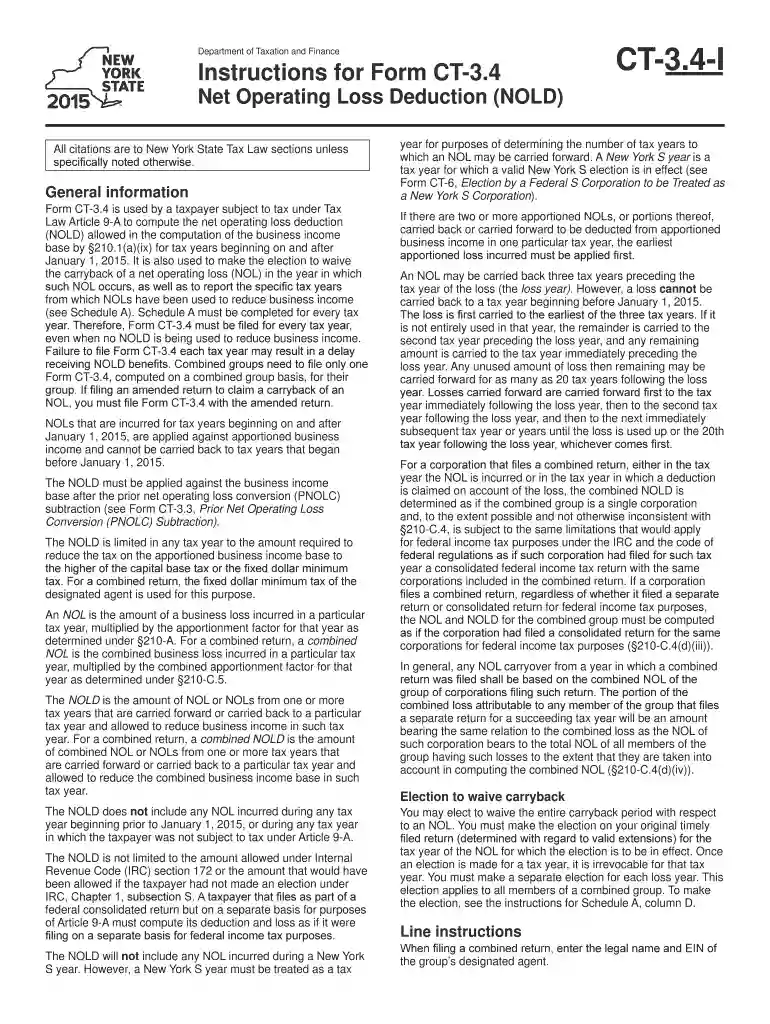
Form CT-3 is a tax document used by certain corporations in New York to file their corporation franchise tax returns for tax years starting on or after January 1, 2015. This form is crucial for reporting net operating losses (NOL) and ensuring compliance with state tax regulations. Understanding the purpose and proper completion of Form CT-3 is essential for accurate tax filing and liability calculations.
Corporation franchise tax is a tax on the privilege of doing business in New York, and Form CT-3 plays a vital role in this process. The form is utilized by various business entity types, ensuring they disclose necessary financial information according to state requirements.
Understand the Requirements: Before filling out the form, review the specific instructions to clarify which entities are required to file and the information necessary for each section.
Gather Required Information: Assemble all pertinent financial documents, including income statements, balance sheets, and records of net operating losses. This data is crucial for specifying income, deductions, and credits.
Completing the Form: Follow the instructions meticulously, entering information precisely where indicated. Pay special attention to sections detailing NOLD, as accurate reporting is necessary for compliance.
Review and Confirm: Double-check all entries for accuracy. Ensure all calculations comply with the state rules and regulations specified in the 2015 instructions.
Entity Information: Begin by entering the corporation's name, address, and identification number.
Income Reporting: Report net income or loss, details of federal deductions, and subtraction modifications.
Net Operating Loss Deduction: Use the specific lines for declaring any net operating losses and applying NOLDs to offset business income.
Tax Calculation: Calculate the company's tax liability considering the net income, taxable capital base, and minimum tax requirements.
Sign and Date: Review the completed form for accuracy, sign, and date the form to certify its accuracy before submission.
Net Operating Loss Deduction (NOLD): A key component allowing businesses to balance previous years’ losses against current or future taxable income.
Franchise Tax: A tax levied on corporations for the privilege of operating within New York State.
Minimum Tax: The least amount a corporation must pay, even if it incurs a net operating loss.
Taxable Year: The annual period used for tax calculation, often aligning with the company's fiscal year.
The instructions for Form CT-3 provide the legal framework under which corporations must file their taxes in New York State. Adhering to the guidelines ensures compliance with:
State Tax Laws: Complying with tax regulations helps businesses avoid legal complications and penalties.
Reporting Accuracy: Ensures that corporations report income and deductions accurately, mitigating the potential for audits.
Submitting on Time: Following deadlines helps avoid late fees and ensures smooth processing of tax obligations.
New York imposes its own set of regulations for the completion and submission of Form CT-3. Some key considerations include:
State Deductions and Credits: Varied deductions specific to New York law must be applied, differing from federal deductions.
Entity Specific Requirements: Depending on the type of corporation (e.g., LLC, partnership), different sections of the form and instructions may apply.
Combined Reporting Requirements: Businesses with subsidiaries may need to file combined reports, capturing each entity's tax obligations.
Annual Submission Date: Corporations must file Form CT-3 by the 15th day of the third month after the close of the tax year, however, extensions may be available under certain circumstances.
Extensions: Entities can apply for extensions using Form CT-5, granting additional time—usually up to six months—to file provided specific conditions are met and estimated taxes are paid.
Failing to comply with New York tax filing requirements can result in penalties, including:
Late Filing Fee: Applied if the form is not filed by the deadline without an approved extension.
Underpayment Penalty: Occurs when insufficient taxes are paid, either across the tax year or by the due date.
Interest Charges: Accrue on any unpaid taxes, further increasing the financial burden for corporations that miss paying by due dates.
Form CT-3 is used by various business entities, specifically including:
Corporations: Both domestic and foreign corporations authorized to conduct business in New York.
Limited Liability Companies (LLC): Those treated as corporations for federal tax purposes must file this form.
Business Trusts and Associations: Depending on their income and corporate status, these entities may also be required to file Form CT-3.
Understanding the specifications and nuances of Form CT-3’s 2015 instructions aids businesses in fulfilling their tax obligations efficiently, while avoiding potential pitfalls related to inaccuracies or non-compliance.
We've got more versions of the form ct3 instructions 2015 form. Select the right form ct3 instructions 2015 version from the list and start editing it straight away!
| Versions | Form popularity | Fillable & printable |
|---|---|---|
| 2024 | 4.4 Satisfied (52 Votes) | |
| 2023 | 4.3 Satisfied (57 Votes) | |
| 2022 | 4.3 Satisfied (22 Votes) | |
| 2021 | 4.8 Satisfied (186 Votes) | |
| 2020 | 4.3 Satisfied (173 Votes) | |
| 2019 | 4.2 Satisfied (78 Votes) | |
| 2018 | 4.4 Satisfied (221 Votes) | |
| 2017 | 3.6 Satisfied (29 Votes) | |
| 2016 | 4.4 Satisfied (462 Votes) | |
| 2015 | 4.3 Satisfied (104 Votes) | |
| 2014 | 4 Satisfied (42 Votes) | |
| 2013 | 4 Satisfied (58 Votes) | |
| 2012 | 4 Satisfied (22 Votes) | |
| 2010 | 4.4 Satisfied (136 Votes) |
At DocHub, your data security is our priority. We follow HIPAA, SOC2, GDPR, and other standards, so you can work on your documents with confidence.
This transmittal introduces Chapter 40, Hospital and Hospital Health Care Complex Cost Report,. Form CMS-2552-10, which contains instructions for the completion
Use this tax return for calendar year 2015, fiscal years that begin in 2015 and end in 2016, and tax years of less than 12 months that begin on or after January
Apr 15, 2019 You must attach Schedule 3 to Form CT-1040 or your credit will be disallowed. If you entered zero on Form CT-1040,. Line 10, do not complete


