







Definition and Meaning
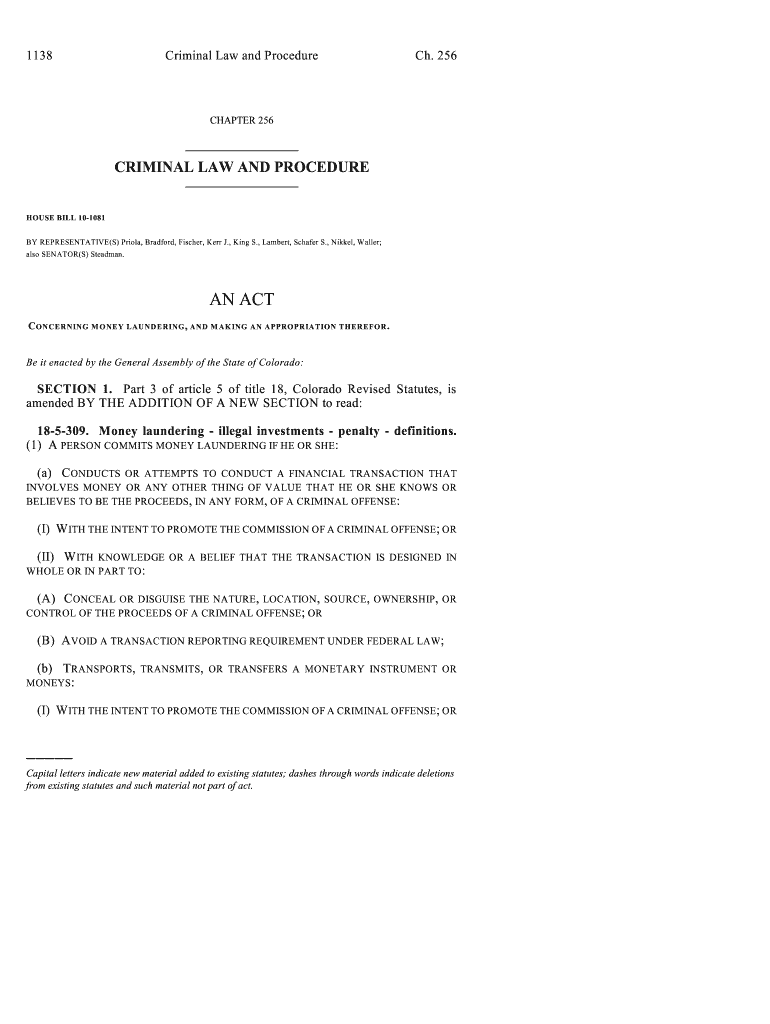
The term "1138 Criminal Law and Procedure Ch - state co" refers to a specific chapter within state-level legislation that outlines guidelines and procedures regarding criminal law and practices. This chapter primarily serves to define criminal activities, legal procedures, and protocols that govern the prosecution and defense of criminal cases. It includes crucial information that law practitioners and individuals involved in the legal system must understand to ensure compliance and proper application of the law.
Key Elements of the Chapter
- Definitions of Criminal Activity: Clearly delineates various criminal acts and their legal implications.
- Procedural Guidelines: Outlines the steps for legal procedures in criminal cases, including evidence submission and trial protocols.
- Penalties and Sentences: Specifies potential penalties for various offenses, which can include fines, incarceration, or community service.
Examples of Criminal Definitions
- Money Laundering: The chapter might define money laundering as knowingly disguising financial assets so they appear to have originated from legitimate sources.
- Theft: Could be described as unlawfully taking someone else's property with the intent to permanently deprive them of it.
How to Use the 1138 Criminal Law and Procedure Ch - state co
This chapter is a critical reference for legal professionals, law enforcement, and individuals facing criminal charges. Using this document effectively involves understanding its clauses and applying them to real-world scenarios.
Steps for Utilization
- Identify Relevant Sections: Determine which parts of the chapter apply to your situation.
- Interpret Legal Language: Analyze the legal jargon and context to accurately understand the obligations and rights described.
- Apply Procedures: Follow outlined protocols during investigations, arrests, and court proceedings.
Practical Example
An attorney refers to this chapter when preparing a defense strategy by ensuring all legal procedures have been adhered to by law enforcement during the arrest of a client.
Required Documents
Gathering the necessary documents is essential when dealing with legal matters covered in this chapter. Here's a concise list of what might be required:
- Arrest Warrant: An official document authorizing a person's arrest.
- Evidence Reports: Documentation of evidence collected during an investigation.
- Witness Statements: Written or recorded accounts of events by individuals with firsthand knowledge.
Legal Use of the 1138 Criminal Law and Procedure Ch - state co
The chapter is leveraged for both defense and prosecution in the state’s judicial system. This legal tool ensures adherence to due process and upholds the rights of individuals involved in criminal proceedings.
Applications in Court
- For Defense: Argue misapplication of legal processes or insufficient evidence against a defendant.
- For Prosecution: Use the chapter to ensure the legitimacy of evidence and adherence to procedural norms.
State-Specific Rules for the 1138 Criminal Law and Procedure Ch - state co
Each state may interpret and implement this chapter differently. Understanding state-specific nuances is crucial for its application.
Considerations for State Differences
- Statutory Language: States may use varying legal terminology.
- Procedure Variations: Steps involved in filing charges or conducting investigations can differ.
- Judicial Precedents: State court rulings may influence how the chapter's guidelines are followed.
Penalties for Non-Compliance
Failure to adhere to the protocols and guidelines set forth in this chapter can result in significant penalties for individuals and legal entities.
Common Penalties
- Fines: Monetary penalties imposed on individuals or organizations.
- Incarceration: Jail time which varies based on the severity of the offense and compliance failures.
- Probation: Conditional release and monitoring instead of serving jail time.
Important Terms Related to 1138 Criminal Law and Procedure Ch - state co
Familiarity with specific legal terms used in this chapter aids in understanding and applying it effectively.
Glossary of Key Terms
- Statute of Limitations: The time frame within which legal proceedings must be initiated.
- Probable Cause: Reasonable grounds for making an arrest or conducting a search.
- Adjudication: The legal process of resolving a dispute or deciding a case.
Who Typically Uses the 1138 Criminal Law and Procedure Ch - state co
The primary users of this legal chapter include a variety of professionals and individuals engaged with the criminal justice system.


User Groups
- Attorneys: For crafting defense strategies or supporting the prosecution.
- Law Enforcement Officers: To ensure arrests and investigations comply with legal standards.
- Judges and Court Officials: For making informed decisions based on legal statutes.
By providing key information and practical applications, this detailed guide to the "1138 Criminal Law and Procedure Ch - state co" empowers stakeholders within the legal system to effectively navigate the complexities of criminal law and procedure.




