



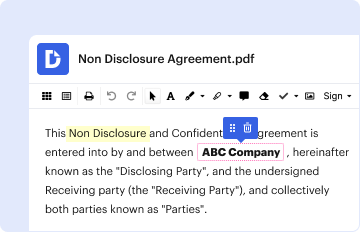
01. Edit your form online
Type text, add images, blackout confidential details, add comments, highlights and more.

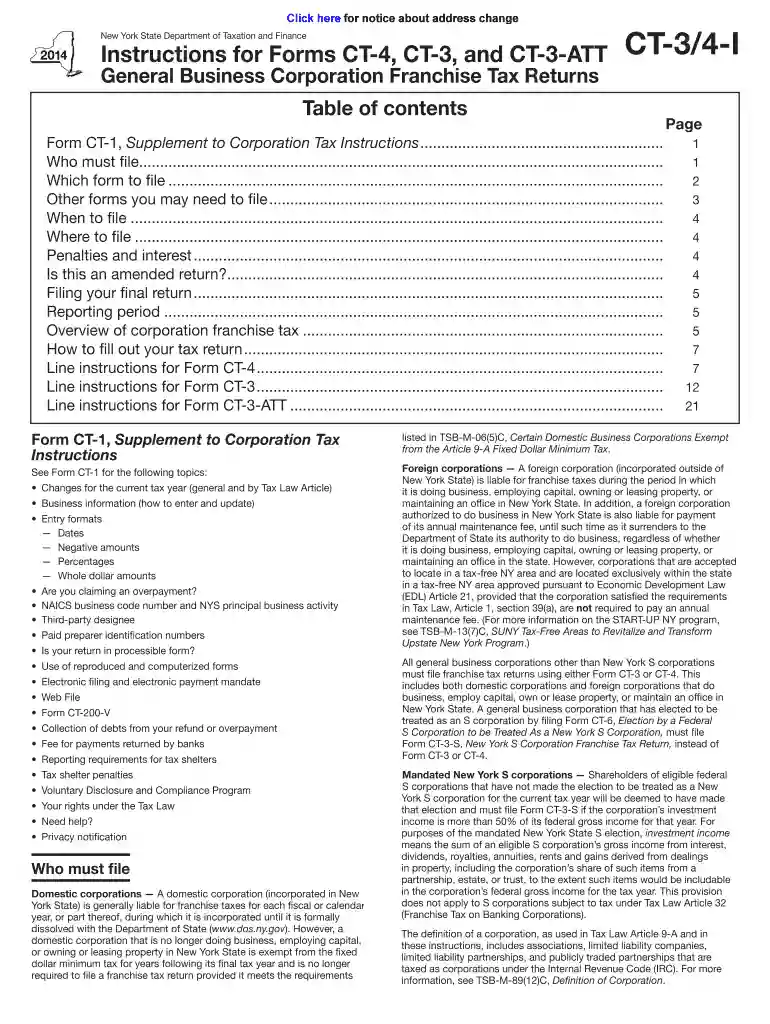
Type text, add images, blackout confidential details, add comments, highlights and more.
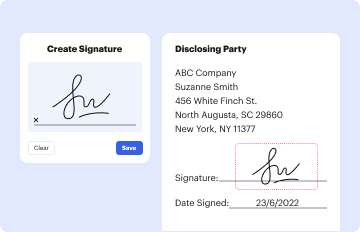
Draw your signature, type it, upload its image, or use your mobile device as a signature pad.

Send it via email, link, or fax. You can also download it, export it or print it out.
Form CT-3 Instructions 2014 are detailed guidelines provided for businesses filing New York State General Business Corporation Franchise Tax Returns. These instructions are designed to help understand how to properly complete Forms CT-3, CT-4, and CT-3-ATT. They encompass who must file, appropriate forms based on corporate status, required tax credits, exemptions for small businesses, and guidelines for reporting subsidiary income.
Identify Business Type: Determine if your corporation falls under the required categories to file—based on state regulations and your specific business classification.
Gather Necessary Documents: Collect financial documents, proof of income, and details on any subsidiaries. This ensures you have the needed data to complete each section accurately.
Understand Tax Credits and Exemptions:
Calculate and Report Income: Use the instructions to accurately report earnings from various sources, including investment capital. Ensure all income streams are accounted for.
Check for Filing Deadlines: Adhere to deadlines to avoid penalties. Confirm state-specific filing dates as they can affect your submission timeline.
The state of New York may impose particular conditions that affect corporate taxes. Understanding these can influence how you fill out your return. For example, tax rates or credit eligibility can vary depending on the location and specific industry regulations.
Failing to file by the deadline or inaccurately completing the forms can result in financial penalties and interest charges. Additional fines may apply if fraud or intentional misrepresentation is discovered. Ensuring compliance through careful review and adherence to instructions helps avoid these penalties.
The instructions cater to various business structures, such as LLCs, corporations, and partnerships. Identifying your specific type ensures that the form is filled out correctly, helping to claim appropriate credits and deductions pertinent to your entity classification.
The New York State Department of Taxation and Finance is responsible for issuing the CT-3 form and corresponding instructions, ensuring they align with current tax laws and regulations. For questions or clarifications, businesses can reach out to them directly for support and guidance.
We've got more versions of the form ct3 instructions 2014 form. Select the right form ct3 instructions 2014 version from the list and start editing it straight away!
| Versions | Form popularity | Fillable & printable |
|---|---|---|
| 2024 | 4.4 Satisfied (52 Votes) | |
| 2023 | 4.3 Satisfied (57 Votes) | |
| 2022 | 4.3 Satisfied (22 Votes) | |
| 2021 | 4.8 Satisfied (186 Votes) | |
| 2020 | 4.3 Satisfied (173 Votes) | |
| 2019 | 4.2 Satisfied (78 Votes) | |
| 2018 | 4.4 Satisfied (221 Votes) | |
| 2017 | 3.6 Satisfied (29 Votes) | |
| 2016 | 4.4 Satisfied (462 Votes) | |
| 2015 | 4.3 Satisfied (104 Votes) | |
| 2014 | 4 Satisfied (42 Votes) | |
| 2013 | 4 Satisfied (58 Votes) | |
| 2012 | 4 Satisfied (22 Votes) | |
| 2010 | 4.4 Satisfied (136 Votes) |
At DocHub, your data security is our priority. We follow HIPAA, SOC2, GDPR, and other standards, so you can work on your documents with confidence.
You must attach Schedule 3 to Form CT-1040 or your credit will be disallowed. If you entered zero on Form CT-1040,. Line 10, do not complete this schedule
See Form CT-1 for the following topics: Changes for the current tax year (general and by Tax Law Article). Business information (how to enter and update).
May 2, 2017 Be sure that the payers name and EIN on Forms W-2 and. W-3 are the same as those used on the Form 941,. Employers QUARTERLY Federal Tax Return


