







Definition & Meaning
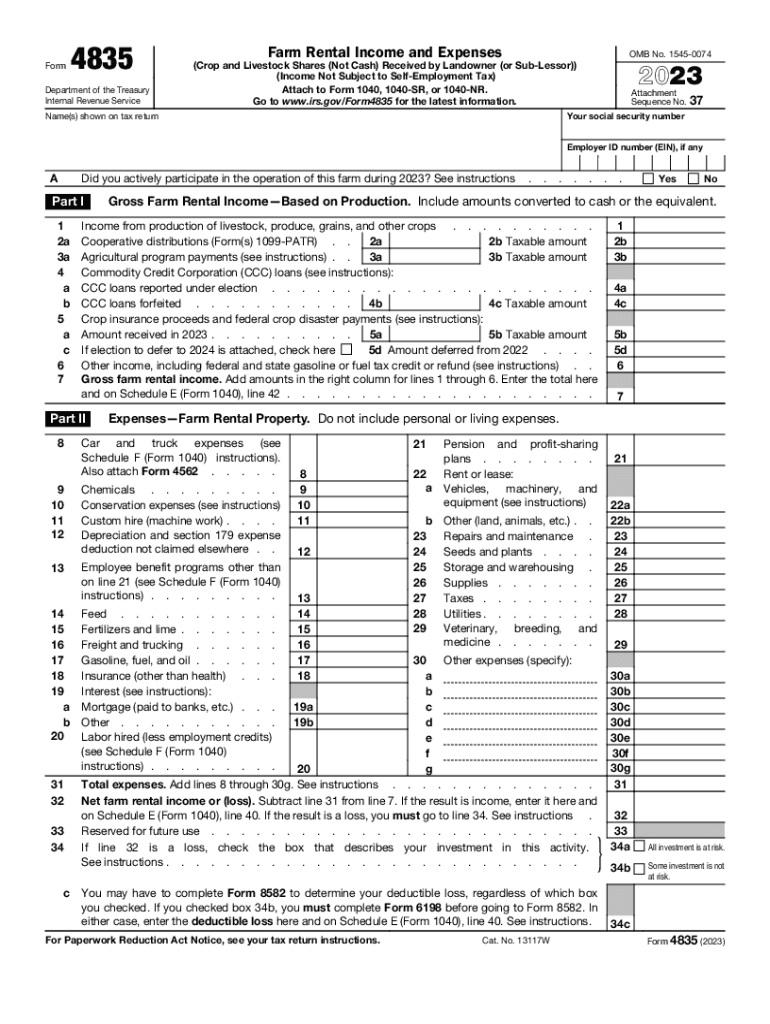
IRS Form 4835, known as "Farm Rental Income and Expenses," is used by landowners or sub-lessors who need to report rental income and expenses related to the farm. This form is specifically applicable when they are not materially involved in the farming operations carried out by tenants. The primary aim of Form 4835 is to identify gross farm rental income, which is determined based on the output from the land, such as crops or livestock. The form also allows landowners to detail any expenses they incur in respect to maintaining the farming operation, paving the way for tax considerations specific to land and income management.
How to Use IRS Form 4835 For
Using IRS Form 4835 correctly requires a precise understanding of the data that must be recorded. Landowners should include rental income that is contingent on the production of crops or livestock, excluding guaranteed fixed rental amounts. The form is also used to document a variety of expenses, from repairs and conservation efforts to insurance and taxes specific to the property. Income from participation in government programs related to farming should also be noted. Importantly, this form is ideal for those instances where physical involvement in the farm's operation remains minimal.
Steps to Complete IRS Form 4835 For
- Gather Information: Begin by compiling all relevant financial documents, including income records from farm production and a detailed statement of expenses.
- Identify Income Sources: Accurately mark income from all farm activities that are dependent on production.
- Detail Expenses: On Schedule E, record deductible expenses such as repairs, land preparation costs, and depreciation.
- Calculate Totals: Sum the income and expense figures to determine overall gain or loss.
- Complete the Form: Fill in the sections of Form 4835 with calculated totals, ensuring accuracy in reporting.
- Review and Submit: Carefully review for errors, ensure completeness, and submit alongside your tax return via mail or electronically.
Important Terms Related to IRS Form 4835 For
- Non-Material Participation: Refers to the lack of direct, significant involvement in farming activities, a key qualifier for using Form 4835.
- Gross Income from Farming: The total income derived from products grown or livestock raised on leased farmland.
- Deductible Expenses: Costs that are permissible deductions to reduce taxable income, including property taxes, interest payments, and conservation expenses.
Examples of Using IRS Form 4835 For
Real-world examples illustrate the use of IRS Form 4835 efficiently. Consider a landowner leasing a portion of their property for soybean cultivation. Here, income derived from that soybean yield would be reported using this form. Similarly, a landowner involved in a crop-sharing agreement where they receive a percentage of the harvest would record the income based on the market value of their share, detailing any expense contributions like building maintenance or soil enhancement.
IRS Guidelines
The IRS provides stringent guidelines for the completion and filing of Form 4835. It is crucial to differentiate the nature of income and expenses compared to typical rental property. Rental income that doesn't depend on farming output does not qualify. Detailed instructions furnished by the IRS ensure landowners accurately submit and declare their farm-related earnings and expenditures. Always refer to the most current IRS publications for any updates affecting Form 4835.
Filing Deadlines / Important Dates
Form 4835 is typically filed as part of an individual's annual tax return, meaning it adheres to the general deadlines for federal tax submissions, normally April 15th. Delays can result in penalties or interest on owed tax amounts, so timely submission is crucial. Keep informed about possible extensions through IRS announcements, especially when unexpected circumstances may shift standard deadlines.
Penalties for Non-Compliance
Failure to correctly or timely file Form 4835 can result in financial penalties imposed by the IRS. These include fines for underreported income due to errors or omissions on the form, and potential interest on late payments if additional tax is owed as a result of improperly reported farm rental income. Compliance ensures accurate tax liability assessment and avoids unnecessary fees.




