




01. Edit your 4835 online
Type text, add images, blackout confidential details, add comments, highlights and more.

Type text, add images, blackout confidential details, add comments, highlights and more.

Draw your signature, type it, upload its image, or use your mobile device as a signature pad.

Send form 4835 via email, link, or fax. You can also download it, export it or print it out.
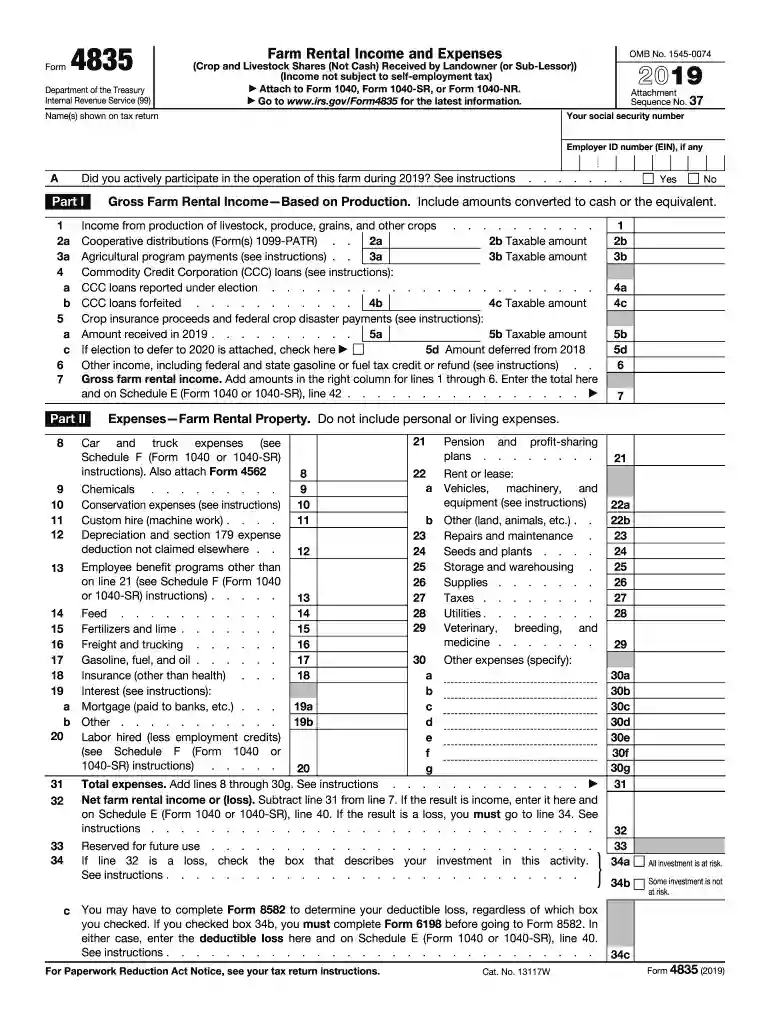
Form 4835, also known as IRS Form 4835, is primarily used by landowners or sub-lessors who do not materially participate in farming activities. It enables them to report farm rental income and expenses derived from crops or livestock produced by tenant farmers. This form distinguishes income that does not qualify as self-employment income, thus impacting how the income is taxed.
Completing Form 4835 requires attention to detail due to the specific information it demands. Here's a step-by-step guide:
Identify the Correct Taxpayer Information: Fill in your personal information, including name and social security number.
Report Gross Farm Rental Income:
Deductible Expenses:
Calculate Net Farm Rental Income:
Review and Submit:
Form 4835 is specifically for individuals who:
Several terms play key roles when dealing with Form 4835:
Understanding these definitions ensures proper form completion and accurate reporting.
Compliance with IRS requirements when filing Form 4835 is crucial:
Non-compliance can lead to audits and penalties, emphasizing the importance of precision in documenting all aspects related to farm rental income.
Understanding the structure of Form 4835 involves recognizing its main components:
Each part of Form 4835 plays a critical role in conveying the necessary financial details to the IRS.
Adhering to deadlines for Form 4835 ensures compliance with IRS mandates:
Missing deadlines can result in late fees and interest penalties, thus adherence is strongly advised.
Taxpayers should be aware of state-specific requirements that may affect Form 4835:
Understanding both federal and state nuances assures full compliance and maximizes tax reporting accuracy.
We've got more versions of the 4835 form. Select the right 4835 version from the list and start editing it straight away!
| Versions | Form popularity | Fillable & printable |
|---|---|---|
| 2025 | 4.6 Satisfied (47 Votes) | |
| 2024 | 4.6 Satisfied (31 Votes) | |
| 2023 | 4.8 Satisfied (51 Votes) | |
| 2022 | 4.1 Satisfied (49 Votes) | |
| 2021 | 4.8 Satisfied (188 Votes) | |
| 2020 | 4.4 Satisfied (251 Votes) | |
| 2019 | 4.1 Satisfied (32 Votes) | |
| 2018 | 4.2 Satisfied (49 Votes) | |
| 2017 | 4.4 Satisfied (159 Votes) | |
| 2016 | 4.2 Satisfied (122 Votes) | |
| 2015 | 4.3 Satisfied (70 Votes) | |
| 2012 | 4.7 Satisfied (61 Votes) | |
| 2011 | 4 Satisfied (47 Votes) |
At DocHub, your data security is our priority. We follow HIPAA, SOC2, GDPR, and other standards, so you can work on your documents with confidence.
Internal Revenue Service (99). Farm Rental Income and Expenses. (Crop and 4835 to report farm rental income based on crops or livestock produced byRead more
Dec 1, 1974 The Federal Information Processing Standards Publication Series of the National Bureau of Standards is the official publication relating to.Read more


