
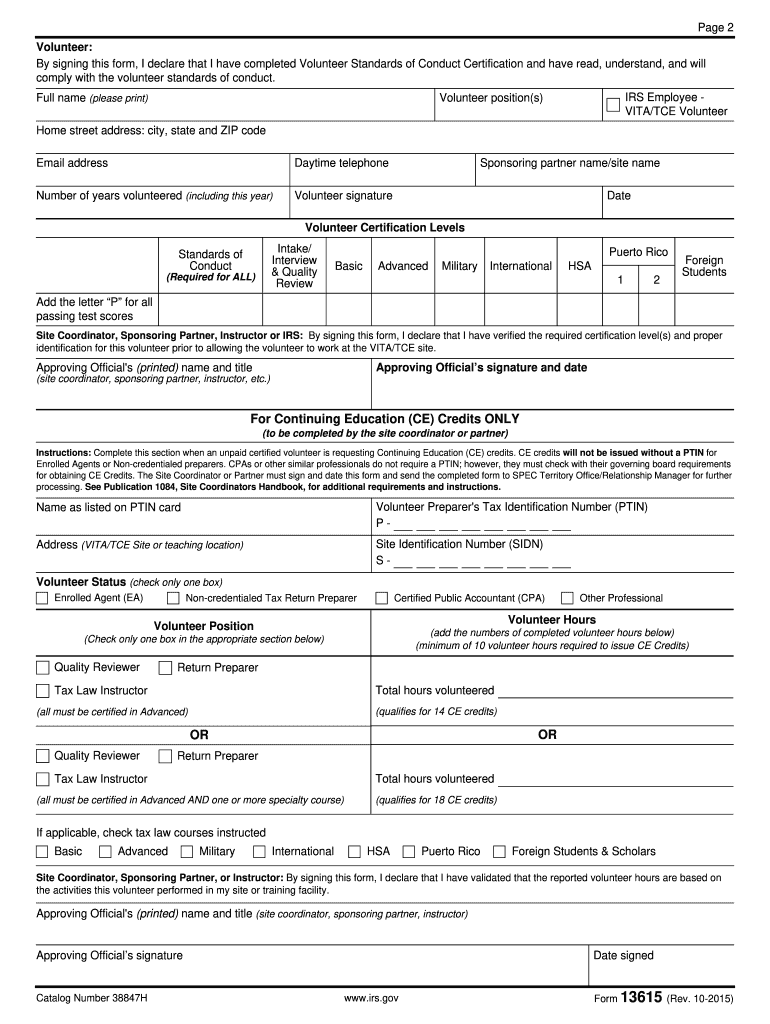







Definition and Purpose of the 13 Form
The 13 form, officially known as the Volunteer Standards of Conduct Agreement, is used by volunteers participating in the Volunteer Income Tax Assistance (VITA) and Tax Counseling for the Elderly (TCE) programs. These programs aim to provide free tax return preparation services to eligible individuals, particularly those who are low-income, elderly, or have limited English proficiency. The form is essential in ensuring that volunteers adhere to ethical standards, maintain taxpayer trust, and comply with legal requirements.
Core Responsibilities of Volunteers
Volunteers using the 13 form are required to understand and fulfill specific responsibilities. These include completing a standards test to demonstrate their knowledge of tax laws and regulations and agreeing not to accept payment for their services. Volunteers must also commit to accurate and honest preparation of tax returns, avoiding any false or misleading claims. This adherence to a strong ethical code is crucial to maintaining the integrity and effectiveness of the VITA and TCE programs.
How to Obtain the 13 Form
Acquiring the 13 form involves several straightforward steps. It can be accessed through the IRS website, providing a downloadable PDF version. Alternatively, volunteers might receive the form directly from their VITA or TCE program coordinators during the onboarding process. Ensuring access to the correct version of the form is important for compliance, so it's advisable to verify with program supervisors if there are any updates or specific instructions related to acquiring the form.
Steps to Complete the 13 Form
Filling out the 13 form involves several critical steps:
- Personal Information: Volunteers must provide their name, contact information, and the identification number assigned by the volunteer program.
- Certification of Understanding: Volunteers must read the conduct agreement thoroughly and confirm their understanding by signing the form.
- Standards Test Completion: Certification that the volunteer has passed the required tests, usually indicated by an attached confirmation or stamp of completion.
- Signature and Date: Volunteers must sign and date the form to affirm their commitment to the outlined agreements and participate legally in the programs.
Common Mistakes in Completing the Form
When filling out the 13 form, some volunteers may face issues such as missing signatures, incorrect personal information, or failure to attach proof of test completion. To avoid these mistakes, it is advisable to double-check the form before submission.
Who Typically Uses the 13 Form
The 13 form is predominantly used by individuals volunteering with the VITA and TCE programs. These volunteers come from diverse backgrounds, including retirees, students, accounting professionals, and community members interested in assisting others with tax preparations. The form ensures that all participants abide by legal and ethical standards, protecting both the taxpayers they assist and preserving the quality of the programs.


Requirements for Volunteers
Volunteers must meet certain criteria, including successfully completing volunteer training sessions and passing certification tests. These prerequisites ensure that all volunteers have the necessary skills and knowledge to provide accurate tax assistance.
Key Elements of the 13 Form
The 13615 form encompasses several key elements aimed at safeguarding both volunteers and taxpayers:
- Volunteer Pledge: A commitment to maintain confidentiality, provide accurate tax-related information, and uphold professional conduct.
- Compliance Statement: An acknowledgment of legal obligations and potential consequences for non-compliance, including removal from volunteer positions or legal investigations.
- Taxpayer Trust Assurance: An emphasis on the importance of taxpayer trust and the volunteer's role in fostering a reliable service environment.
Volunteer Protection Act
The form includes references to the Volunteer Protection Act, underscoring legal protections for volunteers acting within the scope of their duties and without misconduct, helping reassure volunteers of their legal coverage while engaged in the programs.
Legal Use of the 13 Form
The legal framework underpinning the 13 form is crucial for the efficient operation of volunteer tax programs. The form legally binds volunteers to the recognized ethical and operational standards, providing clear guidelines for behavior and safeguarding against unauthorized practices.
Consequences of Non-Compliance
Failing to adhere to the standards outlined in the form can lead to significant repercussions, such as expulsion from the volunteer programs or initiation of legal proceedings. This deterrent underscores the importance of each volunteer comprehending the weight of the agreement.
IRS Guidelines and Filing Deadlines
The 13 form must align with IRS guidelines to maintain the credibility and effectiveness of the associated programs. While the form itself doesn't have a standalone filing deadline, it is imperative for volunteers to complete and submit the form before beginning any tax preparation work. This ensures readiness prior to any taxpayer interactions during the tax season.
Digital vs. Paper Version
The 13 form is available in both digital and paper formats, offering volunteers flexibility based on their comfort and technological access. The digital format allows for easier dissemination and centralized record-keeping, while the paper version provides a tangible document that volunteers can review and sign by hand.
Choosing the Right Format
Volunteers should consider their accessibility to technology and familiarity with digital tools when choosing the form's format. Coordinators often facilitate the decision by recommending the format preferred by their specific VITA or TCE program.




