
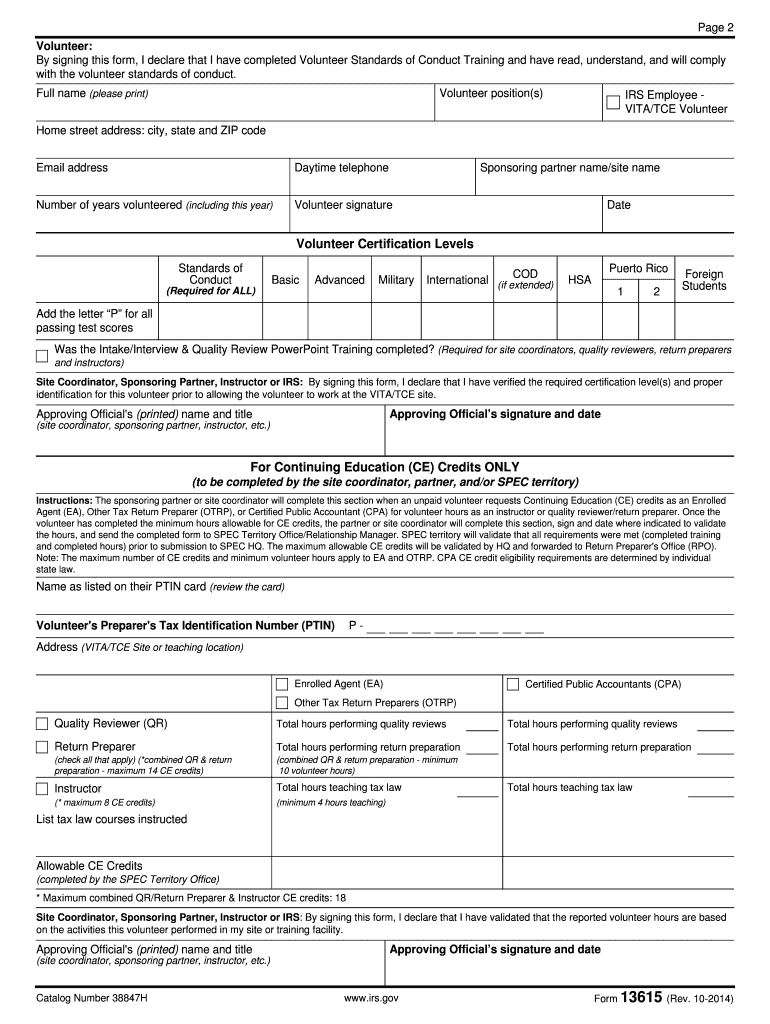







Key Elements of the Volunteer Agreement 2014 Form
The Volunteer Agreement 2014 Form serves as a crucial document for organizations such as the VITA and TCE programs, which rely on volunteer support for tax preparation services. This form outlines the terms and conditions under which volunteers agree to provide their services. It specifies the roles, responsibilities, and expectations for both the volunteers and the organization, cementing a mutual understanding and a legally binding agreement. Key elements typically include volunteer duties, performance standards, confidentiality clauses, and termination policies. The form is integral for maintaining high standards of ethics and accountability within these programs.
Confidentiality and Data Protection
Confidentiality and data protection are vital components of the Volunteer Agreement 2014 Form. Volunteers are often entrusted with sensitive taxpayer information, necessitating strict adherence to privacy policies. The form typically includes clauses that prohibit the disclosure of personal data without explicit consent, except where legally mandated. Volunteers may also be required to undergo training or certification in data protection practices, ensuring compliance with relevant legal frameworks like the Volunteer Protection Act. This commitment to confidentiality fosters trust and protects both the taxpayers and the integrity of the volunteer program.
Performance Standards
Performance standards are a cornerstone of the Volunteer Agreement 2014 Form. These standards define the expected level of service quality and ethical behavior inherent in volunteer duties. For instance, volunteers in tax preparation programs may be required to complete specific training modules, adhere to guidelines that prevent the preparation of false tax returns, and avoid any conflict of interest or solicitation of donations. Meeting these standards is crucial to maintain program integrity and avoid disciplinary actions, which can include removal from volunteer positions or more severe consequences depending on the severity of non-compliance.
Steps to Complete the Volunteer Agreement 2014 Form
Understanding the Form's Requirements
Before filling out the Volunteer Agreement 2014 Form, it is essential to thoroughly understand its requirements. This involves reviewing sections related to volunteer duties, confidentiality, and performance standards. Potential volunteers should acquaint themselves with the ethical guidelines and legal implications outlined in the form. This understanding aids in ensuring that all necessary information is correctly provided and that there is full compliance with the form's terms.
- Review Volunteer Responsibilities: Start by reading the sections detailing the roles and responsibilities expected of a volunteer. Ensure clarity on specific tasks and standards.
- Acknowledge Confidentiality Clauses: Familiarize yourself with the data protection measures and privacy obligations mentioned in the form.
- Confirm Training and Certification Requirements: Verify if there are any necessary certifications or training sessions you need to complete before starting your volunteer duties.
Completing and Submitting the Form
Once familiar with the form's requirements, the next step is to complete and submit it:
- Fill Out Personal Information: Provide accurate personal details, including your name, contact information, and any identification numbers required.
- Agree to Terms and Conditions: Sign the form to confirm your understanding and acceptance of the volunteer agreement terms.
- Submit the Form: The form can typically be submitted online through the organization's website, by mail, or in person, depending on the preferred method of submission indicated.
Who Typically Uses the Volunteer Agreement 2014 Form?
The Volunteer Agreement 2014 Form is primarily used by individuals and organizations involved in tax preparation services, such as the VITA and TCE programs. These programs recruit a diverse range of volunteers, including:
- Retirees: Experienced individuals who wish to offer their expertise and spend their time productively.
- Students: Young adults seeking to gain valuable experience and fulfill any service-related requirements for their academic programs.
- Professionals: Individuals from financial or legal backgrounds looking to contribute their skills to community service.
Volunteers in these categories help in preparing tax returns for eligible taxpayers, ensuring a broader section of the population receives necessary tax assistance.

Legal Use of the Volunteer Agreement 2014 Form
Compliance with Legal Standards
The volunteer agreement is structured to comply with various legal standards and protocols that ensure the protection of both the organization and its volunteers. It references key aspects like the ESIGN Act for electronic signatures, offering a legally binding framework when executed digitally.
Ethical and Legal Implications
In addition to outlining the legal frameworks, the form addresses ethical responsibilities tied to volunteer work, especially in handling sensitive taxpayer information. This includes abiding by regulations and ensuring the use of legally accepted procedures when performing volunteer duties, protecting both the volunteer from legal repercussions and the taxpayers from potential breaches of confidentiality.
State-Specific Rules for the Volunteer Agreement 2014 Form
State-specific regulations may influence the way the Volunteer Agreement 2014 Form is structured and applied. Variations can occur based on state laws governing volunteer work and data protection. For instance, some states may have unique privacy mandates that necessitate additional clauses in the form. Understanding these differences is essential for compliance, especially when volunteer programs operate nationwide.
Examples of State-Specific Differences
- Data Privacy Laws: States like California may require stricter adherence to data privacy norms due to comprehensive state-specific regulations like the California Consumer Privacy Act (CCPA).
- Volunteer Training Requirements: Certain states might have their own set of criteria for volunteer training, influencing the content and format of related sections in the agreement.
Digital vs. Paper Version
The Volunteer Agreement 2014 Form is available in both digital and paper formats to accommodate various preferences and accessibility needs. The digital version provides the convenience of online submission, while the paper format serves those who prefer or require a physical copy.
Comparing Formats
-
Digital Version:
- Allows for quick editing and submission.
- Incorporates electronic signature capabilities, ensuring compliance with the ESIGN Act.
- Offers the advantage of easy storage and retrieval.
-
Paper Version:
- Preferred in settings with limited internet access.
- Beneficial for individuals who prefer a tangible document for record-keeping.
- Submission typically requires mailing or dropping off the completed form to the designated address.
Understanding the differences and respective advantages will guide potential volunteers in selecting the most suitable format for their needs.




